The Best Degrees for Autistic Students
Explore degrees best for autistic students, available support services, and job market strategies.


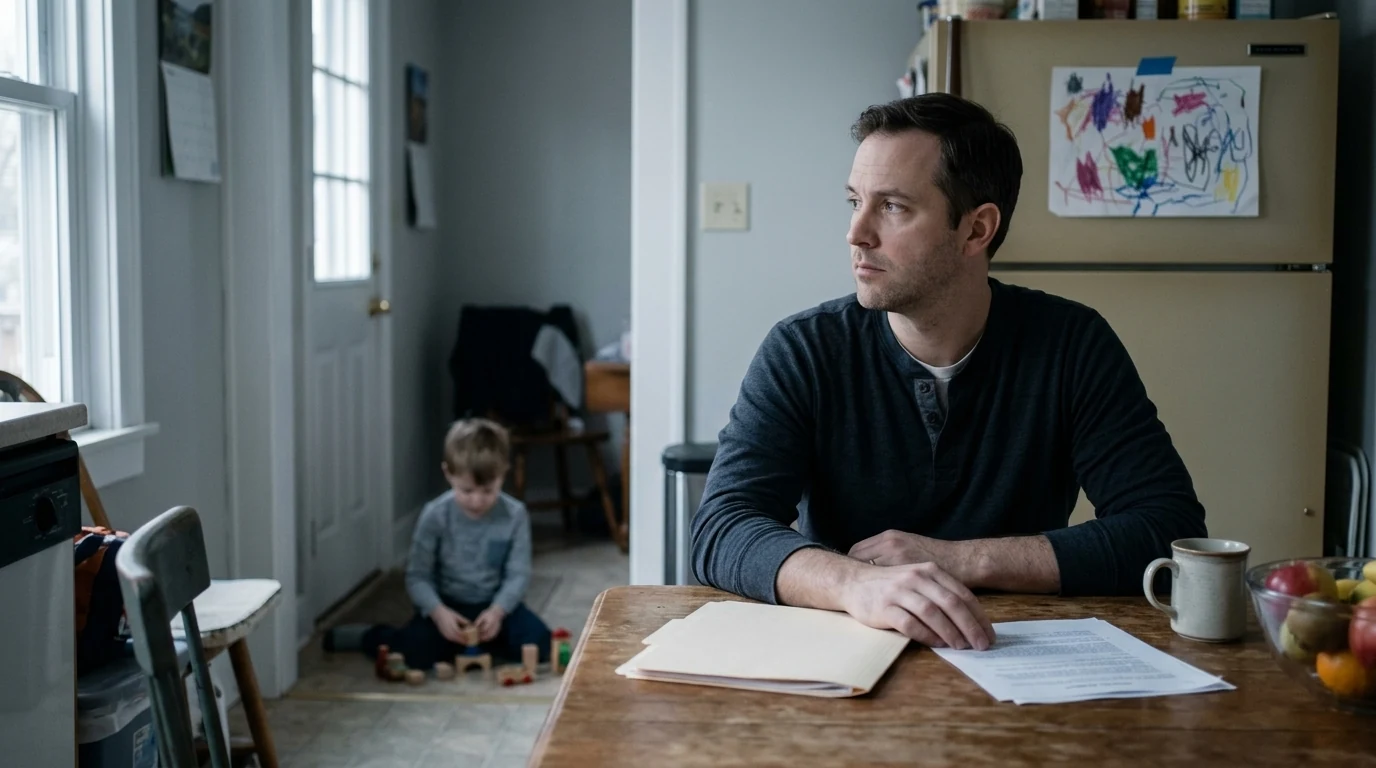
Your daughter is a junior. The college counselor wants to talk about majors next week, and you have not slept well in three nights. The list she put together has computer science, graphic design, marine biology, and library science on it, and you have no idea which one is going to work for the kid you actually have, not the kid in the brochure. You are also running calculations on housing, support services, whether the campus you visited last month felt right or just looked right, and how exactly a freshman year of college turns into an adult life that holds. There is no one right answer to what an autistic student should study. There is a better way to think about the question, and that is what the rest of this article is for.
Education for Autistic Students
Long before the college conversation, students on the autism spectrum tend to have specific learning needs that show up in how they take in information, how they manage transitions, and what kind of environment supports them. Tailored learning approaches and inclusive educational programs are part of building toward a college path that actually works.
Tailored Learning Approaches
Tailored learning approaches for students with autism can significantly improve outcomes across the K-12 years. As outlined in a study published in the International Journal of Inclusive Education, these approaches cater to the individual learning styles, strengths, and challenges of each student. They often involve visual aids, hands-on learning, and the strategic use of technology to make complex concepts more accessible.
Setting SMART (Specific, Measurable, Achievable, Relevant, Time-bound) goals is one of the more useful frameworks for tracking academic progress, particularly during transitions. For more on this, see our guide on examples of smart goals for students with autism.
A practical pattern from our caseload: most of the autistic kids who do well in college were not the ones with the highest grades in high school. They were the ones who learned how to ask for help in a way an instructor could recognize as a request. The skill of self-advocacy, built in concrete, repeatable ways, ends up mattering more than any single transcript line.
Inclusive Educational Programs
Inclusive educational programs play a vital role in the education of students with autism. According to a study in the Journal of Learning Disabilities, inclusive programs create environments where students with autism can learn alongside their peers in a supportive setting.
Inclusive education benefits students with autism by providing opportunities for social interaction, and it also benefits neurotypical students by fostering everyday familiarity with neurodiversity. These programs incorporate accommodations for students with autism to make sure participation is real, not technical.
Teacher training is one of the make-or-break pieces. Educators need both the knowledge and the skills to meet the needs of autistic students, which includes understanding the way autism actually shows up, implementing tailored strategies, and managing the classroom environment well enough that an autistic student is not spending half their working memory on sensory load.
For parents and caregivers in New Jersey seeking the best education for autism, a working understanding of these methods helps in choosing the right school or program. Later, that same understanding helps in evaluating colleges and choosing the degrees best for autistic students.
Best Degrees for Autistic Students
Choosing the right degree is a real decision for any student. For autistic students, the decision is shaped by specific strengths and specific challenges, and the framework most parents and counselors use (which prestigious school, which "good" major) is usually the wrong one. The better framework is fit.
Degree Options
A key part of choosing a degree is honest assessment of areas of strength, sustained interest, and capacity for growth. Many autistic students excel in fields that reward attention to detail, pattern recognition, and systematic problem-solving. Those skills translate well into degrees like computer science, physics, mathematics, engineering, and statistics.
Autistic students also frequently have the ability to focus intensively on a subject of deep interest, which makes them well-suited to fields that reward depth: creative work like art, music, or literature, and detail-oriented work like history, geography, anthropology, or library science.
Every autistic individual is different, and the best degree depends on the individual's interests, strengths, and career goals. Anderson and Butt's 2017 study found that autistic students can succeed in a wide variety of degree programs, given the right support and accommodations [1].
In our work with families, the conversation about majors lands better when it starts with what the student does in their free time without prompting (the special interest, the hours-long focus on one topic, the project they cannot stop working on), and works backward from there. Picking a major from a list of "good careers" tends to produce dropouts. Picking a major that uses a strength the student already returns to, voluntarily, tends to produce graduates.
Considerations for Career Paths
Choosing a degree is also about thinking through the career paths that the degree opens up. Autistic students should be encouraged to look at careers that align with both the degree and with their personal patterns of working.
Work environment matters as much as job title. Some autistic adults thrive in jobs that offer a consistent routine and limited interruption. Others do well in more flexible, creative roles where the structure comes from the project rather than the schedule. The fit question applies here too: a brilliant programmer who needs to be in a room with twelve other people in open office plan is going to have a different career than the same brilliant programmer who can work from home.
Gelbar, Smith, and Reichow's 2014 study reinforced that with the right supports and accommodations, autistic individuals can succeed in a wide range of careers. The support, not the field, tends to be the limiting factor.
Support services play a real role in the transition from college to the workplace. For more information on what those services look like, see our article on accommodations for students with autism.
Selecting the best degree for an autistic student involves careful consideration of interests, strengths, career goals, and the support services available at prospective colleges. For more on selecting a college, see our article on colleges for autistic students. Choosing the right degree and career path is, in the end, the place where individualized planning and support pay off most visibly.
Support Services for Autistic Students
To make a degree program actually work for an autistic student, a range of support services are typically built into the picture. These exist to make sure students get the help and accommodations that allow them to navigate the academic load and the social environment on top of it.
Counseling and Guidance
Counseling and guidance services play a real role in supporting autistic students. These services often involve individual counseling, group sessions, and other therapeutic interventions (Autism Speaks). Counselors and therapists work with students on social skills, stress management, and any emotional or behavioral challenges that come up in college life, which is often more demanding socially than high school was.
Guidance counselors also assist with academic planning and career exploration, helping students identify strengths, interests, and potential career paths. They can offer real advice on degrees best for autistic students and on setting goals that are concrete enough to make traction visible. For more on goals, see our article on examples of smart goals for students with autism.
One piece worth naming: the quality of the relationship between the autistic student and the counselor or therapist matters as much as the credentials. Trust in a therapy relationship is not soft language; it is the mechanism by which a student is willing to say "I am struggling with the social part of this lab group" before the situation spirals into a withdrawn course.
Accessibility Resources
Accessibility resources are the other critical piece of support services for autistic students. These encompass a range of accommodations designed to make learning more accessible and effective.
Common examples of accessibility resources:
- Specialized instructional strategies tailored to the student's learning style
- Assistive technology to aid in communication and learning
- Extended time for assignments and tests
- Quiet spaces for studying and testing
These accommodations make full participation possible. To learn more, see our article on accommodations for students with autism.
In short, counseling and guidance services, along with accessibility resources, are the two pillars of support for autistic students. Leveraging them well lets students focus on the academic work rather than spending all their energy on the friction around it.
Transitioning to Higher Education
The move from secondary education to higher education is a real shift for many students, and it can be a steep one for students with autism. With proper preparation and the right support, autistic students can do well in a university setting.
College Preparation
Preparing for college is more than academic readiness. It also includes developing social skills, independence, and self-advocacy. Starting the preparation early helps students with autism adjust to the new environment without burning out in week three of freshman year.
Beyond academic prep, autistic students benefit from learning about the specific accommodations and support services available at their chosen colleges. These may include tutoring, mentorship programs, and special accommodations for exams. For more detailed information, students and families can refer to our article on colleges for autistic students.
SMART goals are useful here too. Goals that are Specific, Measurable, Achievable, Relevant, and Time-bound give students something concrete to work toward and give parents and counselors something to actually track. For examples, see our article on examples of smart goals for students with autism.
Support Systems in Universities
Once in college, autistic students have several support systems available. These range from formal accommodations like extended time for tests to informal supports like faculty mentorship programs.
Strong support networks in universities can include faculty members, disability services staff, and peer mentors. These individuals can provide guidance, advocacy, and the kind of practical translation between expectation and execution that makes college doable.
Many universities now offer specialized programs for students with autism. These may include social skills training, academic support, and career counseling, all aimed at creating a more inclusive environment in practice rather than only in policy.
For a fuller picture of the accommodations available in higher education, refer to our article on accommodations for students with autism. The transition to higher education is a significant milestone, and with the right preparation and support, autistic students can pursue the degrees best for them and the careers that follow.
Vocational Training and the Job Market
Traditional degrees are one path. Vocational training and direct-to-work pathways are another, and they are often a better fit for autistic adults whose strengths align more with skilled practice than with a four-year academic environment.
Skill Development Programs
Skill development programs hone the practical skills needed for employment. These programs are designed to build independence and develop daily living skills, areas that tend to develop on a longer timeline for individuals with autism (Smith, L.E., et al., 2012).
These programs typically cover a range of skills, from technical abilities tied to specific industries to soft skills like communication, teamwork, and structured problem-solving. The curriculum is often tailored to the unique learning styles and strengths of autistic students.
By participating, autistic adults can build confidence and competence in concrete, employable skills. One of the under-discussed benefits is what showing up consistently to a structured program teaches outside of the curriculum: the rhythm of work, the social structure of a team, the practice of managing energy over a full day. Those skills do not show up on a transcript and they make the difference between getting hired and staying hired.
In our practice, strategies for increasing motivation in therapy sessions translate directly to vocational and college contexts. The mechanics of reinforcement, breaking down complex tasks, and building toward sustained engagement do not stop being useful when the student turns eighteen.
Job Search Strategies
A successful job search strategy for autistic adults should align with the individual's specific strengths, interests, and skills. Hendricks suggests that effective strategies include targeted job preparation, work-based learning experiences, and self-advocacy training. Burke and colleagues found that direct instruction methods can significantly increase employment options for young adults with autism spectrum disorders.
Effective job search strategies include:
- Identifying employers who actively value diversity and inclusion (not just claim it).
- Tailoring resumes and cover letters to highlight specific strengths and accomplishments.
- Preparing for interviews with mock interview sessions, including the social mechanics, not just the content.
- Seeking internships or volunteer opportunities to build a work history before the formal job search begins.
Job placement assistance, often offered through vocational programs and disability services offices, plays a real role in the transition from school to work. The service typically includes career counseling, job search assistance, and support through the application and interview process. With strong job placement support, the likelihood of an autistic student securing competitive employment goes up notably (Wehman et al., 2013), particularly given the lower employment rates and higher reliance on public assistance documented among young adults with autism (Taylor and Seltzer, 2011).
For more on preparation, see our article on examples of smart goals for students with autism.
Workplace Accommodations
Workplace accommodations are adjustments or modifications provided by an employer to give people with disabilities equal employment opportunities. Accommodations can range from physical adjustments to the work environment to changes in how a job is performed. For adults with autism spectrum disorder, sustained employment often depends on having accommodations in place from the start, not as a reactive fix after problems show up.
Workplace accommodations can include:
- Providing a quiet workspace or noise-canceling headphones to manage sensory load
- Using written instructions or visual aids to clarify tasks and expectations
- Allowing flexible work schedules or break times
- Providing a job coach or mentor to assist with training and workplace integration
These are not luxuries. They are the practical conditions that let an autistic adult perform their job duties well, which is in the employer's interest as much as the employee's. For more on accommodations, see our article on accommodations for students with autism.
The journey from acquiring the best education for autism to navigating the job market is a long arc with many small decisions along the way. With tailored search strategies and appropriate workplace accommodations, autistic adults find rewarding employment that aligns with their skills and interests, often in fields the brochure version of career planning never would have suggested.
Why Mastermind Behavior
Mastermind Behavior is a BCBA-owned and operated in-home ABA therapy provider for children with autism across New Jersey, Georgia, and North Carolina. The model is built around the rooms where your child actually lives. A BCBA designs the program, our Behavior Technicians run the daily trials in real environments, and our parent training coaches work directly with you so the skills hold up after we close the door. When parents ask us how to think about adulthood for their child (college, vocational training, a job, independent living), the work that opens those doors starts years earlier with the building blocks: communication, self-advocacy, motivation to engage with challenging material, and the practice of asking for help in a way an adult outside the family can recognize as a request. A 90%+ staff retention rate means the same team that learns your child in February is still with you in November, and with no onboarding waitlist, most families begin direct services within six weeks of their initial assessment.
If you are looking at the years between now and that college conversation, and trying to figure out what to build into the runway, we are happy to hear where you are right now and what you are seeing at home. Schedule a free consultation or call 732.813.7333. No pressure, no commitment, just a conversation about what is possible from here.
References
- Anderson, K.A., & Butt, C. (2017). Young adults on the autism spectrum: The struggle for appropriate services. Journal of Autism and Developmental Disorders. https://doi.org/10.1007/s10803-017-3218-x
- Autism Society. Transition to Adulthood. https://www.autism-society.org/living-with-autism/transition-to-adulthood/