Therapy doesn't end when the session does
You watch your child's therapist get a breakthrough (a new word, a calmer transition, a moment of eye contact), and then the session ends. ABA parent training gives you the practical, everyday tools to keep that progress going. At breakfast. At bedtime. In the car on the way to Grandma's house.
We accept most major insurance plans


Why parent involvement in ABA changes everything
Even robust ABA programs provide 10 to 20 hours per week of direct sessions. You're with your child for the other 148. Research consistently shows that parent involvement in ABA leads to faster skill acquisition, better generalization, and a reduction in challenging behaviors by nearly 48%.
When you use the same prompts, reinforcement, and structured routines your child's therapist uses, skills don't stay locked inside sessions. They travel to the bedroom, the playground, Grandma's kitchen.
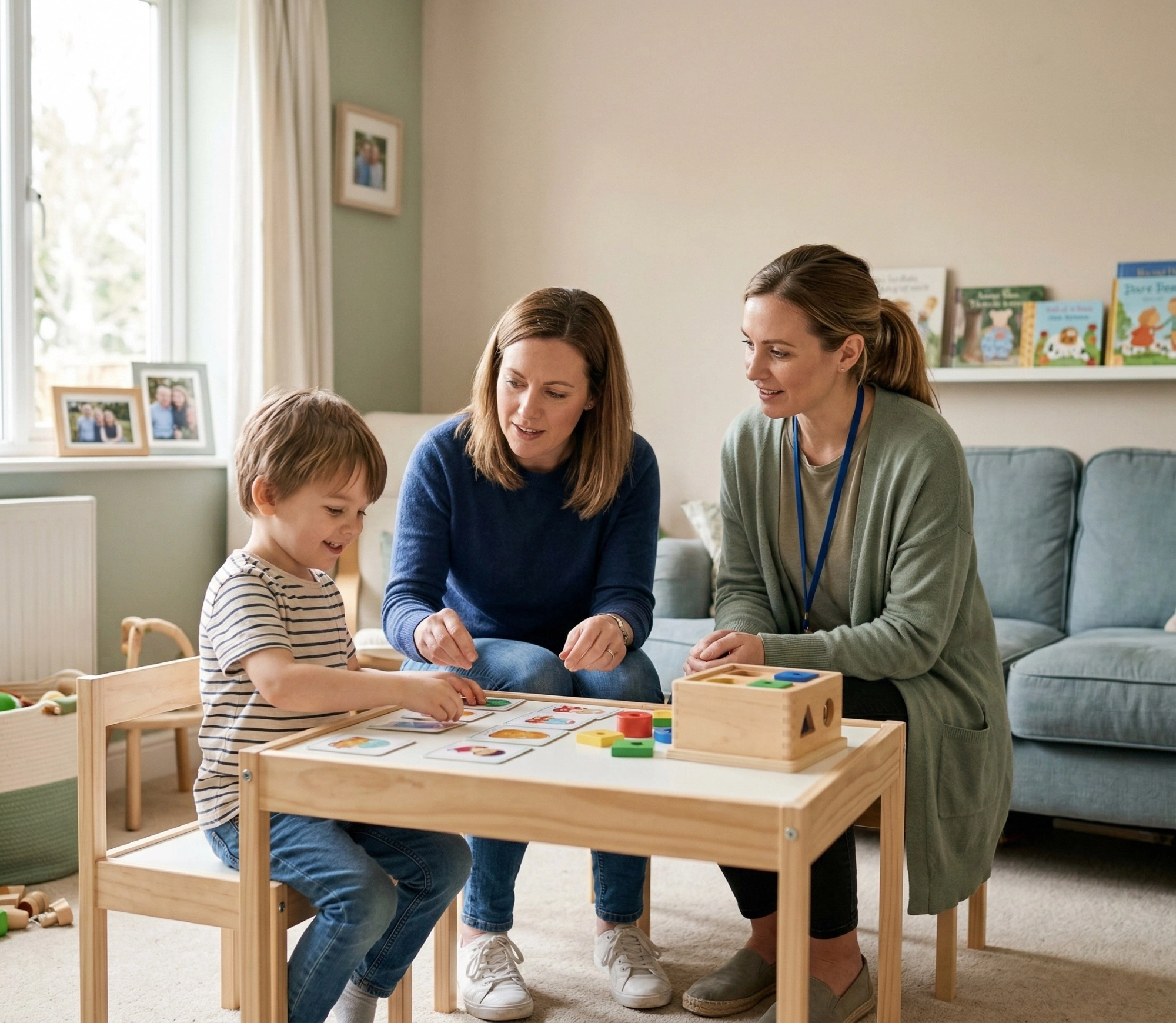
With our in-home ABA therapy model, your BCBA coaches you in the actual spaces where daily life unfolds. There's no "what do I do when I get home?" gap. You're already there.

What parent coaching at Mastermind ABA covers
Structured, hands-on coaching that teaches you to use the same evidence-based strategies your child's therapist uses, right in your daily routines.
ABA basics & the ABCs
Understand Antecedents, Behaviors, and Consequences: the framework for understanding why your child does what they do.
Reinforcement strategies
Learn what motivates your child and how to use it effectively, from specific praise to token systems tailored to them.
Behavior identification
Recognize patterns so you can get ahead of challenges before they build.
Simple data collection
Easy tracking methods so you and your BCBA can see what's working, and adjust when it's not.
Parent training might be right for you if...
- You see breakthroughs in therapy but struggle to replicate them at home
- You're unsure how to respond when behaviors escalate outside of sessions
- You want to be a true partner in your child's progress
- Grandparents, co-parents, or other caregivers need to learn the same strategies
- You feel exhausted from guessing and want to respond with confidence and intention
Essential ABA techniques for parents
Positive reinforcement
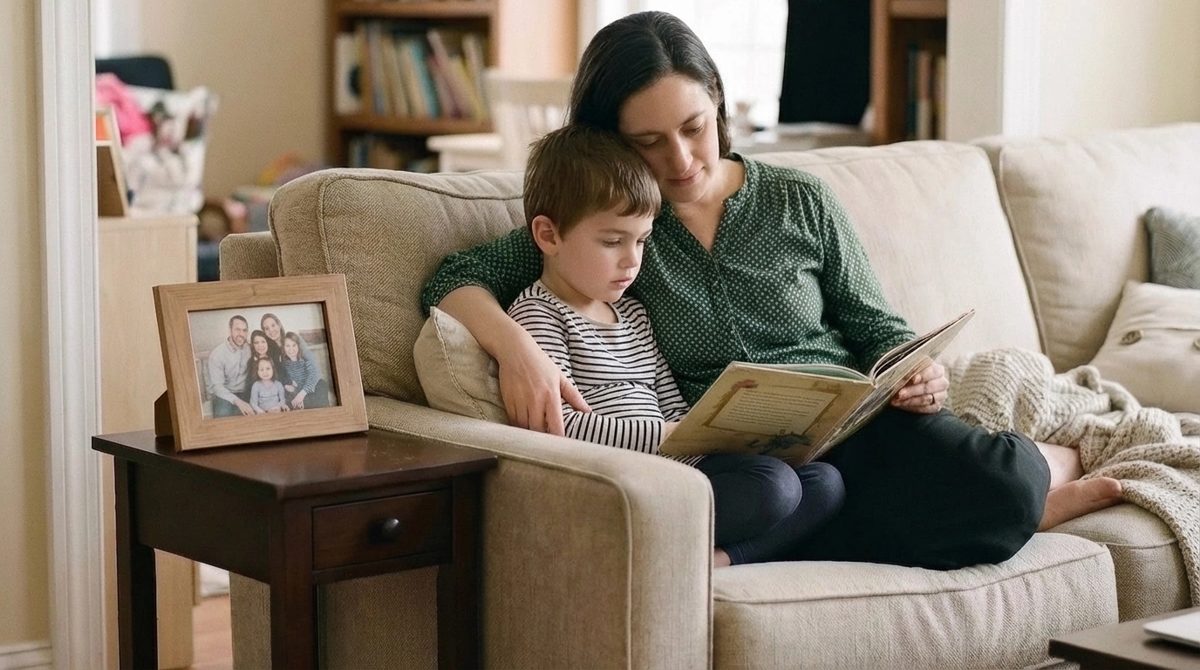
When your child does something you want to see more of, you follow it with something they love. The key is timing and specificity. Instead of a vague "good job," you'd say, "Great job asking for your cup" right in the moment. Your BCBA helps you figure out what motivates your child specifically.

Antecedent strategies & prompting
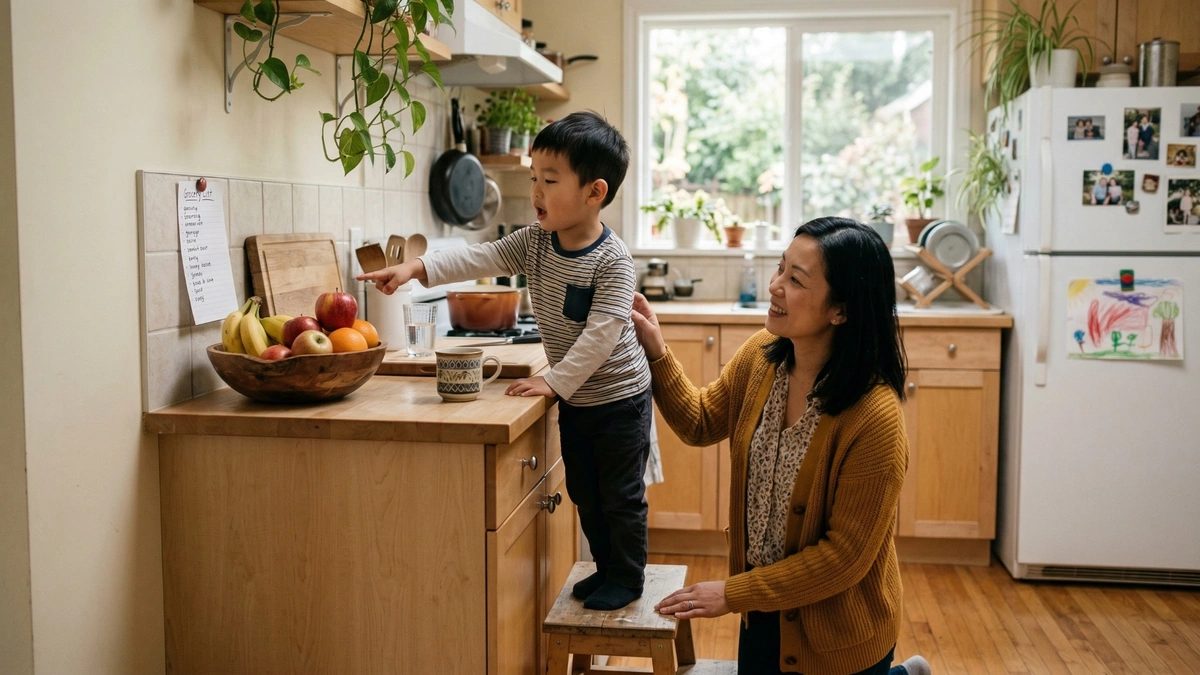
Set your child up for success before things go sideways. Five-minute warnings before transitions, offering choices to reduce power struggles, adjusting the environment. Your BCBA teaches you different prompt levels and how to fade them over time, because the goal is always independence.

Structured routines & visual supports
When your child knows what comes next, anxiety drops and cooperation rises. Picture schedules, first-then boards, or visual timers give your child a concrete roadmap. Your BCBA helps you build a flexible framework that works for your family, with structure where your child needs it most.
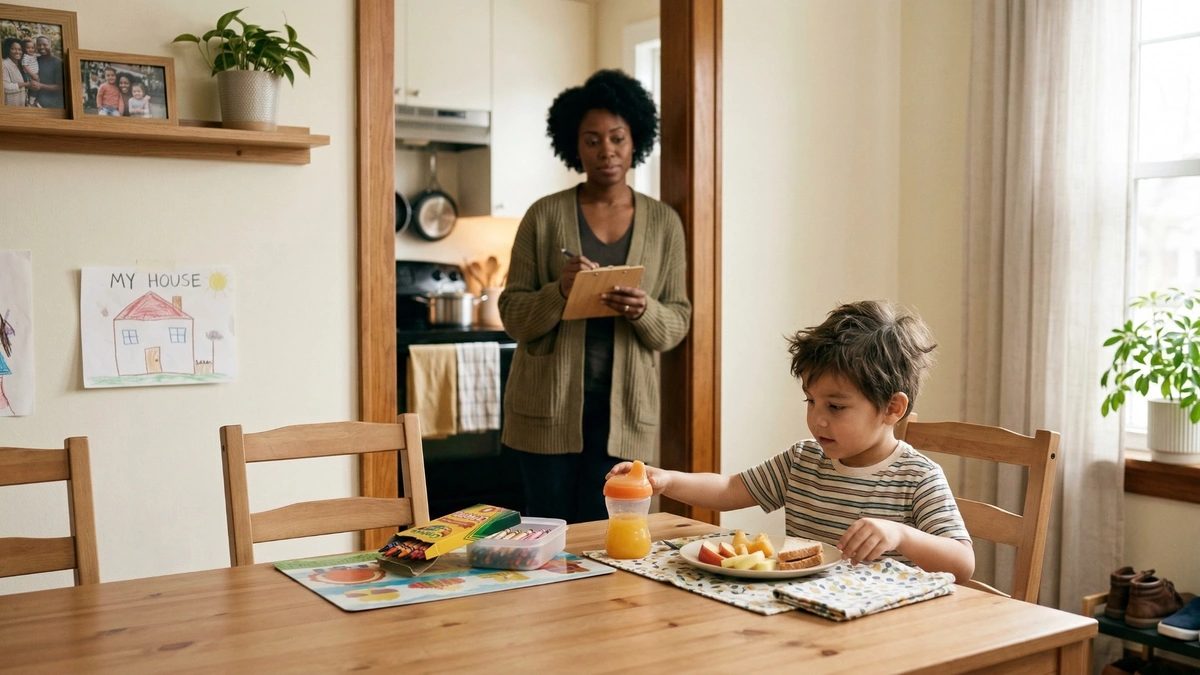
Tracking progress with data
Simple frequency counts, brief notes after a routine, or a quick check on a printed chart: your BCBA finds the method that fits your life. The data is what lets you celebrate wins, adjust strategies, and see the trend line when progress feels slow.
What caregiver training in ABA therapy looks like
This is Behavioral Skills Training (BST), the same research-backed approach used to train therapists, adapted for parents. You're building real confidence, the kind where you know exactly what to do at the grocery store or during a tough bedtime.
Your BCBA explains
A technique is introduced, say, how to prompt your child to request a snack independently. You see the rationale and the steps before you try anything.
They model it
You watch the technique in action with your child. You see exactly what it looks like (the timing, the tone, the reinforcement) before it's your turn.
You practice & get feedback
You try it with your child while your BCBA observes. You get real-time feedback on what went well and what to adjust, right then and there. That's how muscle memory builds.
Real-time coaching, real-life situations
In-home, in the moment
Coaching happens in the actual spaces where daily life unfolds: practicing bedtime routines in the bedroom, mealtime strategies at the kitchen table, morning transitions at the front door.
In-home ABA therapy →The whole team learns
Grandparents, co-parents, older siblings, nannies: anyone who's part of your child's daily world can participate. The more consistent the team, the faster your child progresses.
Training through practice
We focus on active practice: role-playing scenarios, real-time corrective feedback, and hands-on rehearsal. Knowing about ABA and knowing how to do it are two very different things.
Skill development programs →Find your local team
BCBA-led parent coaching for families across New Jersey, Georgia, and North Carolina.
When you grow, your child grows. Let's build your confidence together.
We're in your home, working alongside you, building your skills in real time.