The earlier you start, the stronger the foundation
You're not too late. And the fact that you're already here tells us something important about you — you're the kind of parent who acts. Early intervention gives your child the best possible chance to build communication, connection, and independence during the years when their brain is growing fastest.

We Accept Most Insurances


Why the Early Years Matter Most
Your toddler's brain is forming connections at a staggering rate — faster than it ever will again. When therapy begins during this window, it capitalizes on that openness. Skilled intervention can actually influence how your child's brain develops, strengthening pathways for communication, social engagement, and emotional regulation.
Children who begin early intervention before age five consistently show the greatest gains in communication, social skills, and adaptive behavior. This isn't about pressure or guilt. It's about opportunity. And the opportunity is right now.
Our BCBAs deliver in-home ABA therapy designed specifically for this age range — because toddlers learn best where they feel safest: at home, with you nearby.
What Early Intervention Looks Like at Home
Play-based & natural
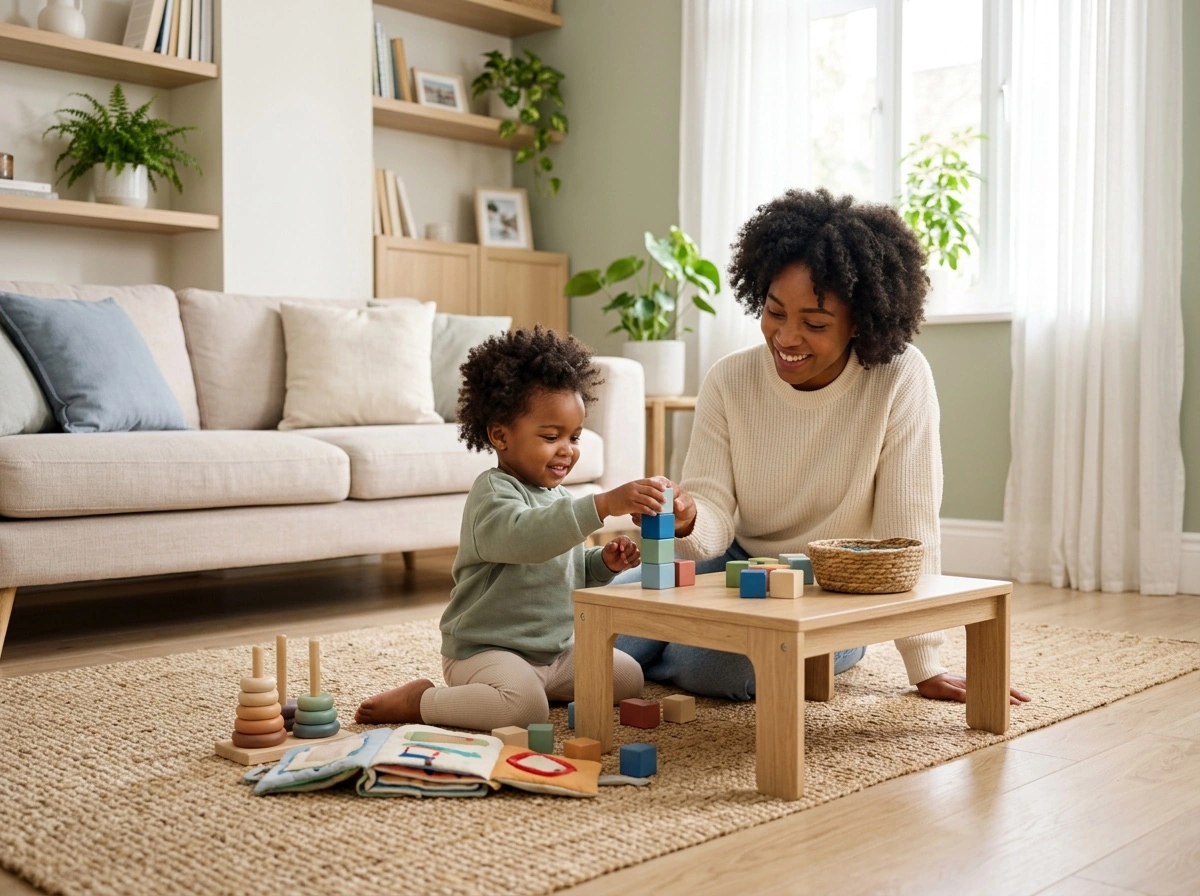
Therapy looks like play, not drills. Your child learns to request a snack while actually wanting one.
In your child's world
Your kitchen, living room, and backyard become the classroom. Skills are built where they'll actually be used.
Shorter, more frequent
Sessions are adapted for toddler attention spans — shorter and more frequent so learning stays engaging.
Parent coaching built in
You learn alongside your child. The strategies shouldn't disappear when the therapist leaves.
This might be right for you if...
- Your child just received a diagnosis and you don't know what comes next
- You've been told to "wait and see" but it doesn't feel right
- Your toddler isn't hitting communication milestones and you want to act now
- You want therapy that fits into your toddler's world, not a clinical one
- You're overwhelmed by information and just need someone to walk you through it

Skills We Build in Early Intervention

Communication
First words. Requesting. Responding to their name. Your child learns to express their wants and needs — and you finally get to hear what they're trying to tell you.

Social connection
Eye contact. Shared attention. Parallel play. The building blocks of friendship and connection start here — in the moments between you and your child.

Daily living
Feeding. Dressing. Toileting readiness. Small steps toward independence that make every day a little easier for everyone.

Behavior & transitions
Reducing tantrums. Building tolerance to changes in routine. We figure out what's driving the behavior and teach your child a better way to get what they need.
Pre-academic foundations
Following simple instructions. Matching. Sorting. The cognitive building blocks that set your child up for what comes next.
What Your First Weeks Look Like
Evidence-Based, Play-Based, Parent-Powered
Natural Environment Teaching
Skills are taught in the moments they naturally occur. Your child learns to request while actually wanting something. Fundamentally different from table-based instruction — and far more effective for toddlers.
In-home ABA therapy →Built around the research
Our programs draw on ABA principles and frameworks like the Early Start Denver Model — relationship-focused, play-based, and backed by peer-reviewed research. Not a one-size-fits-all template.
You're part of it
We train you to capture your child's attention during everyday moments, promote communication, and respond to behaviors with calm confidence. You become part of the intervention. That's by design.
Parent coaching →Find Your Local Team
We specialize in early intervention for families across New Jersey, Georgia, and North Carolina.
Your child's potential is enormous. Let's build that foundation together.
We walk alongside families through this journey. Not above you. Not ahead of you. Right beside you.