Georgia gives a teenager with autism less time than most states. The IEP does not have to address transition until 16, and Ava's Law stops requiring ABA coverage at the end of age 20. Four years, on paper, to teach the skills that adult life will ask for every day after that. Families who treat those four years as the whole job, rather than the last chapter, are the ones who arrive at 21 with a plan instead of a waiting list.
Mastermind Behavior provides in-home ABA therapy for children and young people with autism through age 21, from our Middle Georgia offices out to communities across the state.
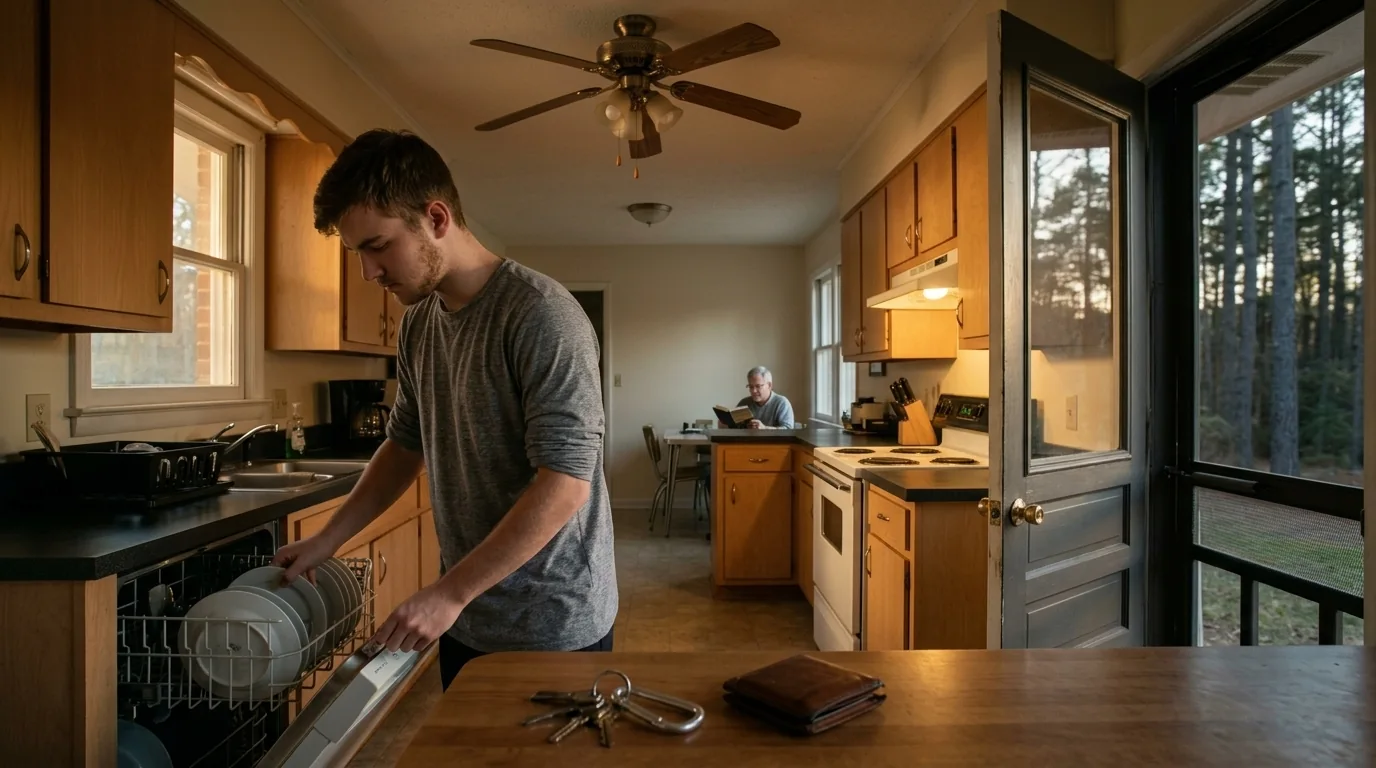
Transition planning in ABA is not a meeting. It is a set of skills, taught in the places they will be used: managing money at the actual store, following a bus schedule on the actual route, filling in the actual job application, asking for help from someone who does not already know how your child communicates. We teach them at home and in your community, and we teach them early enough that there is time to practice.
On the school side, Georgia follows the federal clock. The IEP in effect when your child turns 16 must include measurable postsecondary goals and the transition services to reach them, and your child must be invited to any IEP meeting where transition is discussed. Teams can start earlier, and asking for that is reasonable. Your BCBA can contribute to that IEP with the data we collect at home, which is often the most current picture anyone has of what your child can do independently.
On the funding side, three clocks run at once: Ava's Law coverage through age 20, Georgia Medicaid to 21, and special education until graduation or aging out. They all end within a short span. That is why the skills work belongs in the years before the deadline. The adult system that follows, and when to apply for it, is covered in the timeline below.
Coverage in the transition years is a countdown, and the rows below are the clocks that matter most. The full Georgia picture lives on our Georgia ABA therapy page.
| Coverage element | Georgia detail |
| State mandate | Ava's Law (HB 429, effective July 1, 2015), amended by SB 118 (signed 2018, effective January 1, 2019), codified at O.C.G.A. § 33-24-59.10 |
| Age limit | Coverage mandated through age 20 (i.e., individuals 20 and under) |
| Medicaid | GA Medicaid (DCH) covers ABA for individuals under 21 since January 1, 2018, via EPSDT. The manual describes therapy ranging from 10 to 30 hours a week, or more if medically necessary. Requires DSM-5 ASD diagnosis from a licensed professional and prior authorization through the assigned Care Management Organization. |
| Other programs | Katie Beckett Medicaid Waiver, Family Support Services, Georgia TEFRA, alternative pathways for children with disabilities whose family income exceeds standard Medicaid limits |
A sixteen-year-old does not learn independence at a table. So the sessions move: to the kitchen for meals that your child makes rather than watches, to the store with a list and a budget, to the pharmacy counter, to whatever the next unstructured Saturday afternoon looks like. The BCBA designs the program around the specific places your child's adult life will happen, and the Behavior Technician who runs it stays the same from week to week, because a teenager learns best from someone they know and trust.
Because Georgia's insurer redetermines medical necessity each year and Medicaid reauthorizes every six months, the plan is written with measurable independence goals rather than only behavior targets. That keeps the renewals defensible in the late teens, when payers start asking what the therapy is still for. The answer is in the data: fewer prompts, more tasks done alone, more places your child can go without an adult.
Assessment takes about four weeks and there is no onboarding waitlist, which matters most in the years when time is the scarcest resource. Transition planning connects to our other Georgia services: behavior support when specific behaviors stand in the way, and parent training so the skills hold at home. Our Georgia team works from the Macon office at 4658 Presidential Pkwy, serving families across the state.