What Is Choice Theory?
Explore the essence of Choice Theory - uncovering core concepts, practical applications, & its empowering impact.


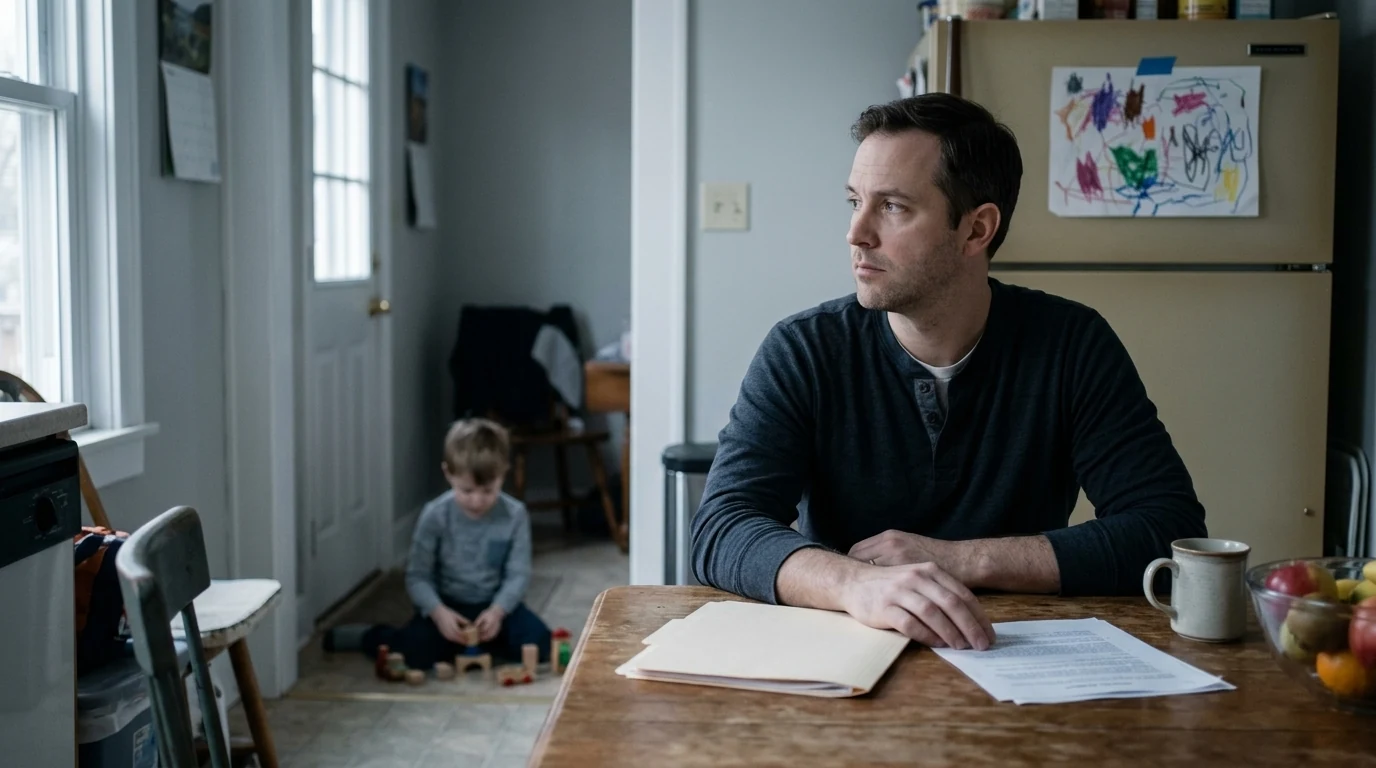
Many parents hear that giving children choices reduces power struggles. Then they try it. Do you want broccoli or carrots? Do you want to sit here or there? Do you want to start homework now or in five minutes?
Sometimes it works. Other times, the child rejects every option, demands something completely different, or turns a simple decision into a twenty-minute negotiation. The problem is usually not that the child was given a choice. It is that the wrong type of choice was offered at the wrong time.
That distinction sits at the center of how many BCBAs apply choice theory in practice.
Choice theory is a psychological framework developed by William Glasser, who argued that nearly all behavior is internally motivated and chosen, even when it does not look that way from the outside.1 In Glasser's model, people are driven by five basic needs (survival, love and belonging, power, freedom, and fun), and most of what looks like "misbehavior" is actually a clumsy attempt to meet one of those needs.
That is a fine framework for adult counseling. It is too abstract, on its own, to run a treatment program for a six-year-old with autism on the dining room floor. The original article on this site treated choice theory mostly as a theoretical concept. In practice, our BCBAs use a stripped-down, clinical version of it that answers exactly two questions: when does a child get a choice, and what kind of choice is it?
The reframe is simple, and it is what makes choice work in autism programming instead of unraveling every routine.
Rule one: no choice on medical or safety. This is non-negotiable. Holding hands in the parking lot, sitting in a car seat, taking prescribed medication, getting bloodwork done, staying in line of sight at the grocery store, wearing a seatbelt. None of these are up for debate. The child does not get to choose, and the adult does not pretend they might.
The reason this rule matters is precisely because it is hard to keep. Parents who have negotiated everything else all day, the snack, the show, the shoes, are exhausted by 4 p.m., and when their child resists getting in the car seat, they may be tempted to let the negotiation drift into the car too. They cannot. The minute hand-holding becomes "if you want," the child has learned that hand-holding is sometimes optional, and the next parking lot is more dangerous than the last one.
Rule two: choice within the adult's controlled options, everywhere else. This is where real autonomy gets built, and it is the thing parents most often get wrong.
The wrong question is "what do you want for snack?" That is an open-ended invitation that produces three predictable outcomes: the child names something not in the house, the child names something they are not allowed to have, or the child cannot choose and freezes. Any of those leads to conflict.
The right question is "apple slices or grapes?" Both options are in the house. Both options are acceptable to the parent. The child gets a real choice, with real preference and real ownership of the outcome. The adult is still in control of the menu, but the child still gets to be a person making a decision.
This is a structural way to give children with autism the practice with autonomy that all kids need, without setting them up to negotiate with limits that should not be negotiable.
Research on autism and self-determination shows that interventions designed to support real choice-making tend to work better when they happen in real-world settings, with adults who are prepared to honor the choices the child actually makes.2 In other words: the structure of the choice matters, but so does the follow-through. If a parent offers "apple or grapes" and then steers the child toward grapes when they pick apple, the choice was theater, and the child knows it.
There is also a body of work on shared decision-making in autism care that points the same direction. Honoring autistic clients' autonomy is an ethical principle as much as a clinical one, and the practical version of that principle is the structure described here: real choices, on things that are actually choosable, with adult follow-through on whatever the child picks.3
In our practice, this structure works because it does two things at once. It builds the child's capacity to tolerate limits (because the limits are clear and consistent) and it builds the child's experience of agency (because every day includes dozens of moments where their preference actually matters). Without both, you get either a tyrant or a child who has learned helplessness. With both, you get a kid who can lose a negotiation, accept it, and move on, because they have won enough other negotiations to trust that the system is fair.
Take the same family, three weeks into a skill development program with our team, with the controlled-options structure built into the BCBA's recommendations.
Morning. Breakfast on the table is oatmeal or yogurt. The child gets to pick. They pick yogurt. They eat the yogurt.
Getting dressed. Two outfits laid out the night before, both weather-appropriate, both clean. The child picks the green shirt. They wear the green shirt.
Car seat. No choice. The child gets buckled in. There is no discussion about it.
Therapy session arrives. The BT offers the child a choice between two reinforcers (a song or a drawing app) earned after the first set of trials. Child picks the song. The session runs.
Snack. Apple slices or grapes. Child picks grapes. Eats grapes.
Dinner. Tonight there is broccoli, and broccoli is on the menu. There is no chicken-nugget alternative because chicken nuggets are not part of tonight's plan. But there is a side of rice, and there is a choice about how the broccoli is prepared (with cheese sauce or with a small amount of soy sauce), and the child picks the cheese.
Bath time. No choice about whether bath happens. There is a choice about which two bath toys come in.
Bedtime. No choice about bedtime. There is a choice about which book is read first.
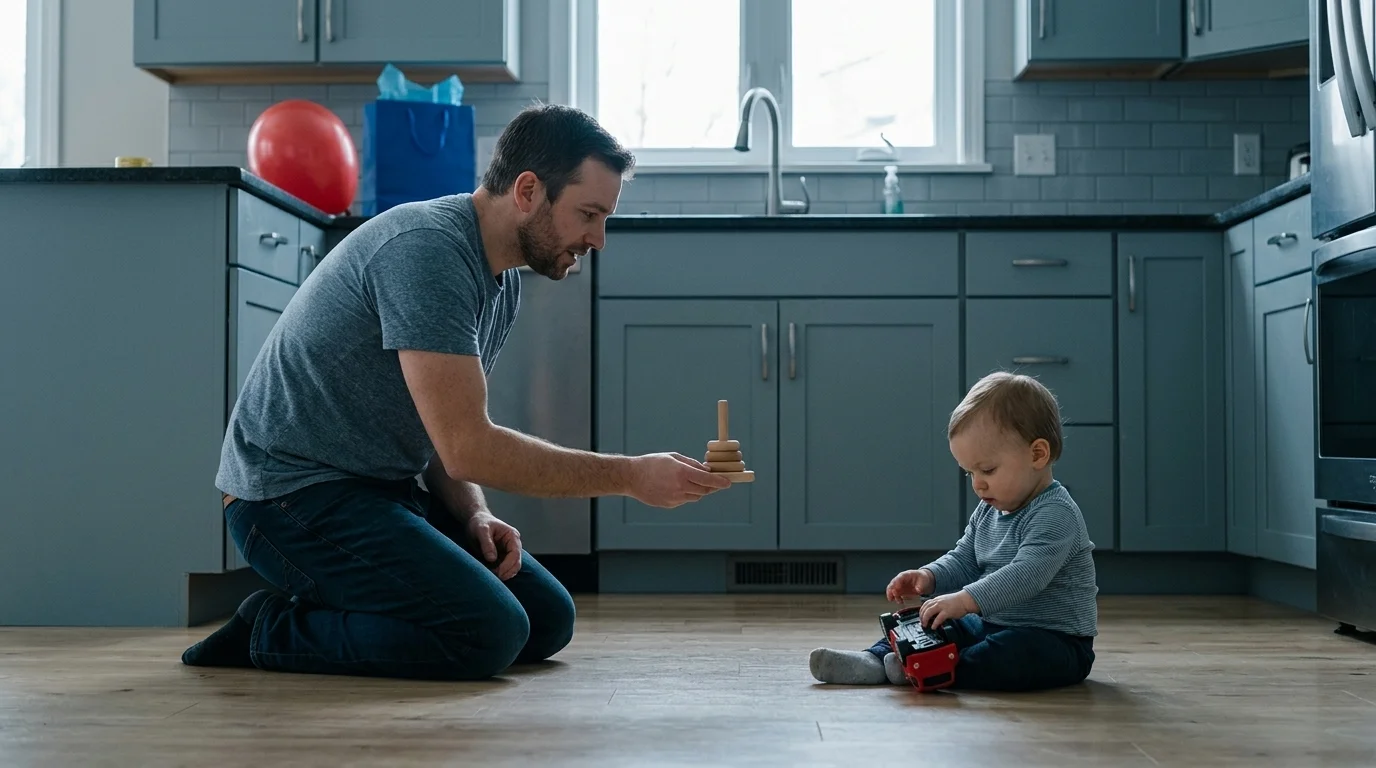
The child has had roughly fifteen real choices by the end of the day. None of them were on safety. None of them were on whether the routine happens. All of them were on details the parent had already decided were acceptable. The 5:47 dining-floor scene does not happen, because the broccoli moment is bounded by a choice the child can take ownership of.
The most common version of choice that parents try first, and the one that almost always backfires, is the false choice. "Do you want to brush your teeth?" is a false choice if the answer "no" is not actually allowed. The child says no, the parent insists, and the child has just learned that questions are commands and their answers do not matter.
Our BCBAs typically replace these in the first parent training session. "Do you want to brush your teeth?" becomes "It is time to brush your teeth. Do you want the blue toothbrush or the green one?" The first part is a statement of what is happening. The second part is the choice. The child gets agency on the part that is actually choosable, and there is no false invitation to negotiate the part that is not.
A pattern we see often: parents say they have already tried "giving choices" and it did not work. When we look at what they tried, almost always it was open-ended (what do you want, where do you want to sit, when do you want to go) instead of closed (this or that). Open-ended choice with a child who has trouble with executive functioning floods them with options and ends in shutdown or escalation. Closed choice with two pre-vetted options is the version that works.
Choice structure also matters in behavior support work, especially when a Functional Behavior Assessment, or FBA (a clinical assessment that looks at what purpose a behavior is serving for your child), identifies escape or access as the function. If a child is hitting to escape a non-preferred task, the long-term plan is rarely "remove the task." It is "teach the child a better way to ask for a break, give them real breaks at predictable times, and give them choice over how the task is structured."
Real choice over structure might look like this. The task is matching ten pairs of socks. The child gets to pick whether to do it on the floor or on the table, whether to use the timer or do it untimed, whether to do it with music or without, whether to start with the white socks or the colored socks. The task is the same. The amount of agency the child has over the task is much higher. Most kids will tolerate a great deal more demand if the demand is wrapped in genuine choice.
What this is not: it is not letting the child opt out of the task because they prefer not to do it. That collapses the program. The work is to make the task tolerable through structure, not to make it optional through erosion.
There are also clinical moments when our BCBAs deliberately reduce the amount of choice in a child's day, usually for a few weeks at a time, to stabilize a routine that has fallen apart. This sounds counterintuitive after everything above, but it is consistent.
A child who has been negotiating bedtime for an hour every night does not need more choice at bedtime. They need a bedtime that runs without any choice points except the ones that are pre-decided and minor (which book, which pajamas). Once the routine is stable for a couple of weeks, the BCBA may reintroduce choice points as part of the fade plan. But the goal is the routine. The choice is in service of the routine, not in competition with it.
Most parents find this counterintuitive at first because the cultural message is that more choice is better. In autism programming, more choice is sometimes the problem. The right amount of choice is the amount that the child can metabolize without the routine collapsing.
There is a lot of general parenting advice about giving children choices. Most of it is helpful in broad strokes and unhelpful in the specifics, because it does not account for executive functioning, sensory regulation, language processing, or the specific way autism interacts with decision-making.
The ABA difference is that the choice structure is built into a treatment plan with measurable goals and data. The BCBA is tracking which choices the child can handle, which ones lead to escalation, which contexts require the choice load to be reduced, and which ones can take more. Parent training translates the structure to home, and the BTs running sessions in your home use the same structure during therapy so the child sees a consistent system across the day.
Inside an ABA session, that structure looks more specific than most parents realize. Our BTs will often let a child pick which target or activity to work on next, from a short list the BCBA has already approved. The child may also get to choose where session happens, sitting at the dining table, on the living room floor, in the backyard, or out in the community at a familiar park. And when a token board is part of the program, the reinforcer the child is working toward on that board is something the child has picked themselves from a menu, not something the BT has decided on their behalf. The order is flexible, the location is flexible, the payoff is the child's call. The clinical content is not.
We had a client recently whose program leaned hard into this structure. Tantrums during session dropped. Task refusals dropped. Elopement, leaving the work area mid-session, dropped. None of those were the target behaviors written into the plan; they came down because the child was a real participant in the session instead of a recipient of it. The parents started noticing it too, not just during therapy hours, and brought it up at the next parent meeting. That kind of feedback is the practical answer to "why does giving the child more say make the program work better." It does not soften the program. It makes the program something the child shows up for.
This is also where in-home delivery does its quietest work. The choices that matter most, breakfast, dressing, snack, dinner, bath, bedtime, are happening in your house, not at a clinic. The treatment plan needs to know which two cereals are usually in the pantry, which utensils your child has accepted in the past, and which corners of which rooms have historically gone wrong. Programs designed in the clinic rarely have that texture. Programs designed at your kitchen table do.
Most parents come into our intake worried that they are either too strict or too permissive. The two clinical rules in this article address a different question: are the choices your child is making real?
A real choice is on a thing that is actually choosable, between options the adult has already decided are okay, with adult follow-through on whatever the child picks. A real choice does not get reversed when it is inconvenient. A real choice does not appear on safety. And a real choice does not happen forty times a day, because no child can hold up under that load.
Two or three good choices per major routine, every day, with no choice on medical or safety, is a structure that holds up across years. The Wednesday dining-floor moment is rare. The relationship between you and your child is calmer because the limits are clear and the agency is real.
Mastermind Behavior is a BCBA-owned and operated in-home ABA therapy provider serving families across New Jersey, Georgia, and North Carolina. Choice structure is hardest to teach in the rooms where it matters most (your kitchen, your dining table, the car seat), so our BCBAs design the choice points into your actual daily routines and our BTs practice them with your child in the moments those routines actually happen. With a 90%+ staff retention rate and no onboarding waitlist, most families begin direct services within six weeks of their initial assessment.
If you are exploring ABA therapy for your child, schedule a free consultation or call us at 732.813.7333. We will talk through the specific moments where choice is breaking down (the meals, the transitions, the bedtime negotiation that has gone on too long), walk you through what a program would look like for your child, and help you figure out the right next step. No pressure, no commitment.
References
- Glasser W. What is Choice Theory? The William Glasser Institute. 2024.
- Sutherland M, Pellicano E. A Systematic Review of Interventions on Self-Determination for Autistic Individuals. Review Journal of Autism and Developmental Disorders. 2025.
- Cage E, Troxell-Whitman Z. The Ethical Imperative to Honor Autistic Clients' Autonomy in Mental Health Treatment. Frontiers in Psychiatry. 2023.
- Eckes T, Buhlmann U, Holling HD, Möllmann A. A Meta-Analysis of Applied Behavior Analysis-Based Interventions to Improve Communication, Adaptive, and Cognitive Skills in Children on the Autism Spectrum. Review Journal of Autism and Developmental Disorders. 2025.
- Hyman SL, Levy SE, Myers SM. Identification, Evaluation, and Management of Children with Autism Spectrum Disorder. Pediatrics, American Academy of Pediatrics. 2020.