How Much Are Autism Benefits? SSI, SSDI and Medicaid
SSI pays up to $994 a month in 2026. What autism benefits actually pay, who qualifies, and why most families receive less than the federal maximum.


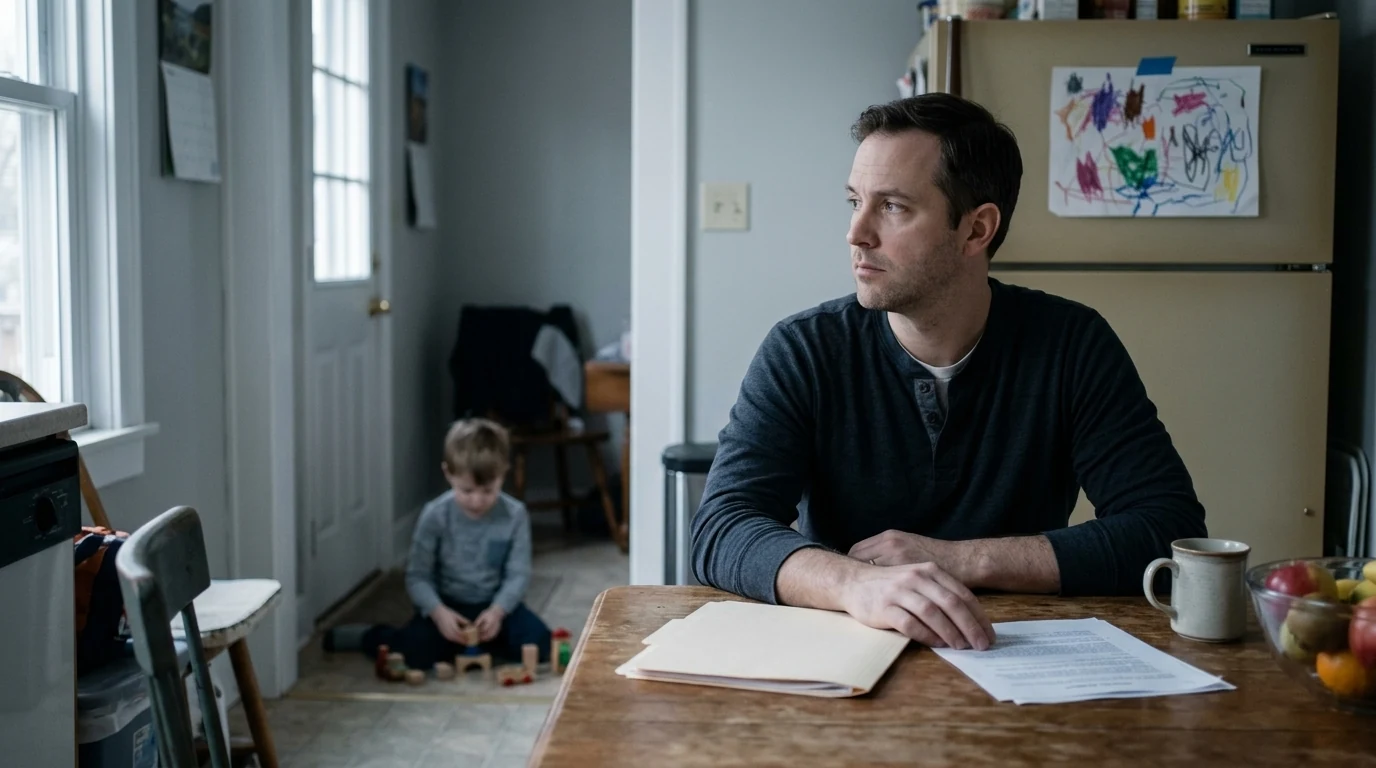
There is a manila folder on the kitchen counter that has been there for three weeks. The diagnostic report. Two pediatrician letters. A printout of every benefit a parent has been able to find online. SSA forms half filled out. You keep meaning to finish them. You keep not knowing whether your family even qualifies, whether the income limits will rule you out, whether the wait is six weeks or six months, whether the monthly check will be $200 or $900.
The honest answer is that "how much is autism benefits" does not have one number. It has four or five overlapping programs, and what your family gets depends on which combination applies to your situation. This guide walks through SSI, SSDI, Medicaid, state insurance mandates, and the other support layers most families do not realize are available. By the end, you should know which programs are worth applying for first.
Understanding Autism Benefits
Most families end up with benefits from two directions: direct cash assistance (SSI and sometimes SSDI), and service-based coverage (Medicaid, state insurance mandates, and waiver programs). The cash side is what people usually mean when they search "autism benefits," but the service side often delivers more total value to a family with a child on the spectrum.
Disability Check Amounts
For families asking "how much is autism benefits," the cash benefit is usually Supplemental Security Income (SSI). For most children under 18, SSI is the only Social Security cash benefit they qualify for, because SSDI requires either a work history or a parent who is deceased, retired, or receiving disability benefits.
For 2026 the Social Security Administration puts the federal maximum SSI benefit at $994 a month for an eligible individual, and $1,491 for an eligible individual with an eligible spouse. SSDI is a separate program whose maximum depends on the parent's earnings record rather than a single published ceiling, so there is no one figure to quote. Both are adjusted every year through the Cost of Living Adjustment, so check the current number on ssa.gov before planning around it.
| Benefit Type | 2026 Federal Maximum | Typical Range Families Receive |
| SSI (child) | $994 / month | Often reduced based on parent income, household resources |
| SSDI | Set by the parent's earnings record | Varies with that record. The SSA can give you an estimate |
The SSI federal maximum is rarely what a family actually receives. SSI is a needs-based program, which means the SSA counts most of your household income and resources against the benefit. A two-parent household with a moderate income may receive a much smaller monthly check, or nothing at all. Once your child turns 18, the calculation changes (their parents' income stops counting), and many families who did not qualify before suddenly do. This is the single most common pattern we see: families assume their teenager will never qualify, miss the redetermination window at 18, and lose two years of benefits.
For a deeper walk-through specific to childhood eligibility, see our companion article on SSI benefits for an autistic child.
Health Insurance Coverage
Health insurance plays a major role in managing the cost of autism care, and federal and state laws have expanded coverage substantially over the past decade. Autism Speaks reports that more than 200 million people in the United States now have insurance coverage for Applied Behavior Analysis (ABA) therapy under one mandate or another. In practice, most comprehensive health insurance plans cover:
- Diagnostic evaluations (developmental, psychological, or psychiatric)
- ABA therapy
- Speech therapy
- Occupational therapy
- Mental health services for co-occurring conditions
Coverage scope still varies by state and by plan type. Marketplace plans sold through the Affordable Care Act must cover Essential Health Benefits, which include behavioral health, but the specific extent of ABA coverage depends on the state's benchmark plan. Self-funded employer plans (governed by ERISA) are not required to follow state autism insurance mandates, though many do as a matter of policy. The most reliable next step is to call the member services number on the back of your insurance card and ask three things: "Is this a fully insured plan or self-funded? Is ABA therapy covered? What is my annual benefit limit and prior authorization process?"
For families also working out the financial side, our overview of the average cost of autism treatment maps out what families typically pay for ABA, speech, OT, and combined therapies.
Social Security Benefits
Navigating Social Security benefits for a child or adult with autism takes some patience, but the rules are clearer than the SSA's website makes them look. The key distinction is which program your family member qualifies for and which one will pay more in your specific situation.
SSDI vs. SSI
The Social Security Administration runs two main programs for individuals with disabilities. The right one for you depends primarily on age and work history.
| Benefit Type | Eligibility | Key Points |
| SSDI | Adults with a work history, or as an adult disabled child | Based on work credits and earnings. Adults with autism may qualify if a parent is deceased, retired, or receiving disability benefits. |
| SSI | Adults and children with disabilities | Needs-based program. Children with autism primarily qualify through SSI. Eligibility resets at age 18. |
Most adults with autism do not have enough Social Security work credits to qualify for SSDI on their own, since significant employment history is required. There is, however, an important pathway called "Disabled Adult Child" benefits. An adult whose disability began before age 22 can collect SSDI under a parent's earnings record once that parent retires, becomes disabled, or passes away. Families with a teenager approaching 18 should mark this on the calendar.
Children with disabilities, including autism, are typically eligible for SSI only, unless a parent's situation triggers Disabled Adult Child eligibility later.
Qualifying for Benefits
To qualify for either program, your child or family member must meet two layers of requirements: medical and financial.
- SSDI requires either a sufficient work history or qualifying as an adult disabled child. The benefit amount is calculated from earnings history, not need.
- SSI is needs-based. Financial resources and income are counted, and for a child, parent income counts until age 18. The autism diagnosis on its own is not enough; the child must demonstrate significant functional limitations.
The medical side of the application rests on documentation. The more complete your records (diagnostic reports from a licensed psychologist, developmental pediatrician, or psychiatrist; therapy progress notes; school assessments; statements from teachers and providers), the smoother the review. Most initial SSI applications are denied; most denials are reversed on appeal when stronger documentation is submitted. Plan for this as part of the process rather than a setback.
Applying for SSI
The SSI application is doable on your own, but most families benefit from having someone walk them through it. Here is the basic flow:
- Collect medical records. Diagnostic report, treatment notes, IEP or 504 plan, recent evaluations.
- Complete the application. SSI applications can be started online or by phone with the SSA, and there is a separate Child Disability Report for children.
- Submit supporting documents. Send the medical records, school records, and any provider letters.
- Attend the interview. SSA may request an interview to verify household financial information.
- Wait, and prepare for the possibility of denial. Average decision time is 3 to 6 months. If denied, you have 60 days to file an appeal.
For families starting from the medical-evidence side, check your insurance coverage for in-home ABA early. Insurance-funded ABA generates ongoing clinical documentation (treatment plans, progress reports, BCBA assessments) that strengthens an SSI application substantially.
State-Mandated Autism Benefits
Most states now require some form of autism coverage on fully insured commercial plans, but the age caps, dollar limits and provider rules differ enough that a general statement about state mandates is not much use to any one family. What follows is what the law actually says in the three states our practice serves. Every figure below comes from the statute itself or from the state insurance regulator, and each state links to a fuller guide that names the source.
New Jersey Coverage
New Jersey's mandate is P.L. 2009, c. 115, which the Department of Banking and Insurance refers to as Chapter 115. It reaches hospital, medical and health service corporation contracts, insurance company policies and HMO coverage issued or renewed in New Jersey on or after February 9, 2010.
| The law | P.L. 2009, c. 115, at N.J.S.A. 17:48-6ii and parallel sections |
| Ages covered for ABA | Under 21 |
| Annual dollar cap | $36,000 is the figure usually quoted, but the insurance regulator has said it often cannot lawfully be applied. Ask your plan to confirm in writing whether it is applying a dollar maximum to ABA, and on what basis |
| Visit or hour limits | None set by the statute, and a carrier may not cut your other therapy benefits because they were used to treat autism |
Read the full New Jersey funding guide, which covers Medicaid, the appeal deadlines and what to do when a plan says no.
Georgia Coverage
Georgia's mandate is Ava's Law, at O.C.G.A. 33-24-59.10, as expanded by SB 118 in 2018. The original requirement reaches plans issued or renewed in Georgia on or after July 1, 2015.
| The law | Ava's Law, O.C.G.A. 33-24-59.10, as expanded by SB 118 |
| Ages covered | 20 years of age or under. SB 118 struck the word six and inserted 20 |
| Annual dollar cap | $35,000 a year for applied behavior analysis specifically. It is a ceiling a plan may choose to apply, not a budget you are handed |
| Visit or hour limits | None permitted. The statute says a policy "shall not include any limits on the number of visits" |
Read the full Georgia funding guide, which covers Medicaid, the appeal deadlines and what to do when a plan says no.
North Carolina Coverage
North Carolina's mandate came in through Session Law 2015-271 and is codified at N.C.G.S. 58-3-192. It applies to contracts issued, renewed or amended on or after July 1, 2016.
| The law | Session Law 2015-271, codified at N.C.G.S. 58-3-192 |
| Ages covered | The statute says adaptive behavior treatment "may be limited to individuals 18 years of age or younger". Read the shape of that sentence: it is something a plan is permitted to do, not a statement that older children are excluded |
| Annual dollar cap | $40,000 a year, with a catch. That is a 2015 base which the statute then indexes, so the live ceiling is higher and we could not find the current amount published anywhere citable. Ask your insurer for it in writing |
| Visit or hour limits | None set. The only limit the statute names is the annual dollar maximum |
Read the full North Carolina funding guide, which covers Medicaid, the appeal deadlines and what to do when a plan says no.
Two things decide whether any of this reaches your family. The first is whether your employer buys coverage from an insurer or self-funds it, because a self-funded plan sits outside state insurance law and the state cap, the state deadline and the state regulator are not levers you hold. The second is your state Medicaid position, which is separate from the commercial mandate and is often more generous on age. Both are covered in the state guides above, and the terms themselves are explained on our insurance terminology page.
Medicaid Spending for Autism
Medicaid spending per capita for children with autism spectrum disorder varies significantly across states, driven by differences in benefit packages, provider availability, and waiver programs. In 2019, the median per capita Medicaid spending for children with ASD was about $7,641, but the range was striking: roughly $3,416 in Tennessee to $42,897 in Alaska.
States with higher per capita spending typically have more robust waiver programs (like North Carolina's Innovations Waiver), broader Medicaid coverage of intensive behavioral interventions, and stronger provider networks. The takeaway for families is practical: ask your state Medicaid office whether your child qualifies for a developmental disability or autism-specific waiver. A waiver can dramatically expand what services Medicaid covers, sometimes adding $30,000 to $50,000 in annual care your private insurance would not otherwise pay for.
| State | Per Capita Spending (2019) |
| Tennessee | $3,416 |
| Alaska | $42,897 |
| Median | $7,641 |
For families in our service area, Medicaid and ABA coverage in NJ covers the New Jersey-specific application steps and how Medicaid stacks with private insurance.
Disparities in Access
Access to autism resources is not uniform across racial, ethnic, or socioeconomic groups in the United States. Autistic children from minoritized racial and ethnic groups have historically received fewer resources, later diagnoses, and less consistent service access than their White counterparts. The pattern shows up in age at diagnosis, in service hours authorized, in waiver enrollment, and in distance to the nearest qualified provider. Closing this gap is partly a policy question and partly a practical one for families: knowing your child's rights, asking direct questions, and pushing back on insurance denials are all part of the work that should not have to fall on parents in the first place.
Qualifying for Disability Benefits
The Social Security Administration uses a reference document called the Blue Book to determine which conditions qualify for disability benefits. Autism is listed as a qualifying condition under Section 112.10 for children and Section 12.10 for adults. The criteria focus on the severity of the condition and how much it affects daily functioning, not on the diagnosis itself.
For children, the Blue Book requires documented deficits in:
- Social interaction
- Verbal and nonverbal communication
- Restricted or repetitive interests, activities, or behaviors
For adults, the criteria are similar, with additional consideration of the individual's ability to manage daily activities, sustain concentration, adapt to change, and (when applicable) maintain employment.
Collecting Medical Evidence
Strong medical evidence is the single biggest factor in whether an application is approved on the first review. The documentation should show how autism specifically affects your child's ability to function across settings, not just that the diagnosis exists. Useful evidence includes:
- Initial diagnostic report (developmental pediatrician, psychologist, or psychiatrist)
- Treatment records from ABA, speech, and occupational therapy
- Developmental assessments and progress reports
- School records (IEP, 504 plan, teacher reports, behavioral incident logs)
- Statements from family, teachers, BCBAs, and other providers
The pattern we see in our practice is that families with active in-home ABA programs have substantially better SSI documentation packages, because BCBA progress reports speak directly to the functional limitations SSA wants to see. The reports were generated for clinical purposes, not the application, which makes them particularly credible.
Testimonials and Statements
Personal statements from people who know your child can carry real weight in an SSI application, especially when the medical record is thin or your child has had limited access to services. Useful testimonial statements typically address:
- Social interactions and how they differ from same-age peers
- Communication challenges in specific contexts (school, home, community)
- Behavioral patterns and what triggers them
- Daily living skills and the level of support required
Ask teachers, BCBAs, BTs, OTs, SLPs, family members, and trusted adults who interact with your child regularly. A specific paragraph from someone who sees your child daily is more useful than a generic letter from a specialist who has met them twice.
Financial Considerations
Caring for a child with autism involves substantial extra expense relative to a neurotypical child. On average, medical expenditures for a child with ASD exceed those of a child without ASD by roughly $4,110 to $6,200 per year. The total cost across health care, education, ASD-related therapy, family-coordinated services, and caregiver time can be considerably higher when summed across a year.
| Expense Category | Annual Cost (USD) |
| Excess Medical Expenditures | $4,110 - $6,200 |
| Health Care | Variable |
| Education | Variable |
| ASD-Related Therapy | Variable |
| Family-Coordinated Services | Variable |
| Caregiver Time | Variable |
The figure that surprises families most is caregiver time. Parents of a child with autism spend, on average, several more hours per week on coordination, therapy attendance, paperwork, and IEP-related work than parents of a neurotypical child. This is not a cost that shows up on any bill, but it is real, and it affects household income through reduced hours, missed promotions, and the occasional career pause.
Behavioral Interventions Cost
Intensive behavioral interventions, particularly Applied Behavior Analysis, drive much of the autism-specific cost. Full-time, in-home ABA at the published rate can run between $40,000 and $60,000 per year per child, though this is the gross figure before insurance is applied. With insurance covering most of the bill, what families actually pay is typically a fraction of this, capped at the plan's annual out-of-pocket maximum.
| Intervention Type | Annual Gross Cost (USD) |
| Applied Behavior Analysis (ABA) | $40,000 - $60,000 |
Why Mastermind Behavior
Mastermind Behavior is a BCBA-owned and operated in-home ABA therapy provider serving families across New Jersey, Georgia, and North Carolina. Our BCBAs design every treatment plan and supervise the program directly. Our Behavior Technicians (BTs) run the day-to-day sessions in your home, where your child actually uses the skills we are teaching. Our parent training coaches sit with you on the couch and translate clinical strategies into routines that survive a real morning. Because we are BCBA-owned and operated, the people building your child's program are clinicians, not benefit coordinators, but our intake team does know the SSI, Medicaid, and state waiver landscape in NJ, GA, and NC well enough to flag what families are often leaving on the table. With a 90 percent staff retention rate and no onboarding waitlist, most families begin direct services within six weeks of their initial assessment.
If you have a diagnosis in hand and you are not sure where to start with benefits, schedule a free consultation or call us at 732.813.7333. We can usually point you toward the right form to fill out first, and we will not pretend to be your benefits lawyer. We will give you what we know, in plain language, and let you decide what to do next.