In North Carolina the public early intervention system moves quickly, and the coverage for ABA moves more slowly. A CDSA has 45 days from referral to evaluate your child and write a plan, and no doctor is needed to make that referral. In-home ABA, by contrast, cannot start until a physician or psychologist has diagnosed autism and ordered the treatment. The families who do best are the ones who set both processes running in the same week.
Mastermind Behavior provides in-home early intervention ABA for young children with autism in communities across North Carolina.
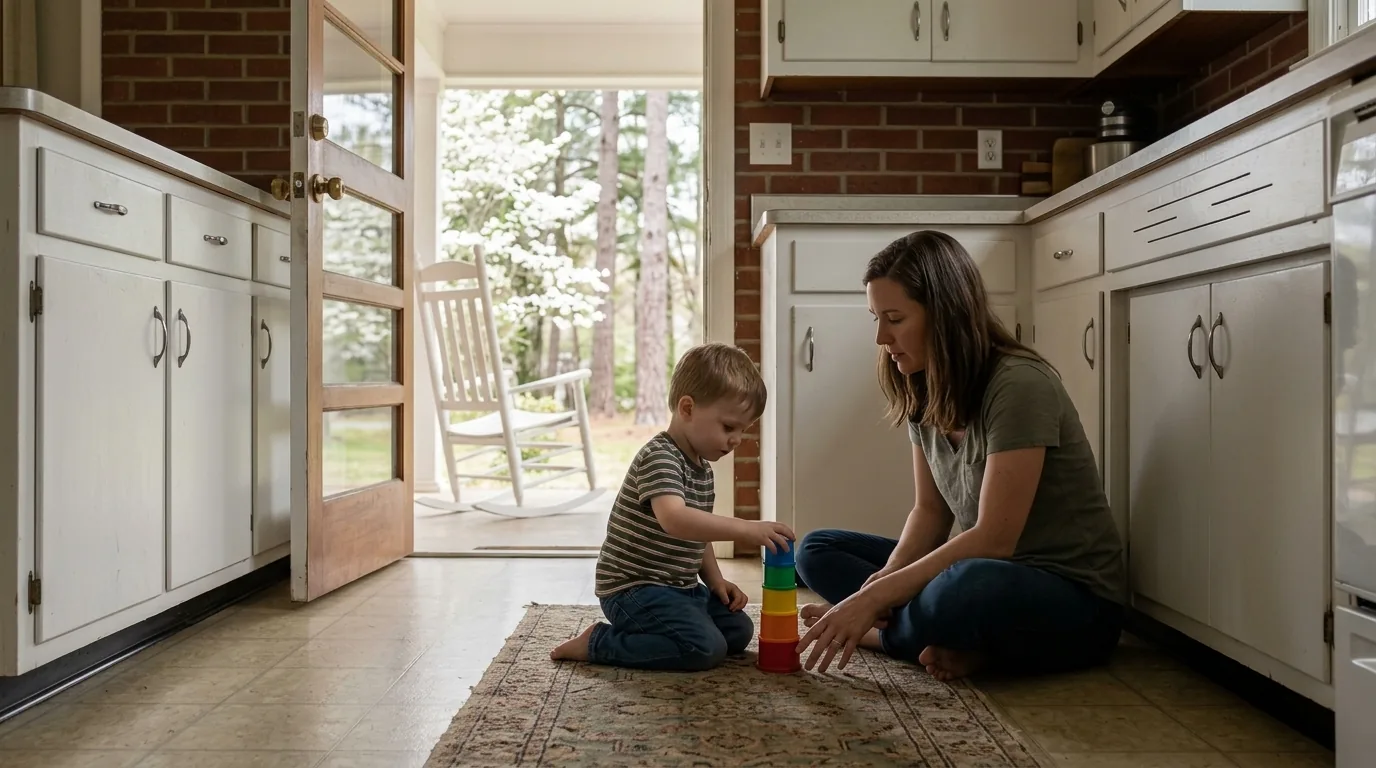
Early intervention in ABA means starting while a young child's learning is at its fastest, and doing it as play in the rooms where the child lives rather than as an appointment somewhere else. The gains children make when they start before five are in ordinary things: words, pointing, imitation, tolerating a routine.
North Carolina's public program is the Infant-Toddler Program, run under Part C of IDEA by the Early Intervention Section of the Division of Child and Family Well-Being, and delivered through sixteen regional Children's Developmental Services Agencies. It serves children under three with a developmental delay or an established condition. Evaluation, service coordination and the Individualized Family Service Plan are free, and the plan is reviewed every six months. At three, the CDSA hands off to the local school system, and state rules require that transition planning to happen between the second and third birthday.
In-home ABA runs on a separate track, funded through your plan under the state mandate or through NC Medicaid as Research-Based Behavioral Health Treatment, and both require the autism to be diagnosed by, and the treatment ordered by, a licensed physician or psychologist. It does not switch systems at three. Families commonly use both at once, and we ask to see the IFSP so the two plans build on each other. We are a private provider, not part of the state system.
The short version: state-regulated North Carolina plans must cover adaptive behavior treatment for autism, and NC Medicaid covers ABA for children under 21. The full picture lives on our North Carolina ABA therapy page.
| Coverage element | North Carolina detail |
| State mandate | SB 676, codified at G.S. § 58-3-192, enacted October 15, 2015, effective July 1, 2016 |
| Coverage | Adaptive behavior treatment for autism spectrum disorder, including ABA |
| Age limit | Coverage mandated for individuals under 19 |
| NC Medicaid (children) | Covers ABA as RB-BHT (Research-Based Behavioral Health Treatment) for children under 21 via EPSDT, delivered through the LME/MCO, Tailored Plan, or Standard Health Plan you're enrolled in |
For a two-year-old the skills that matter are home skills, so that is where we teach them: first words at the snack table, pointing at the window, imitation in a game on the floor, the routine of getting dressed. Sessions are shorter and more frequent than for an older child, and they use natural environment teaching, which means we follow what your child is already interested in rather than bringing a curriculum to the floor.
North Carolina's order requirement and its Medicaid renewal cycle shape the paperwork more than the sessions. Plans above 16 hours a week are reauthorized every 90 days, lighter ones every 180, and being under 21 does not remove that requirement. We keep the physician's order current and start each renewal early so a toddler's program never pauses for a form. Parent coaching runs through every session, because a two-year-old's week has far more hours in it than any therapy schedule.
Programs are designed and supervised by a BCBA and delivered by Behavior Technicians who stay with your child rather than rotating. Assessment takes about four weeks and there is no onboarding waitlist. As children grow, North Carolina families also come to us for parent training, behavior support, and eventually transition planning. We serve families across North Carolina; our North Carolina page lists every community.