North Carolina makes families do one thing in a particular order: before a plan or Medicaid will cover ABA, a physician or psychologist has to order it. Families who have been through that step usually arrive with a diagnosis in hand, an order in hand, and a behavior at home that the paperwork has not touched yet. This page is about what happens next.
Mastermind Behavior provides in-home ABA therapy, including behavior support, for children and young people with autism through age 21, in communities across North Carolina.
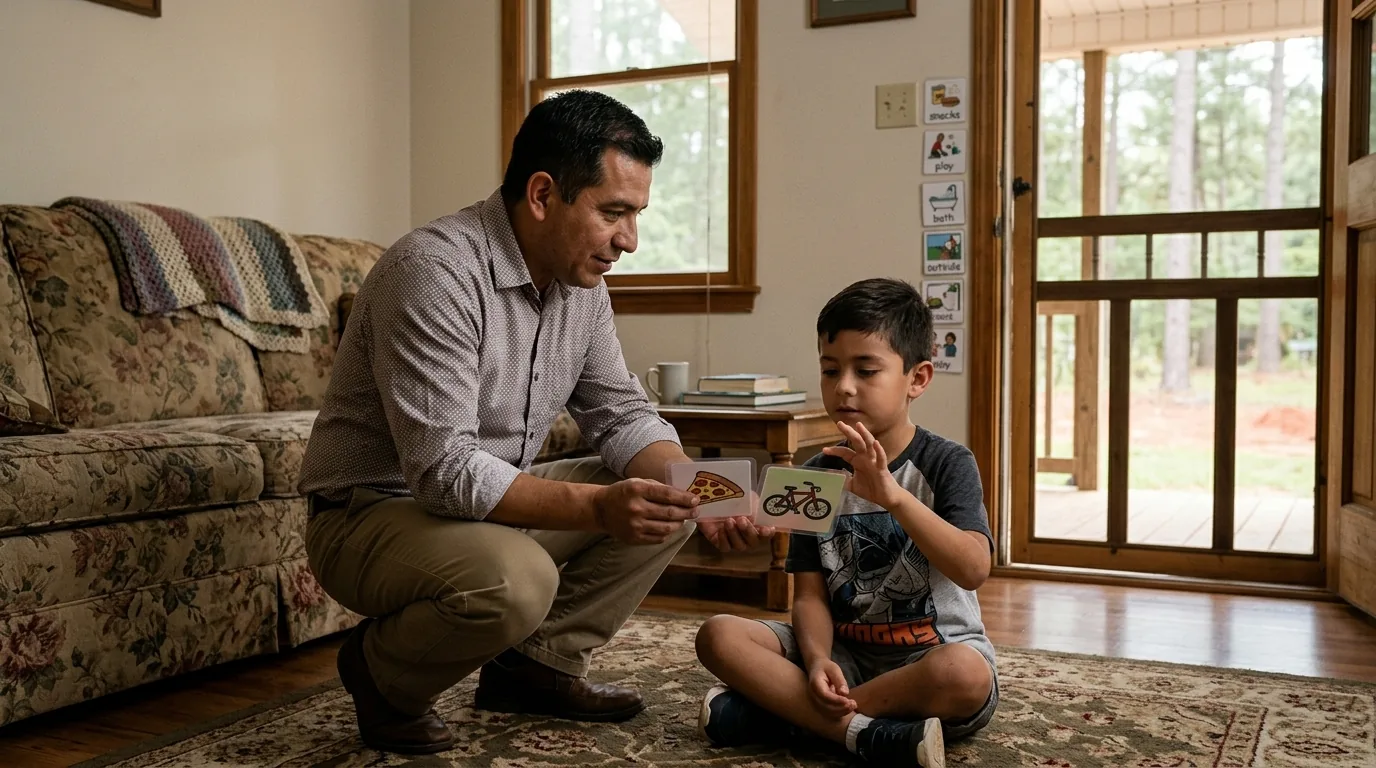
Start with what the state has already decided. North Carolina's autism coverage statute says treatment must be ordered by a licensed physician or licensed psychologist and then provided or supervised by one of a list of professionals that includes a Board Certified Behavior Analyst. That sentence sets the roles. The clinician who diagnosed your child is the one who orders behavior support; the BCBA is the one who designs and supervises it; and the family is the one who lives with the result, which is why our work happens in your home rather than in an office.
The school has its own lane. If behavior is getting in the way of learning, federal law requires the IEP team to consider positive behavioral supports, and in North Carolina that sits inside the Multi-Tiered System of Support that the Department of Public Instruction uses statewide. The school's assessment and plan are built for the school day, and they are genuinely useful to us, but they are not the physician's order, and they do not cover the hours at home. We ask to see the school's plan, and with your consent we share ours.
Licensing here is recent. North Carolina's Behavior Analyst Licensure Board was created in 2021 and began taking applications in 2023, so it is worth asking any provider whether their BCBAs hold the state license. Ours do, alongside BACB certification. When a behavior has grown past what a home plan can hold, the public route runs through your regional LME/MCO, and for a child aged six or older with a developmental disability, NC START offers crisis planning as well as response. We are not that system. We work alongside it when a family asks us to.
Behavior support is ABA therapy, and North Carolina treats it that way for coverage purposes. The rows below are the parts of the state's picture families ask about most. The full detail lives on our North Carolina ABA therapy page.
| Coverage element | North Carolina detail |
| State mandate | SB 676, codified at G.S. § 58-3-192, enacted October 15, 2015, effective July 1, 2016 |
| Annual dollar cap | $40,000 a year at enactment, indexed since, on state-regulated plans. Federal MHPAEA parity may make this unenforceable on plans subject to parity; ask the carrier in writing. |
| NC Medicaid (children) | Covers ABA as RB-BHT (Research-Based Behavioral Health Treatment) for children under 21 via EPSDT, delivered through the LME/MCO, Tailored Plan, or Standard Health Plan you're enrolled in |
| BCBA licensure | Required in NC. North Carolina's Behavior Analyst Licensure Board was established by SB 103 (signed May 2021); applications opened July 2023. Our BCBAs hold both BACB certification and an active NC behavior analyst license. |
Families ask us what they will actually see. Here is the sequence.
First, someone watches. A BCBA comes to your home over several visits, at the times the behavior usually shows up, and records what happens just before it and just after. That record is what the plan is built from. It takes about four weeks, and there is no waitlist to start it.
Then the plan is written, and it is mostly about teaching. A behavior that gets your child out of something is replaced with a quicker way to ask for a break. A behavior that gets attention is replaced with a way of getting attention that does not hurt anyone. That is functional communication training, and it does more of the work than any consequence ever will. The strategies are the least restrictive ones that will hold.
Then the same Behavior Technician comes back, session after session. Not a rotation. The BCBA supervises, reads the data, and adjusts. You are coached in the moment, because your child needs the same response from you at nine at night as from us at three in the afternoon.
And the authorization keeps pace. NC Medicaid authorizes plans of more than 16 hours a week for 90 days at a time and lighter plans for 180, and a plan that lapses is a plan that stops. We start each renewal early and keep the physician's order current so that never happens on our side.
Behavior support often runs alongside our other North Carolina services: parent training deepens the coaching side, early intervention serves the youngest children, and transition planning picks up the teen years. We serve families across North Carolina; our North Carolina page lists every community.