How to Teach Adaptive Behavior Skills Through ABA Therapy
Effective Techniques for Building Adaptive Skills with ABA Therapy

It is a Tuesday morning, 7:14, and your eight-year-old is standing in the bathroom in his pajamas, holding a toothbrush, frozen. You have asked him to brush his teeth four times. He has the skill. He brushed his teeth on Saturday with no trouble at all. But this morning the toothpaste cap is on the wrong side of the sink, his sister is humming in the hallway, and the whole sequence has come apart. You are going to be late for work.
This is the kind of thing parents call us about. Not the big diagnostic moments, not the meltdowns at the grocery store, but the daily drift: the routine that should be automatic by now and somehow is not. Adaptive behavior skills are the answer. They are also the part of an ABA program most parents do not realize they can ask for.
What Adaptive Behavior Actually Means in ABA
Adaptive behavior is the bundle of everyday skills that lets your child function in the world without an adult holding every step together. Eating with utensils, washing hands, putting on shoes, asking for the bathroom, waiting in a line, accepting that the snack you wanted is not available today. The American Psychiatric Association describes adaptive functioning as how well a person handles the demands of daily life across communication, daily living, social participation, and independent living.1
For children with autism, the gap between what they know and what they can do day-to-day is often wider than parents expect. Research published by SPARK for Autism on adaptive behavior in adolescents found that daily living skills are typically below age-expected levels in young teens with autism, even when cognitive ability is in the average range or higher.2 In our practice, we see this pattern start much earlier. The seven-year-old who can spell "transportation" but cannot reliably put on a coat. The four-year-old with hundreds of words who still drops to the floor when it is time to leave the playground.
Most parents come to us thinking adaptive skills are the school's job, or the OT's job, or something a child grows into. They are surprised to learn that adaptive skills get the same data-driven treatment in ABA as communication or behavior reduction. Same task analysis, same reinforcement, same generalization plan. They are taught alongside everything else, not after.
Why In-Home ABA Changes the Math on Adaptive Skills
There is a structural reason adaptive skills are hard to teach in a clinic. The skills you most want to see at home, brushing teeth, getting dressed, sitting through a family dinner, transitioning from iPad to bedtime, are happening in your bathroom, your kitchen, your living room. A clinic can practice a version of those skills with a clinic toothbrush and a clinic mirror, but the generalization back to your bathroom is the actual job, and it is rarely smooth.
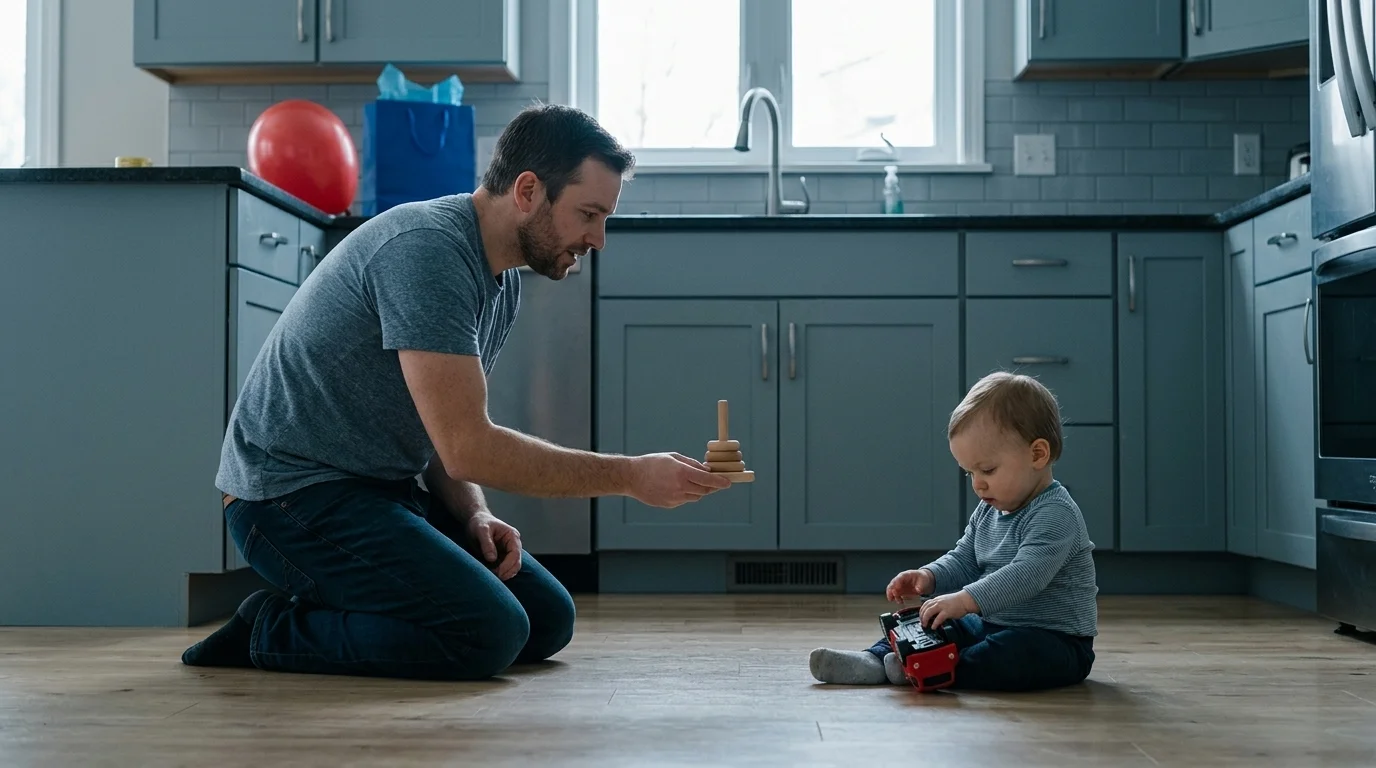
Our BCBAs typically run the first set of in-home ABA therapy sessions in the rooms where the skill is supposed to live. If the goal is independent toothbrushing, the BT (Behavior Technician) is not at a clinic table. The BT is in your bathroom, with your toothpaste, watching the actual sequence break down at the actual sink, and writing the program around what they see. The toothbrush goal, the cap-on-the-wrong-side problem, the sister-in-the-hallway distraction: those are program data, not background noise.
A pattern we see often: a child masters a routine in clinic in three weeks and then takes another four months to perform it at home, because the home version has different lighting, different smells, different siblings, and a different parent giving the cue. When we start in your home, we skip that second project entirely.
The Three Buckets BCBAs Use
When our BCBAs assess for adaptive behavior, they typically organize goals into three categories. The categories matter because they tell you what you are actually paying for, and what should show up on a treatment plan.
Conceptual skills. This is language used in real life: telling time, following multi-step directions, understanding "later" or "in five minutes," using a calendar. Conceptual skills are where parents most often confuse cognitive ability with adaptive functioning. Your child can read at a fourth-grade level and still not understand what "we are leaving in ten minutes" means as an action prompt.
Social skills. Greetings, taking turns, recognizing emotion in another person's face, following social rules at the park. These are not the same as the social goals you might see in an SLP report. Adaptive social skills are about whether the behavior happens in real settings, with real peers, without a script.
Practical skills. This is the bucket most parents think of first: dressing, hygiene, toileting, eating, mealtime behavior, sleeping, navigating the community. Practical skills are usually the most observable, which makes them the easiest to take data on and the most rewarding to watch progress in.
A good treatment plan touches all three. A plan that lives entirely in one bucket, usually practical, is a sign that the assessment was thin or that the child's family was not asked what they actually wanted help with.
Behavior Skills Training: How a Skill Actually Gets Taught
Most adaptive skills in ABA are taught using a method called Behavior Skills Training, or BST. The structure is boring on purpose: explain, model, practice, give feedback, repeat. What makes it work is not the cleverness of the technique but the consistency of the trial-by-trial repetition with a child who needs more reps than typically developing peers to lock a skill in.
Take handwashing. The full task analysis for a four-year-old might have eleven steps: walk to sink, push up sleeves, turn on water, wet hands, get soap, lather for ten seconds, rinse, turn off water, get towel, dry hands, put towel back. Most kids learn this from imitation by age three. For some of our clients, each of those eleven steps is a separate teaching target with its own data sheet for the first month. The BT prompts at the level the child needs (full physical, partial physical, verbal, gestural, or just a model) and fades the prompt as the child takes over the step. Independence has a definition here: the moment the prompt level reaches zero on consecutive sessions.
A clinical detail parents often miss: the order matters. Forward chaining (teaching step 1 first, then step 2, etc.) and backward chaining (teaching the last step first and building backward) are not interchangeable. For self-care skills, our BCBAs frequently use backward chaining because the child gets to feel the satisfaction of completing the routine on every trial. The teen who hates getting dressed is more likely to tolerate the program if the first thing they master is pulling the shirt over the head, the visible end of the sequence, rather than the part that comes first.
Reinforcement Without Bribery
Parents sometimes balk at reinforcement, especially around routines they feel "should" be intrinsically motivating. The technical answer is that reinforcement in ABA is not the same as bribery. Bribery is offered in the middle of a problem behavior to make it stop. Reinforcement is delivered after a target behavior, predictably, and faded systematically as the behavior becomes routine.3
What this looks like in your kitchen, week one: your child brushes teeth with full physical prompting and gets a sticker, plus access to a preferred song while the BT walks them through the sequence. Week four: your child brushes teeth with a single verbal prompt and the sticker chart is on a variable schedule, meaning some days they get a sticker, some days they do not, but the praise is consistent. Week ten: the chart is gone, the routine is just a routine, and you can leave the room while it happens.
The job of the BCBA is to plan that fade. Reinforcement that never fades is a programming error, not a feature.
Functional Behavior Assessment: When the Real Problem Is Not the Skill
Sometimes the adaptive skill is not actually the bottleneck. The child can put on shoes, they have demonstrated it twenty times in the last month, but they refuse on Tuesday mornings before therapy. That is a behavior with a function rather than a skill deficit, and it deserves its own assessment.
A Functional Behavior Assessment, or FBA, is exactly what it sounds like: we look at what purpose the behavior is serving for your child. Children with autism, like all kids, do behaviors for reasons. The four big functions in ABA are escape (getting out of something hard), access (getting something they want), attention (getting interaction), and sensory (the behavior feels good or regulates them). The FBA tells the BCBA which one is operating, and the behavior support plan is built from there.
The Tuesday-morning shoe refusal might turn out to be escape from the car ride, which is escape from the route past a barking dog, which is escape from a sound. The shoe is not the problem. Once the BCBA names the function, the program changes from "teach shoe-tying again" to "build tolerance for the dog noise and reinforce calm car rides," and the shoe goes back on without a fight.
What Parent Training Looks Like (and Why It Is Not Optional)
Adaptive skills do not stick if the people in the home do not change with the child. The most common failure mode we see is this: BT teaches the routine perfectly during sessions, child runs the routine flawlessly, BT goes home, parents revert to the old prompts, the routine collapses by Sunday.
The fix is structured parent training. Our BCBAs typically run weekly parent training sessions for the first two months, focused on the specific routines on the treatment plan. Session one might be the toothbrushing chain. The BCBA models the prompts, watches you do it, gives feedback. Session two is dressing. Session three is the bedtime sequence. By week eight, you are running the routines as well as the BT, which is the actual goal: the BT goes home, and the routine survives.
A pattern we see with siblings more than you would expect: the neurotypical older sister becomes the family translator. She knows where the toothbrush goes, she knows the order of the bedtime steps, she knows the song that gets her brother to put his shoes on. Parent training usually starts by giving her permission to be the sister again, not the interpreter. The skill belongs to the child. The chain belongs to the parent.
Generalization: Where Most Programs Fall Apart
The hardest part of teaching adaptive skills is generalization, which is the technical word for "the skill works in places and situations other than the one where it was taught." Your child masters handwashing at the kitchen sink and cannot do it at the bathroom sink. Your child masters toothbrushing on weekday mornings and stares at the toothbrush blankly on Saturday. The skill is in there. It is just attached to a context.
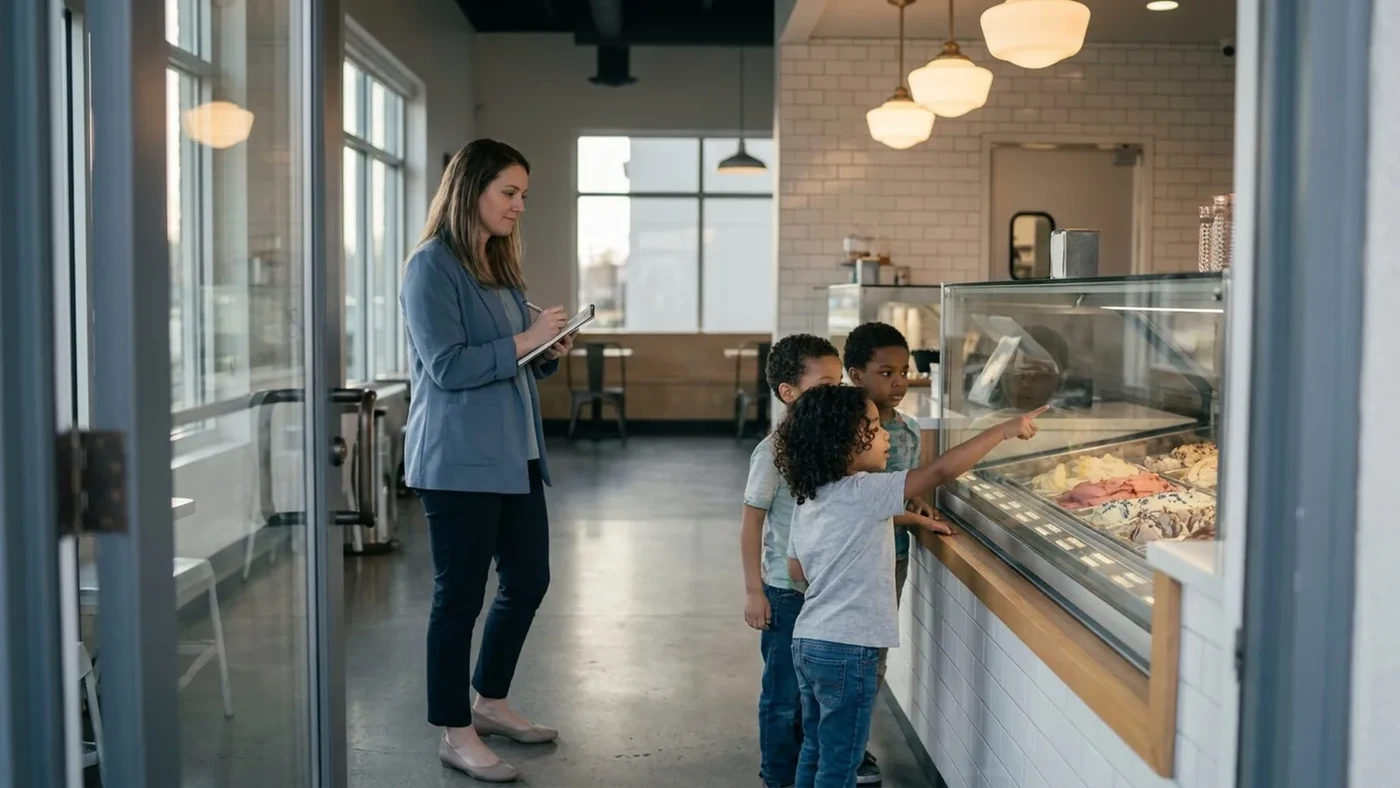
Research on ABA-based interventions in children with autism shows that program intensity and duration both predict the size of adaptive behavior gains, with stronger effects when interventions include explicit generalization planning and parent involvement.4 In our practice, generalization is built into the program from week one. The toothbrushing chain is taught at the kitchen sink, the bathroom sink, the bathroom sink at grandma's house, the airplane lavatory if travel is on the calendar. Different toothbrushes, different toothpaste flavors, different mirrors. The variability is the point.
This is also where in-home delivery does its quietest, most important work. When the program is happening in your home, the BT is already varying the conditions naturally: different siblings present, different days of the week, different parents giving the cue. By the time the program asks for formal generalization probes, half the variance is already built in.
When Adaptive Skills Get Taught Matters
The earliest you can start a structured adaptive skills program is roughly the same age you can start any early intervention ABA program: as soon as the diagnosis is in place, often around age two or three. The American Academy of Pediatrics and other professional bodies endorse ABA-based interventions as evidence-based practices for autism, and the adaptive behavior gains are part of why.5
That said, "earliest is best" does not mean "later is too late." Our caseload includes plenty of teenagers learning to do laundry, manage personal care, or ride a city bus for the first time. A study on daily living skills interventions for adolescents with autism found that even older teens without intellectual disability often have substantial gaps in adaptive behavior that respond to structured, evidence-based programming.6 The right age to start an adaptive skills program is the age your child is right now.
What Progress Looks Like (and How to Tell the Program Is Working)
Adaptive skills move slower than language goals on a graph. A child might pick up new vocabulary in a single session. A child learning to dress independently might take three months to fade prompts on a single article of clothing. That is normal. Parents who are watching the data weekly often feel the program is too slow, even when it is on track.
Two indicators that an adaptive skills program is working, beyond the obvious one of "child does the thing":
The first is that the child starts performing the skill in untrained contexts. They put on shoes at grandma's house. They wash their hands at the doctor's office. The skill has generalized.
The second is that the routine survives mild disruption. The toothpaste cap is on the wrong side, the sister is humming, you are running late, and the toothbrushing still happens. That is real mastery. The Tuesday-morning standstill is over.
Why Mastermind Behavior
Mastermind Behavior is a BCBA-owned and operated in-home ABA therapy provider serving families across New Jersey, Georgia, and North Carolina. Skills like waiting, accepting alternatives, completing a self-care chain, and transitioning between activities are best taught in your kitchen and bathroom and living room, not in a clinic across town, which is why our BCBAs design programs around your actual rooms and our BTs run sessions where the routine actually happens. With a 90%+ staff retention rate and no onboarding waitlist, most families begin direct services within six weeks of their initial assessment.
If you are exploring ABA therapy for your child, schedule a free consultation or call us at 732.813.7333. We will listen to what is actually breaking down at home (the morning that falls apart, the routine that has not stuck, the skill that should have generalized by now), walk you through what a program would look like for your child, and help you figure out the right next step. No pressure, no commitment.
References
- American Psychiatric Association. What is Autism Spectrum Disorder? APA. 2024.
- SPARK for Autism. Daily Living Skills: A Key to Independence for People with Autism. Simons Foundation. 2024.
- Yu Q, Li E, Li L, Liang W. Efficacy of Interventions Based on Applied Behavior Analysis for Autism Spectrum Disorder: A Meta-Analysis. Psychiatry Investigation. 2020.
- Eckes T, Buhlmann U, Holling HD, Möllmann A. A Meta-Analysis of Applied Behavior Analysis-Based Interventions to Improve Communication, Adaptive, and Cognitive Skills in Children on the Autism Spectrum. Review Journal of Autism and Developmental Disorders. 2025.
- National Academies of Sciences, Engineering, and Medicine. Evidence Base for Applied Behavior Analysis: The Comprehensive Autism Care Demonstration. National Academies Press. 2025.
- Duncan AW, Tamm L, Birnschein AM, Becker SP. Daily Living Skills in Adolescents with Autism Spectrum Disorder: Implications for Intervention and Independence. Development and Psychopathology. 2021.