How to Handle Sensory Overload Situations
Navigating Sensory Overload: Strategies and Understanding

You are halfway through the cereal aisle when it happens. The lights are too bright, the freezer fans are humming, a cart squeaks past, and your six-year-old goes from fine to falling apart in about four seconds. Hands over the ears. Body on the floor. The look on his face is not defiance, it is panic, and you already know the words "calm down" are going to bounce right off.
That is sensory overload, and if you parent a child with autism you have probably watched it arrive faster than you could stop it. It happens when the brain takes in more sound, light, touch, or movement than it can sort through at once. In our practice, most of the meltdowns parents describe as "out of nowhere" turn out to have a sensory trigger hiding in plain sight. This guide walks through what overload looks like, why it hits children with autism harder, and the practical strategies our teams use to help kids feel safe again.
What is Sensory Overload and Its Symptoms?
Sensory overload happens when one or more of the senses take in more stimulation than the brain can comfortably process. The result ranges from mild unease to real distress, and for a child who cannot yet put the feeling into words, that distress often comes out as behavior.
What are the symptoms?
Sensory overload shows up in a few recognizable ways:
- Emotional responses: Anxiety, irritability, and restlessness.
- Cognitive effects: Loss of focus and trouble concentrating.
- Physical indicators: Sweating, muscle tension, dizziness, or headaches.
- Behavioral signs: Covering the ears, crying, or pulling away from a situation, which is especially common in children.
What associated conditions increase susceptibility?
Some conditions make a person more sensitive to sensory input, and more likely to tip into overload:
- Autism spectrum disorder (ASD): Children with autism may experience both hypersensitivity and hyposensitivity, so the same room can feel like too much and not enough at the same time.
- Attention-deficit/hyperactivity disorder (ADHD): Overload can lead to avoidance behaviors that get misread as rudeness or disinterest.
- Post-traumatic stress disorder (PTSD): A seemingly harmless sound or sight can trigger panic.
- Generalized anxiety disorder: Anxiety amplifies how intense sensory input feels, which makes overwhelming moments harder to manage.
Understanding what overload is, and what makes it more likely, is the first step toward a plan that actually works.
Impact of Sensory Overload on Mental Health
When sensory input outpaces the brain's ability to process it, the feelings that follow (anxiety, panic, and distress) can take a real toll on mental health. For many people, and especially for those living with autism, ADHD, PTSD, or generalized anxiety, those feelings can spill over into irritability and restlessness.
Day to day, that matters more than it sounds. Overload makes it hard to concentrate and hard to stay regulated, and in children it often turns into behavior because they cannot yet explain what is wrong. A child who is melting down or shutting down is usually not being difficult. They are telling you, in the only language available to them, that the environment is too much right now.
Condition-specific impacts
Different conditions intensify sensory overload in different ways:
| Condition | Impact on Sensory Overload |
| Autism Spectrum Disorder | Heightened sensitivity to stimuli makes everyday environments harder to navigate. |
| ADHD | Difficulty focusing and controlling impulses can turn an overstimulating moment into a distressing one. |
| PTSD | Sudden overload can trigger flashbacks or spikes in anxiety. |
| Generalized Anxiety | Existing anxiety is amplified by overwhelming input, which can lead to panic or avoidance. |
Management strategies, including therapy, structured routines, and the right environmental adjustments, all help soften these effects. Recognizing and addressing sensory processing challenges early makes a meaningful difference in quality of life.
Techniques for Managing Sensory Overload in Adults
Adults manage overload best with a mix of coping strategies and environmental adjustments. A few that hold up in real life:
Coping Strategies
- Deep breathing exercises: The 3-3-3 method (breathe in for three counts, hold for three, exhale for three) helps settle the nervous system.
- Mindfulness and meditation: Staying present reduces the anxiety that overload tends to spin up.
- Regular breaks: Short, frequent breaks from a stimulating space let the brain recover before things escalate.
- Sensory tools: Fidget toys, weighted blankets, and stress balls offer physical comfort and a way to self-regulate.
Environmental Adjustments
| Adjustment | Details | Benefits |
| Dimming Lights | Reduce bright or flashing lights in your environment. | Eases visual overstimulation. |
| Minimizing Noise | Use noise-canceling headphones or soft music. | Cuts auditory distraction and creates a calmer atmosphere. |
| Creating Calm Spaces | Keep one area at home set aside for relaxation. | Provides a retreat from overwhelming stimuli. |
| Avoiding Strong Scents | Choose unscented products to limit olfactory input. | Prevents stress triggered by intense smells. |
The same principles carry into shared environments like work or school, where you have less control over the space. Start by naming your triggers, since loud noise, bright light, and strong smells are the usual culprits, and catch the early signs of overstimulation (restlessness, trouble focusing) before they build. From there, the right tools make a real difference:
| Tool | Purpose | Impact |
| Earplugs | Minimize sound | Reduces auditory distractions |
| Noise-canceling headphones | Blocks background noise | Enhances concentration and calmness |
| Tinted glasses | Dims bright lights | Helps with visual overstimulation |
| Weighted blankets | Provides calming pressure | Supports relaxation during breaks |
| Fidget tools | Channel nervous energy | Fosters focus and reduces anxiety |
A few small adjustments make a shared space more livable: keep scents to a minimum, clear clutter from your desk, and schedule quiet time away from the busiest areas to recover. Communicating your needs to the people around you, and asking for reasonable accommodations, builds an environment where overload is easier to manage.
Supporting Those with Autism Through Sensory Overload
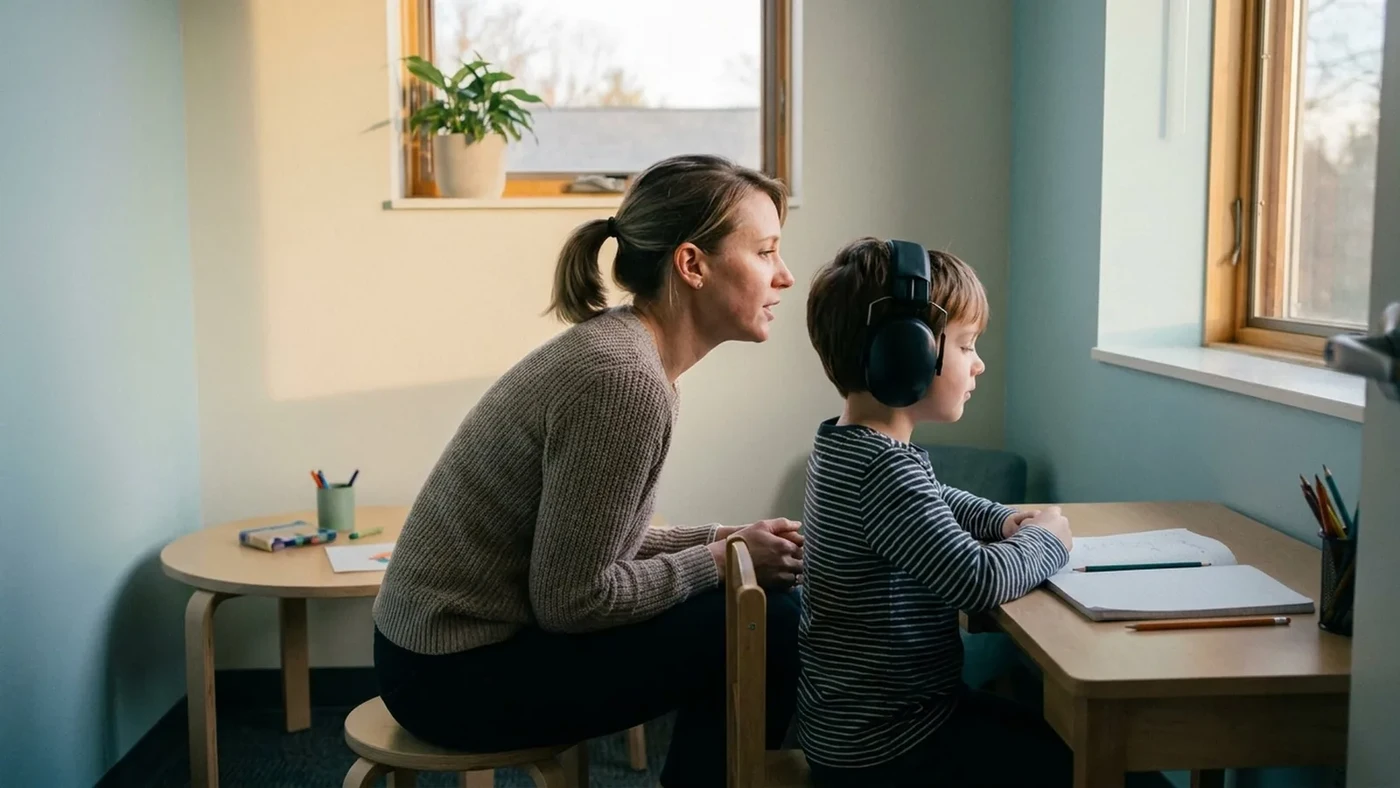
For children with autism, the most effective approach is layered, and it starts with the environment. A sensorially safe space means fewer unnecessary stimuli at home and at school: softer lighting, lower noise, and a quiet corner a child can retreat to when things feel like too much.
Knowing a child's specific triggers comes next. Most kids on our caseload do best with a small, familiar toolkit they can reach for before a moment tips over:
- Deep breathing: Slow breaths help take the edge off rising anxiety.
- Fidget toys: Tactile items provide grounding and a focus for restless hands.
- Weighted items: Weighted blankets or vests deliver calming deep pressure that many children find settling.
Building in sensory breaks throughout the day matters just as much as any single tool. Scheduled downtime gives a child room to recover before overstimulation stacks up, and steering clear of high-pressure environments when you can is a smart, proactive move.
Communication ties it all together. When a child can advocate for a sensory need, at home or in a classroom, they are far more likely to get the accommodation that helps. Caregivers play a huge role here by catching early signs of distress, having a calm space ready, and keeping the conversation about sensory preferences open. This is one of the places where how functional communication training reduces problem behaviors shows up clearly in real homes: when a child has a reliable way to say "this is too loud," the behavior that used to carry that message tends to fade. Giving a child the language to name what they are feeling is part of the same work, which is why the impact of storytelling on language development is worth understanding for families navigating sensory challenges.
One more thing we coach parents on: when a child is mid-overload, patience does more than any phrase. Give them the time and space to come back down, let your steady presence say "I am here," and resist the urge to push them to engage before they are ready. Helping children build the regulation skills to ride out these moments is exactly the kind of work our skill development sessions focus on, one repeatable step at a time.
Exercises and Tools to Calm Sensory Overload
Certain exercises engage the body and the mind together, which is what makes them so useful in the middle of a rough moment:
- Sensory bins: Bins filled with sand, rice, or water beads build tactile awareness.
- Obstacle courses: Moving through a course builds body awareness and delivers proprioceptive input.
- Jumping activities: A mini-trampoline or a swing feeds the vestibular sense and helps settle overwhelm.
- Deep breathing techniques: The 3-3-3 method (breathe in for three counts, hold for three, exhale for three) noticeably lowers anxiety.
- Mindfulness practices: Guided imagery or short meditation supports relaxation when a moment feels like too much.
- Soothing music: A calming playlist helps manage the stress that rides along with overload.
What sensory tools can assist in managing sensory overload?
Tools built for sensory regulation keep things calmer:
| Tool | Description | Purpose |
| Noise-Canceling Headphones | Blocks out loud sounds and distractions | Reduces auditory overstimulation |
| Weighted Blankets | Provides gentle pressure across the body | Soothes and calms the nervous system |
| Fidget Toys | Small handheld items for manipulation | Aids in sensory regulation and focus |
| Sensory Bottles | Bottles filled with glitter or beads | Encourages visual calmness through focus |
| Pressure Vests | Vests that provide deep touch pressure | Offers calming proprioceptive feedback |
Pairing the right exercises with the right tools turns an overwhelming environment into one a child can actually handle.
Managing Touch Sensory Overload
Touch overload starts with knowing the triggers. For some children it is a clothing tag or a specific fabric, for others it is a crowded, bumpy environment. Once you know what sets it off, you can build a plan around it.
Gradual desensitization helps. By introducing an uncomfortable texture slowly and in a controlled way, a child can build tolerance over time instead of bracing against it. Comfortable clothing in soft, breathable fabrics cuts down on daily friction, and avoiding the materials you know are irritating prevents a lot of overload before it starts.
A sensory-friendly environment does the rest. That means limiting time in crowded places when you can and keeping a calm, quiet area available for when overwhelm hits.
Strategies and Supports
Support systems matter here. Occupational therapists and ABA providers can offer strategies tailored to your child, including sensory diets, which are planned sensory experiences designed to regulate input across the day. Our BCBAs typically build these supports right into the home routine, since that is where most touch triggers actually live. If your child's sensory needs are showing up as escalating behavior, this is exactly where a structured plan helps, and you can address sensory needs with in-home ABA support instead of guessing in the moment.
A few additional strategies:
- Weighted items: Weighted blankets or vests provide calming pressure during an episode.
- Communication tools: Giving a child a clear way to signal "I need a break" prevents a lot of escalation.
- Mindfulness practices: Deep breathing calms the physical response that comes with overload.
With these in place, children manage touch sensitivities far more comfortably.
Resources for Children with Sensory Challenges
Plenty of resources can make a child's day easier. Educational materials, including books that explain sensory processing in child-friendly terms, help kids understand their own experience. Trusted online resources give parents and educators strategies they can match to a child's specific needs.
Sensory integration therapy is another route worth exploring. It focuses on improving how the brain processes sensory information and teaches coping techniques through targeted activities.
For practical day-to-day support, personalized interventions go a long way. That might mean letting a child try different school supplies or choosing clothing that follows the "3 S rule" (softer, simpler, seamless). Small adjustments like these noticeably raise a child's comfort level at school.
Tools like noise-canceling headphones, lightly tinted sunglasses, and a customized sensory kit help with overwhelming environments. Sensory-friendly classrooms, set up with sensory corners and flexible seating, make learning more accessible.
Clear communication about sensory needs with teachers and peers builds an environment where a child feels safe enough to say when they are overloaded. The right resources do not just smooth out hard days, they improve a child's overall quality of life.
Finding Balance Through Understanding and Support
Handling sensory overload well is a real part of protecting a child's mental health and well-being. By learning your child's triggers, leaning on strategies that fit them, and shaping calmer environments, you can help them move through overwhelming moments with more ease. Whether you are supporting your own child or learning alongside them, understanding the challenge and the options for managing it opens the door to better days. Education, awareness, and coping strategies that actually fit your child are what make overload something a family can handle together.
Why Mastermind Behavior
Mastermind Behavior is a BCBA-owned and operated in-home ABA therapy provider serving families across New Jersey, Georgia, and North Carolina. Every plan starts with a Board Certified Behavior Analyst (BCBA) who designs the approach around your child, then trains and supervises the Behavior Technicians (BTs) who run the day-to-day sessions in the rooms where the hard moments actually happen. For a child who tips into sensory overload at the kitchen table or in the back seat of the car, that on-site presence is the whole point: our team sees the real triggers, builds calming routines into the spaces your child lives in, and coaches you so the strategies hold up long after the session ends. With a 90 percent and higher staff retention rate and no onboarding waitlist, most families begin direct services within six weeks of their initial assessment, working with the same familiar faces week after week.
If sensory overload has been turning ordinary days into something you brace for, we would like to hear how it is showing up for your family. Schedule a free consultation at mastermindbehavior.com/contact or call us at 732.813.7333, and we will walk you through what an in-home plan could look like, with no pressure and no commitment.