How to Address Challenging Behavior with Behavioral Momentum
Unleashing the Power of Behavioral Momentum


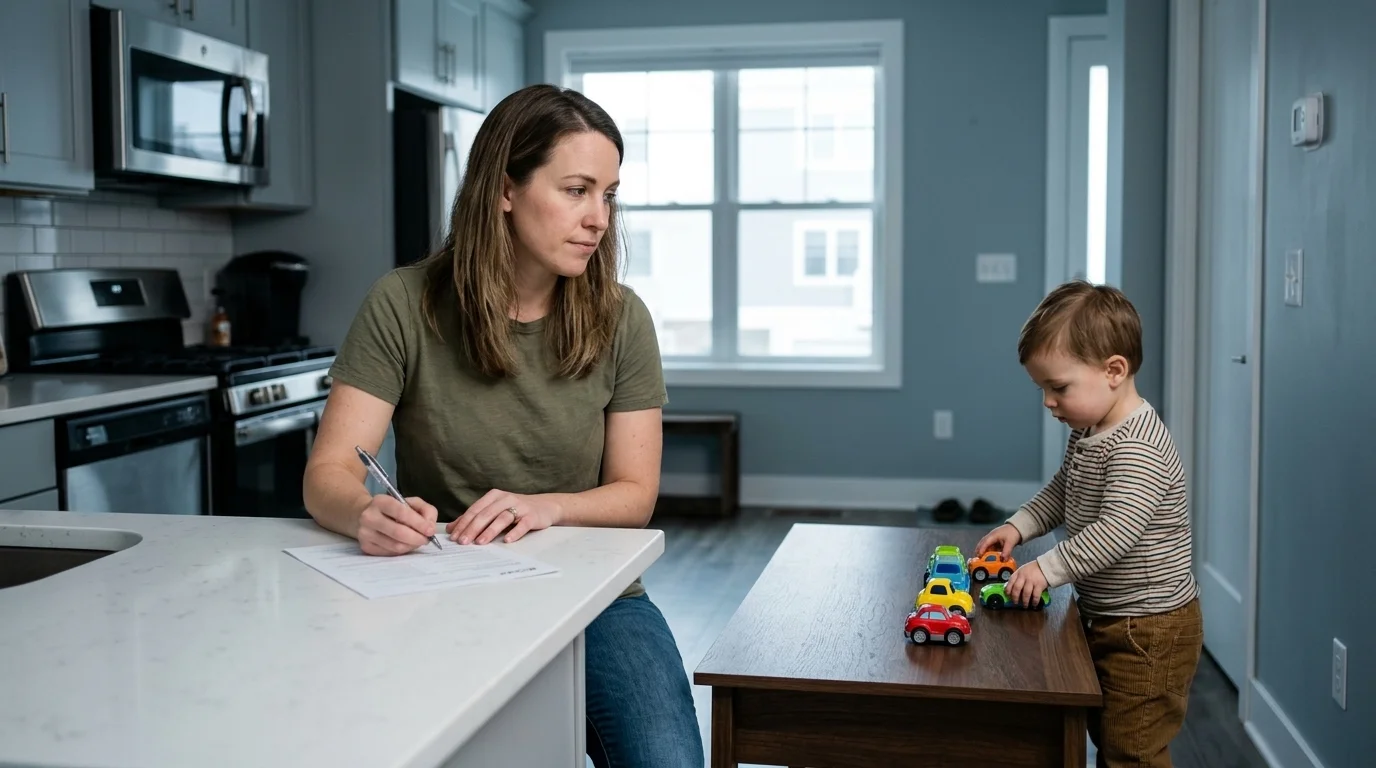
You've tried the visual schedule. You've tried the timer. You've tried counting down from five. Your seven-year-old still digs in when it's time to leave the iPad for homework, and the standoff is the same every afternoon. What often works in our in-home sessions is not a new schedule or a sharper warning. It's a sequence. You ask your child to do three small things they're almost sure to say yes to, you reinforce each one, and then you ask the hard thing. The strategy is called behavioral momentum, and it works because compliance is a habit before it's a choice. This guide walks through how it works, where it fits, and the small adjustments that make it stick.
Understanding Behavioral Momentum: The Basics
Behavioral momentum is a teaching technique that builds student engagement by starting with easy tasks the child is almost sure to complete, then moving on to harder ones. The strategy uses "high probability" requests, which a child can finish with over 80% success, followed by "low probability" requests they tend to struggle with (less than 50% compliance). Reinforcement after each completed task, regardless of difficulty, is what keeps the sequence working. When BCBAs build these request sequences for our clients, we often start with a quick task analysis to identify which steps the child already nails reliably. The technique has been shown to be effective across settings, particularly with children with autism, by building a pattern of correct responding. Behavioral Momentum Intervention (BMI) is an evidence-based practice supported by a range of professionals: BCBAs design the sequences, Behavior Technicians (BTs) run them in real sessions, and parents extend them into everyday moments.
Importance in educational and clinical settings
The use of behavioral momentum matters in both school and clinical settings because it does two things at once: it builds task compliance and it raises motivation. Teachers can fold the strategy into the classroom by identifying high-probability tasks for each student. In therapy sessions, our BCBAs use it to smooth over moments where a child would otherwise refuse and shut down.
Relevance in Autism Spectrum Disorder (ASD)
For children with autism, behavioral momentum plays a particular role. Starting with high-probability requests gives kids a felt sense of "I just did three things right," which most often carries them through the harder ask that follows. The structure tends to reduce frustration, strengthen daily living skills, and protect the relationship between the adult and the child during teaching moments. That last part matters more than parents expect. A child who has been corrected ten times in a row is rarely the same child after the eleventh. A child who has been reinforced ten times in a row often is.
| Behavioral Momentum Application | Purpose | Benefits |
| Classroom setting | Sequence tasks to boost engagement | Increased compliance, smoother transitions |
| Clinical setting | Move children through harder requests | Higher motivation, less escape behavior |
| Home and daily routines | Build confidence through doable tasks | Better skill acquisition, easier transitions |
Illustrative Examples of Behavioral Momentum Implementation
The right moment to reach for behavioral momentum is when a child is starting to dig in on a specific demand and you can see compliance slipping. It works especially well with children who struggle with complex tasks, transitions, or non-preferred work, since the sequence of easy wins builds enough confidence to carry them into the harder ask. Immediate reinforcement after each completed task is what keeps the sequence intact. Skip the reinforcement, and the strategy collapses.
Examples across settings
In the classroom. Before asking a class to start a multi-step math problem, a teacher might prompt three rapid-fire easy moves: clap once, give a thumbs up, point to the board. Each prompt gets a quick verbal reinforcement. By the time the math problem lands, the class has already said yes three times.
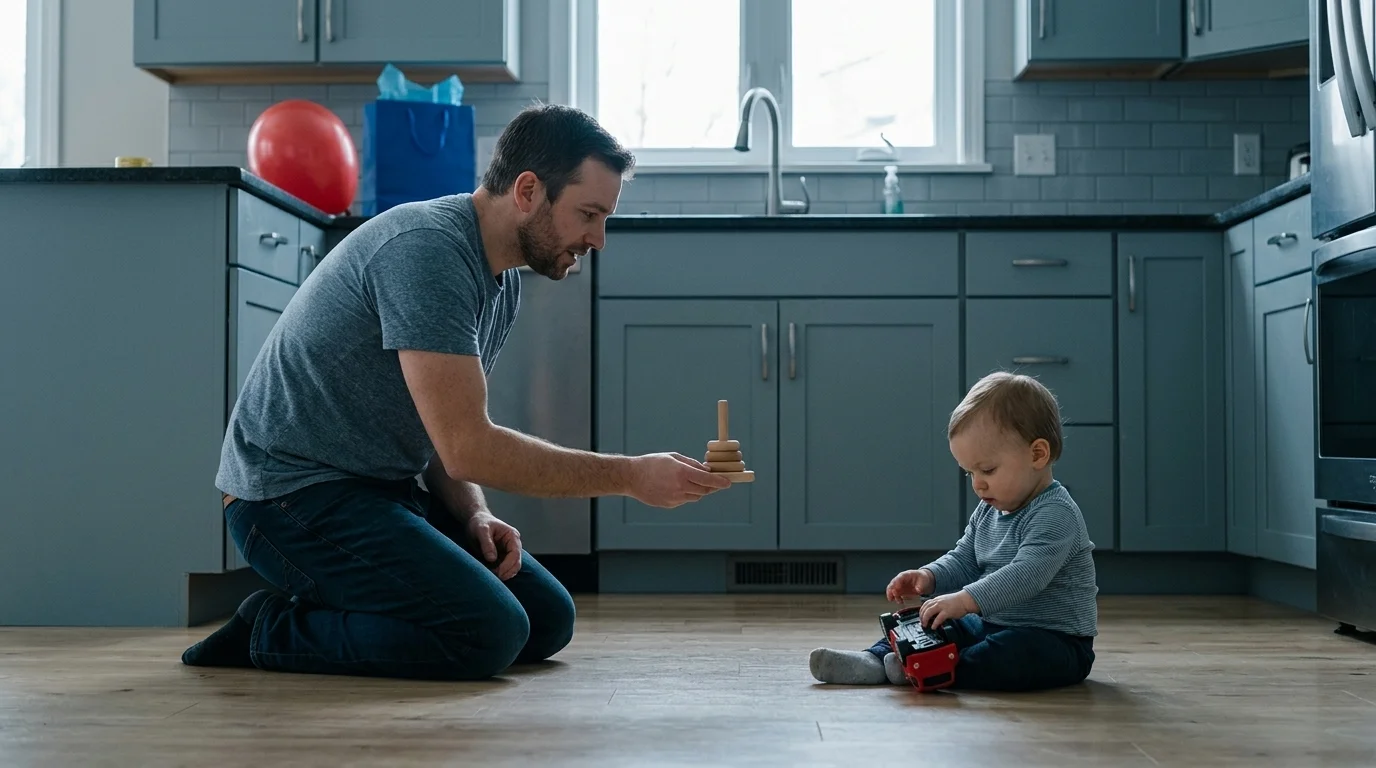
In therapy sessions. Our BTs use behavioral momentum constantly. Before a tough demand like a dental hygiene routine or a haircut prep task, the BT runs a quick string of "high-p" requests the child loves: high-fives, find the green block, point to the dog. Then the difficult demand follows, and compliance is much more likely.
At home. Parents we coach use the same logic with non-preferred chores. Before "please go brush your teeth," try three small wins first: "hand me your shoes," "throw this in the laundry basket," "give the dog a treat." Reinforce each one. Then the toothbrushing prompt lands on a child whose motor is already running in the right direction.
Adjusting strategies to individual needs
Every child has different high-probability tasks, and the strategy only works if you've identified the right ones. For one child, that's silly actions like funny faces or animal sounds. For another, it's preferred tasks like picking out a snack or naming favorite cartoon characters. We see this often in our practice: a parent assumes "ask three easy things" means asking the same three things every time. The sequences work better when you rotate the high-p items and pair them with what your child genuinely finds easy or fun in that moment. Tracking how your child responds to each request over a week or two helps you build a personal library of dependable high-p tasks. For families in our parent training program, this is one of the first practical skills we teach.
Theoretical Insights into Behavioral Momentum
The theoretical foundation of behavioral momentum comes from B. F. Skinner's framework of the discriminated operant and from the relationship between resistance to change and reinforcement rates. Behavioral momentum theory holds that behaviors are more resistant to disruption when they have a history of higher reinforcement, which parallels concepts from Newtonian physics. This is one of the things that distinguishes ABA from other therapies for autism: the strategies come out of measurable behavioral research, not just clinical intuition.
Key concepts include behavioral mass and velocity. Behavioral mass corresponds to response strength and influences how persistent a behavior is when challenged. The more frequently a behavior is reinforced, the more inertia it builds, which means it's less easily interrupted.
Impact of reinforcement
Reinforcement is the engine of the whole strategy. When high-probability tasks are reinforced immediately after completion, the positive reinforcement strengthens the persistence of those compliance behaviors. That momentum carries forward into low-probability requests, which is exactly the moment most parents are trying to win.
Historical Context
Behavioral momentum theory emerged as a significant contribution to behavior modification in educational and therapeutic contexts. Empirical research has consistently shown that contexts rich in reinforcement schedules enhance behavior persistence. As practitioners apply the strategy, they're drawing on decades of behavior-analytic research that supports learners across school, clinic, and home settings.
High-Probability Request Sequences and Their Role
Behavioral momentum and high-probability (high-p) request sequences are essentially the same engine. A high-p sequence is a string of easy tasks the child is likely to complete, presented quickly, before introducing a harder request. The sequence builds momentum that carries through to the harder ask.
When a child finishes three easy tasks in rapid succession, they tend to feel capable and on a roll. That sense of capability is what makes the next (harder) request land differently. It reduces task avoidance and protects the rest of the teaching session.
Steps to implement in practice
To run a high-p sequence well, follow these steps:
- Identify high-probability requests. Pick tasks the child can complete fast and easily, ideally with over 80% compliance history.
- Sequence the requests. Open with three to five high-p requests in rapid succession.
- Reinforce immediately. Each completed high-p task gets verbal praise, tokens, or another reinforcer that works for that child.
- Introduce the low-probability request. Once momentum is built, present the harder task that you actually wanted compliance with.
Importance of sequencing
The sequencing is what makes the strategy work. Starting with tasks that produce a sense of success builds the foundation for the harder ask. Reversed sequencing (hard task first, easy tasks as recovery) does not produce the same effect. The momentum has to be built before the demand is placed.
Behavioral Momentum's Role in Mitigating Challenging Behaviors
Behavioral momentum is one of the strategies our BCBAs reach for most often when a child is escaping demands or refusing transitions. Behavioral Momentum Intervention (BMI) provides a structured approach: the BT or BCBA presents a sequence of high-probability tasks before introducing the low-probability request. This raises compliance and task completion, particularly among children with autism.
Benefits in clinical and home settings
- Higher compliance. Children are much more likely to follow through on difficult requests right after a string of easy ones.
- Motivation boost. Quick wins on high-p tasks build the confidence needed to attempt harder tasks.
- Smoother transitions. Transitions between activities become less disruptive, which protects the rest of the session.
Strategies for effective implementation
- Sequence planning. Identify the right high-probability and low-probability behaviors before the session starts.
- Reinforcement. Provide immediate reinforcement for each completed request.
- Monitor progress. Track which sequences are working and which need adjustment.
Real-life applications for children with autism
- Skill acquisition. BMI helps children with autism acquire skills across environments, from morning routines at home to school drop-off to community outings.
- Confidence building. Starting with easier tasks supports kids in gaining the confidence to attempt harder ones over time.
Ultimately, behavioral momentum plays a key role in motivating learners, reducing escape-driven problem behaviors, and protecting the engagement that makes therapy work. If your child is struggling with compliance around specific demands and you'd like to see how this looks in practice, we can get expert behavior support in your home and walk you through how our BCBAs would design a sequence for your child specifically.
Conclusion: Harnessing Behavioral Momentum Effectively
Behavioral momentum offers a practical framework for managing challenging behaviors across home, school, and therapy settings. By using high-probability request sequences and reinforcing each completed task, parents and practitioners can shift the moment-to-moment dynamic from "no, I won't" to "okay, I will." For children with autism, this approach respects how learning actually works: confidence first, then capability. The strategy is small, repeatable, and easy for parents to integrate into daily life once they've identified the right high-p tasks for their child.
Why Mastermind Behavior
Mastermind Behavior is a BCBA-owned and operated in-home ABA therapy provider serving families across New Jersey, Georgia, and North Carolina. Our model is built around a small team that actually shows up where your child lives: BCBAs design the behavior plans, Behavior Technicians (BTs) run the daily trials in the rooms where your child eats, plays, and falls apart, and our parent training coaches make sure you can carry the strategies forward when we're not in the house. Behavioral momentum is one of the first techniques most of our parents learn, because it works on the demands that come up every day, the tooth brushing, the leaving the iPad, the getting in the car. With a 90%+ staff retention rate and no onboarding waitlist, most families begin direct services within six weeks of their initial assessment, with the same BT and BCBA team for the long haul.
If you're exploring ABA therapy for your child, schedule a free consultation or call us at 732.813.7333. We hear from parents all the time who say the same thing: "I can get my child to do three easy things, but the big one is where we fall apart." That's the exact problem behavioral momentum was built for, and it's the kind of thing we'd walk through with you on a first call.
References