How to address sensory aversions to clothing
Tailoring Comfort: Strategies to Tackle Clothing Sensitivities in Children

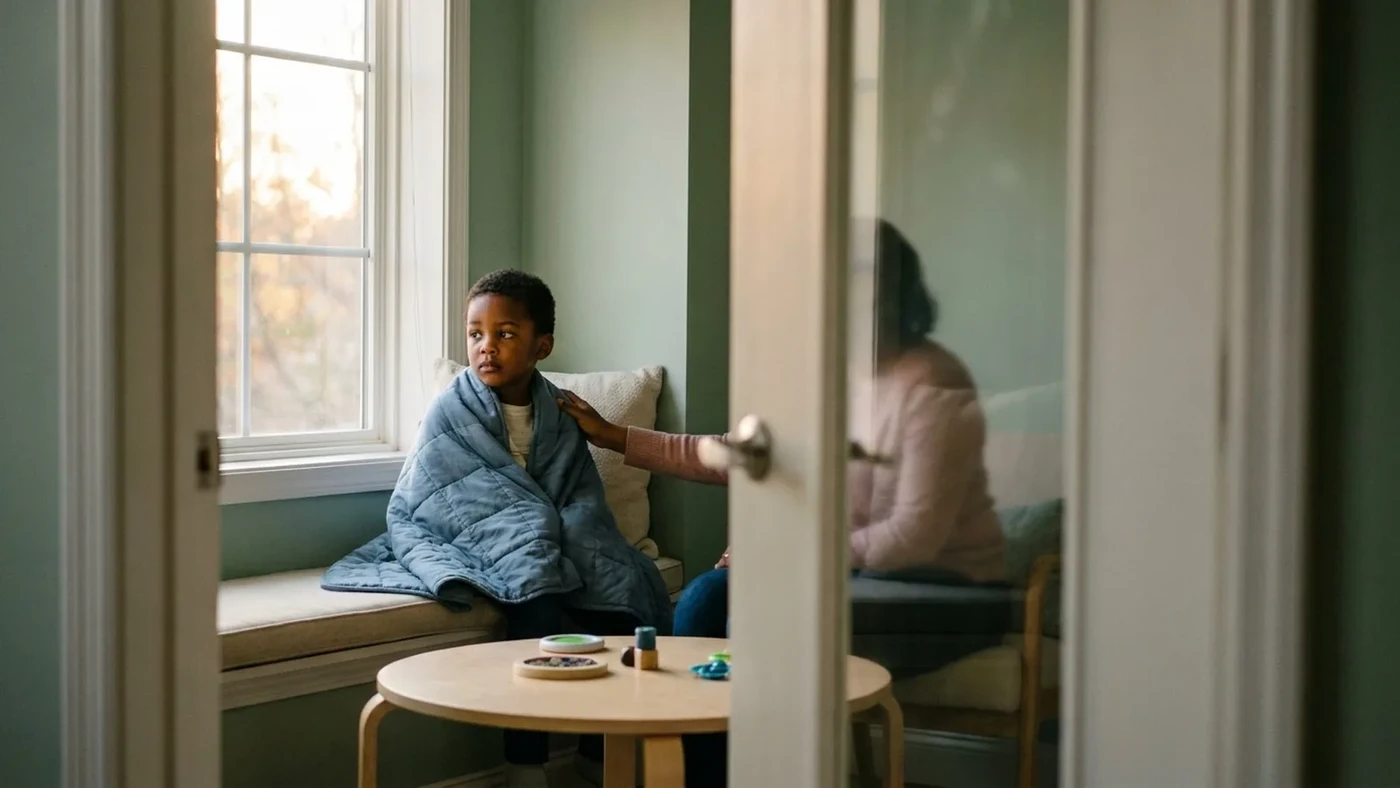
There is a small pile of cut-off tags on top of your eight-year-old's dresser. You cut them off two months ago. The shirts are still on the floor. The seams, the elastic, the texture of the cotton itself, something about them is wrong, and your child cannot tell you exactly what.
Clothing aversions are one of the most underestimated problems in sensory parenting. From the outside it looks like a kid refusing to get dressed. From inside the house it is twenty-five minutes every morning, three meltdowns by 8 AM, and a wardrobe that has narrowed to four acceptable items. In our practice we see these patterns weekly, and the families that get traction usually do so not by buying better clothes but by treating clothing tolerance as a skill to build over time, the way you would teach any other skill.
This article walks through why some children experience clothing as physically painful, what an experienced clinician actually does to expand the wardrobe without forcing it, and which strategies tend to work in real homes versus which ones look good in a brochure.
Recognizing Sensory-Friendly Clothing
Sensory-friendly clothing is designed to minimize the tactile inputs that overload sensitive children. The defining features are consistent across brands:
- Soft natural materials. Fabrics like 100% cotton, bamboo, and jersey knits are gentler against sensitive skin than synthetic blends.
- Stretch and breathability. Designs that allow movement without compression reduce the friction and pressure that escalate discomfort.
- No tags, no rough seams. Tagless labels and flat (or seamless) construction eliminate the small irritants that, for many children, are the actual trigger.
- Non-restrictive fits. Loose or relaxed cuts avoid the squeezing sensations of fitted clothing.
- Easy closures. Hook-and-loop or magnetic closures support independent dressing for children with motor challenges.
- Calming colors and patterns. Quieter hues and simpler patterns reduce visual overstimulation, particularly for children with combined visual and tactile sensitivity.
These features make sensory-friendly clothing a sensible starting point for many families, but they are not the whole answer. A child with a strong tactile aversion can still react to a perfectly seamless shirt if the fabric weight is wrong, or if the previous day's outfit set up a negative association. In our practice, we treat sensory-friendly clothing as a tool, not a cure.
Importance of material choice and design
Choosing the right fabric matters more than most parents realize. Natural materials like cotton and bamboo tend to be softer, more breathable, and more forgiving than synthetic alternatives, which can feel scratchy or hold heat in ways that escalate discomfort. Pre-washing new clothes several times before first wear is one of the simplest, lowest-cost interventions, and it works often enough that we mention it on most caseloads.
A few additional tips that come up consistently:
- Choose soft fabrics first. Prioritize 100% cotton, bamboo, and soft jersey knits before anything fashion-driven.
- Look for stretch. Stretchy fabrics adapt to the body, reducing friction during movement.
- Select loose-fitting styles. Avoid tight waistbands, fitted cuffs, and compression unless the child specifically seeks pressure.
- Layer strategically. A soft bodysuit or seamless undershirt under a less-preferred outer layer can buffer a child through a school day in clothing she would otherwise refuse.
- Eliminate seams and tags. Seamless socks, flat-seamed shirts, and tagless labels are not luxury features; they are the difference between a wearable shirt and one that ends up on the floor.
Used together, these features build a wardrobe a sensory-sensitive child can actually live in, which is the goal. The sensory profile of the actual child should drive the choices, not the marketing copy of the brand.
Managing Sensory Sensitivities in Clothing
Addressing clothing sensitivities works best as a multi-pronged approach. The strategies that show up most often in our practice:
- Start with sensory-friendly clothing. Soft, natural-fiber, tagless, seamless options give the child a baseline she can tolerate. Build from there.
- Allow extra time for dressing. Rushed mornings produce meltdowns. Adding ten or fifteen minutes to the dressing window is one of the highest-yield changes a family can make.
- Empower the child with choices. Two acceptable options laid out the night before, with the child picking, increases cooperation more than the parent picking the "best" choice ever does.
- Use playful exposure. New clothing introduced during play, with no pressure to wear it out of the house, builds tolerance faster than a Monday-morning ultimatum.
- Consult a professional. When clothing sensitivities significantly interfere with daily routines, an occupational therapist or BCBA can design a structured plan that goes further than at-home strategies alone.
How can parents be involved in their children's clothing choices?
Parent involvement is the largest single variable in how clothing tolerance work goes. The behaviors that move the needle most consistently:
- Observe reactions closely. Track which materials, cuts, and weights your child tolerates versus refuses. Patterns emerge faster than parents expect.
- Maintain comfort routines. Familiar clothing acts as an anchor. Gradual introduction of new items, layered around preferred ones, beats wholesale wardrobe changes every time.
- Validate the discomfort. Telling a sensory-sensitive child she is overreacting almost always backfires. Validating that the shirt is genuinely uncomfortable, even if it does not look uncomfortable to you, builds the trust that makes future negotiation possible.
- Pre-wash everything. New clothes get washed two or three times before first wear. This single change reduces the abrasive feel of new fabric significantly.
Used together, these practices reliably lower the daily friction around dressing for sensory-sensitive children. They do not eliminate the aversion. They make it workable.
Causes Behind Clothing Overstimulation
Children experience overstimulation from clothing because their tactile processing system registers ordinary inputs (a tag, a seam, a fiber blend) at a much higher intensity than the typical nervous system does. For these children, the sensation of clothing is not a minor inconvenience the child should be able to ignore. It is more like sand inside a shoe, all day long, on most of the body. It is exhausting, and it is painful in a real and physiological sense.
This pattern is most common in children with sensory processing disorder (SPD), autism, and ADHD, though it shows up across many diagnostic profiles and in some children with no diagnosis at all. The mechanism is the same in each case: a low threshold for tactile input combined with reduced ability to habituate (to "tune out" the input after a few minutes the way most nervous systems do). The result is that the irritation never fades. The seam keeps registering. The waistband keeps pressing. By 10 AM the child is overloaded, and the only thing she can articulate is "I don't want to wear this."
Symptoms parents typically see include tantrums or meltdowns around dressing, refusal to wear specific items even when no other option is available, repeated requests to change clothes throughout the day, and visible distress (scratching, pulling at clothing, removing items) in settings where doing so is socially difficult. The intensity of the reaction is the clearest signal that something more than preference is at work. Preferences do not produce sustained physiological distress; sensory processing differences do.
In environments with high competing input (loud classrooms, crowded grocery stores, busy family events), the clothing trigger often hits harder because the nervous system is already maxed out from other inputs. This is why a child who tolerates a shirt at home may melt down in the same shirt at a birthday party. The shirt did not change. The total sensory load did.
Recognizing this distinction is the foundation for any reasonable response. Once parents understand that the child is not choosing to react, the energy goes into accommodation and tolerance-building rather than into negotiation about whether the discomfort is real.
The Role of Occupational Therapy
Occupational therapy plays a significant role in addressing clothing aversions, particularly when the sensitivities are severe enough to limit the child's participation in school, activities, or family life. Through individualized evaluation, an occupational therapist (OT) maps the child's specific sensory profile (which inputs the child seeks, which she avoids, which she habituates to, and which she does not) and builds a plan that targets the actual processing pattern rather than the surface behavior.
The interventions OTs use most often include sensory integration approaches, where the child is gradually and playfully exposed to a range of textures and fabrics in a controlled setting; desensitization sequences, where non-preferred fabrics are introduced in small, low-stakes doses; and brushing or deep-pressure protocols (used selectively, and with parent training, when the underlying profile supports it). The goal across all of these is not to override the child's reaction. It is to build the nervous system's tolerance over time so that the reaction settles down on its own.
OTs also work closely with parents on environmental modifications: pre-washing fabrics, identifying the specific design features the child can tolerate, and structuring dressing routines that reduce sensory load. In our practice, we coordinate with occupational therapists on shared caseloads regularly, and the work tends to compound: ABA targets the behavioral piece (the meltdowns, the dressing routine, the tolerance-building), OT targets the underlying sensory processing, and the two together cover more ground than either alone.
Sensory Sensitivities and Developmental Conditions
The link between clothing sensitivity and autism or ADHD is strong, although clothing sensitivity is not a diagnostic criterion for either. The underlying cause is sensory processing differences, which are common in both conditions and present similarly in many children.
In autism, tactile sensitivities are one of the most frequently reported sensory differences. Many autistic children describe (when they have the language) experiencing certain fabrics as physically painful, certain seams as relentless, and certain pressure points as intolerable. Strategies that focus on the choice of materials (soft, breathable, tagless, seamless) are essential for these children.
In ADHD, clothing sensitivities show up too, although often with a different texture. Children with ADHD may struggle more with the sustained attention required to tolerate ongoing tactile input, particularly when other sensory inputs are competing for attention. They may handle a single piece of uncomfortable clothing fine until the third hour of a long school day, at which point the irritation breaks through everything else they are managing.
Clothing sensitivity is most often a symptom of sensory processing disorder (SPD), which can stand alone or co-occur with autism, ADHD, or other developmental profiles. The overlap is significant, and parents who notice clothing sensitivities alongside other sensory or behavioral patterns are right to ask whether a fuller sensory evaluation might be useful. (Sensory regulation also connects to broader development, including thinking and language, as we discuss in our piece on the connection between language skills and cognitive development in ASD.)
Encouraging Clothing Acceptance in Children
The most reliable approach to building clothing tolerance combines environmental modifications, gradual exposure, and respect for the child's sensory experience. The work moves on a timeline that is usually slower than parents hope for and faster than parents fear.
In our practice, we typically see a workable shift in clothing tolerance within four to six weeks of structured intervention. The pattern looks roughly like this: weeks one and two are about reducing the sensory load (sensory-friendly basics, pre-washing, eliminating known triggers) so the child has a baseline. Weeks three and four introduce small, playful exposures to slightly less-preferred fabrics, paired with strong reinforcement. By weeks five and six, the child has typically added one or two new tolerable items to her wardrobe and the morning routine is less explosive. This is also when the parent training piece compounds most: families who are doing the exposure work consistently see the most sustained gains. The work we use for skill-building across many of these areas is part of our broader in-home ABA support for sensory needs, where we design the plan inside the actual home where dressing is happening.
Specific strategies that come up most:
- Provide opportunities to explore fabrics first. Let the child touch and explore new fabrics off-body before being asked to wear them. This separates the sensory exploration from the demand to perform.
- Implement a calming sensory routine before dressing. A few minutes of deep-pressure input, vestibular activity, or a familiar tactile activity right before dressing can shift the child's state into one where new inputs are more tolerable.
- Use positive reinforcement. Specific praise ("You wore the new shirt today, that was hard work") and small, meaningful rewards build the association between dressing and success.
- Allow significant extra time. A rushed dressing window is the single most common cause of meltdowns. Adding ten or fifteen minutes is a near-universal first step.
- Include the child in clothing choices. Two or three pre-approved options, laid out the night before, with the child making the final pick, reduces resistance more than parental choice ever does.
Customizing existing clothing (removing tags, snipping out scratchy seams, washing items several extra times) is another low-cost intervention that often produces faster results than buying new sensory-friendly items. The goal across all of this work is the same: a wardrobe a child can live in, a morning routine that does not start with a meltdown, and a child who is learning, slowly, that her body's reactions are real and that she can build tolerance over time. Some of these strategies sit comfortably inside what we call naturalistic teaching, where skill-building happens during ordinary daily routines. We cover this approach in more detail in our piece on how to use naturalistic teaching methods for communication skills development, and many of the same principles apply directly to dressing routines.
Empowering Comfort through Understanding and Support
Addressing sensory aversions to clothing requires understanding the child's actual sensory profile, building strategies around it, and bringing in professional support when daily life is being significantly disrupted. The work is rarely fast and never linear, but the trajectory is real. Children who are supported through structured exposure, environmental modification, and validation of their experience tend to expand their tolerance over time. The goal is not a child who wears anything without complaint. The goal is a child who has enough sensory regulation, enough trust in her parents, and enough self-advocacy to navigate her wardrobe without it costing her morning, every morning.
Why Mastermind Behavior
Mastermind Behavior is a BCBA-owned and operated in-home ABA therapy practice serving families across New Jersey, Georgia, and North Carolina. Clothing aversions, in our experience, are rarely about clothing alone. They are about a sensory system that registers a seam as a scream, and the morning routine that has to accommodate it. Our BCBAs build tolerance plans after watching the actual dressing routine in your actual home, with your actual clothing piles, not in a clinic with a tag-free shirt no parent owns. Behavior Technicians work through the gradual exposure trials, the desensitization steps, the careful fade of preferred-only outfits into a slightly broader wardrobe. Parent training coaches sit at the dresser with you on the school mornings when the cotton shirt is back on the floor and your patience is gone. Most families on our caseload begin direct services within six weeks of their initial assessment, with no onboarding waitlist.
If you have been managing your child's clothing battles by buying the same three shirts in five colors, we are glad to talk through what else might help. Schedule a free consultation at mastermindbehavior.com/contact or call 732.813.7333.