The Role of Mentorship in Developing Social Skills
Unlocking Potential: Mentorship's Impact on Social Skills

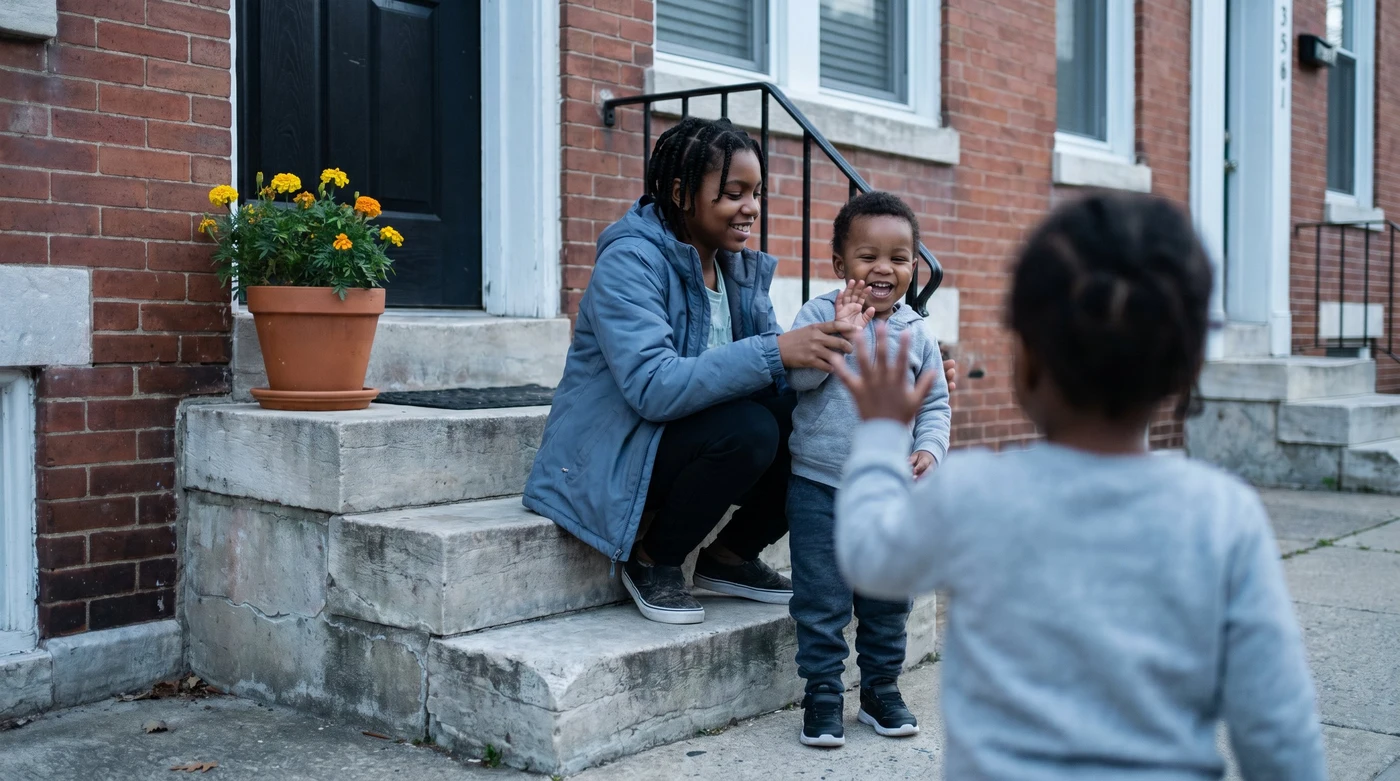
It is a Saturday afternoon in the backyard. Your nine-year-old is on the trampoline with his older cousin, who is twelve. The cousin is jumping in a pattern, slow, fast, slow. Your son is watching. Then he tries the pattern. He misses the rhythm. The cousin laughs and shows him again. Your son tries again, gets it, and laughs too.
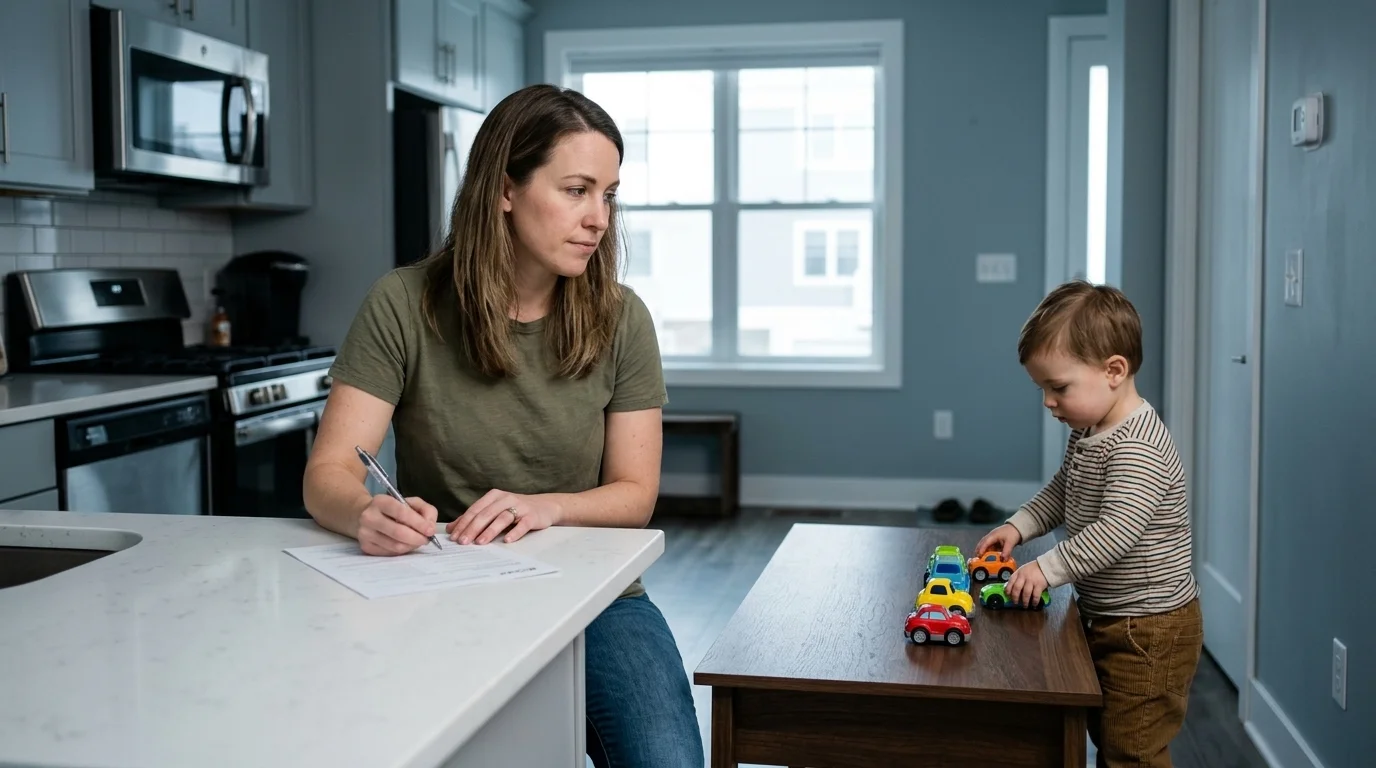
Ten minutes ago, you watched your BCBA run an entire structured social skills drill at your kitchen table. It went fine. He participated. He got his reinforcement. But what just happened on the trampoline is something the drill cannot reproduce, no matter how good the BCBA is.
This is the conversation we end up having with a lot of the parents on our caseload. Not "should my kid have a mentor?" but "why does the cousin work better than the therapist for some of this?"
When ABA people talk about mentorship for kids with autism, we are usually not talking about adult mentor-style programs. We are talking about peer-mediated intervention. The general idea: a typically developing peer (a sibling, a cousin, a kid from the neighborhood, a "buddy" assigned in a school program) is trained to interact in specific ways with a child on the spectrum, and a lot of the social learning happens through that interaction instead of through an adult.
This is not a fringe idea. The 2020 review of evidence-based practices for autism (the third generation of a major federally funded review) lists peer-based intervention as one of the established practices.1 The Association for Science in Autism Treatment summary of the research describes peer modeling as strongly supported by the evidence.2 So when our BCBAs build peer time into a program, it goes in as a clinically supported component of the plan.
Peer time works because peers create real social moments. A therapist can run a sharing drill. A cousin will actually grab the last cookie and create the natural sharing moment.
This is the part of the conversation parents tend to remember.
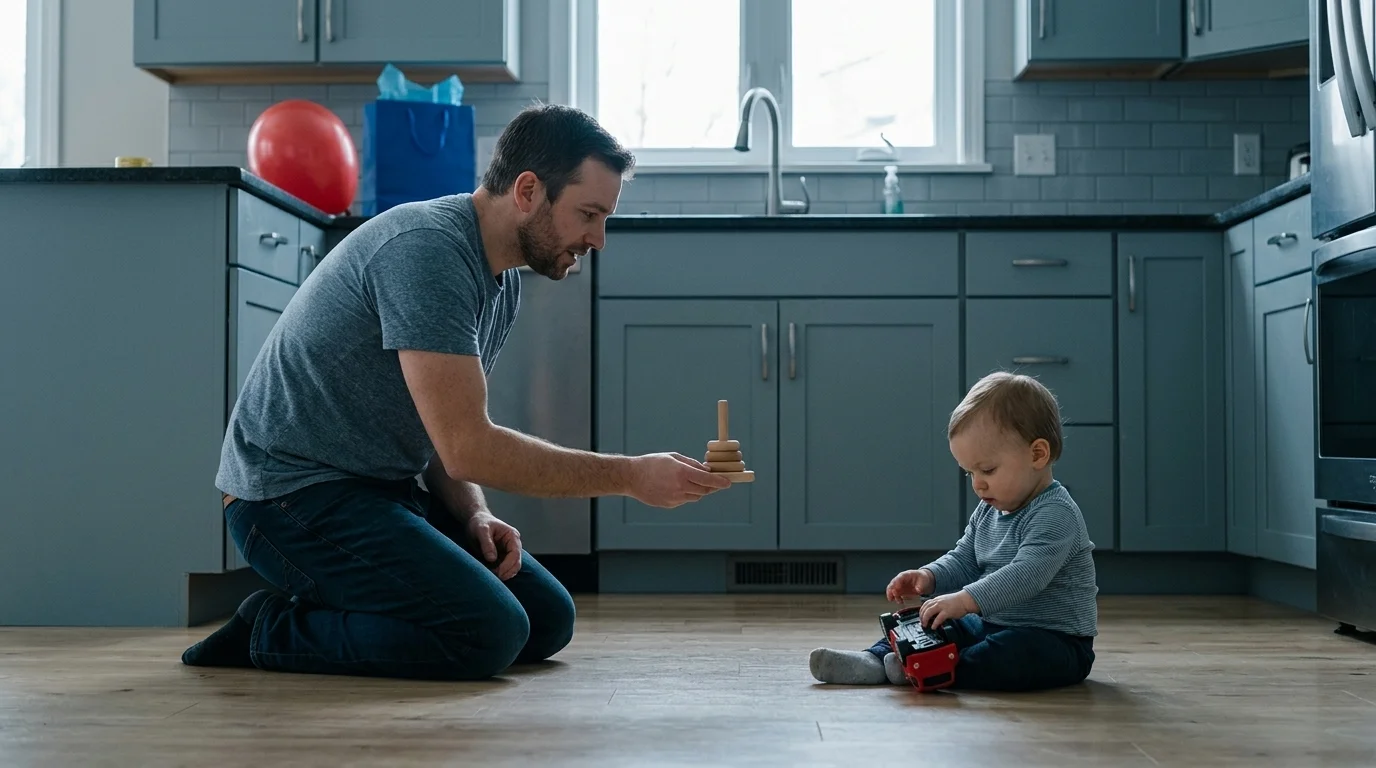
In a structured therapy session, a BT (a Behavior Technician, the team member running daily sessions in your home) can model conversation. They can prompt eye contact. They can run conflict resolution drills. They are very good at this. But the BT is, by design, a calm and patient adult who is being paid to be there. They are not going to cheat at Uno. They are not going to pull rank because they got there first. They are not going to make fun of a wrong answer in the way a real ten-year-old peer might.
Most social skills, frankly, are easier to teach with peers than with therapists, because so much of it happens naturally and does not need to be created. Conflict resolution, sharing, cheating, recovering from being wrong, reading sarcasm, learning that another kid does not actually want to hear about Pokémon for forty minutes straight: these come up automatically with peers. They have to be staged with a therapist.
So in our practice, the BCBA's job in this part of the program is often not to be the social partner. The BCBA's job is to design the environment so the peer can be the social partner, and to be ready when the moment breaks.
Here is what we actually do, in roughly the order we do it.
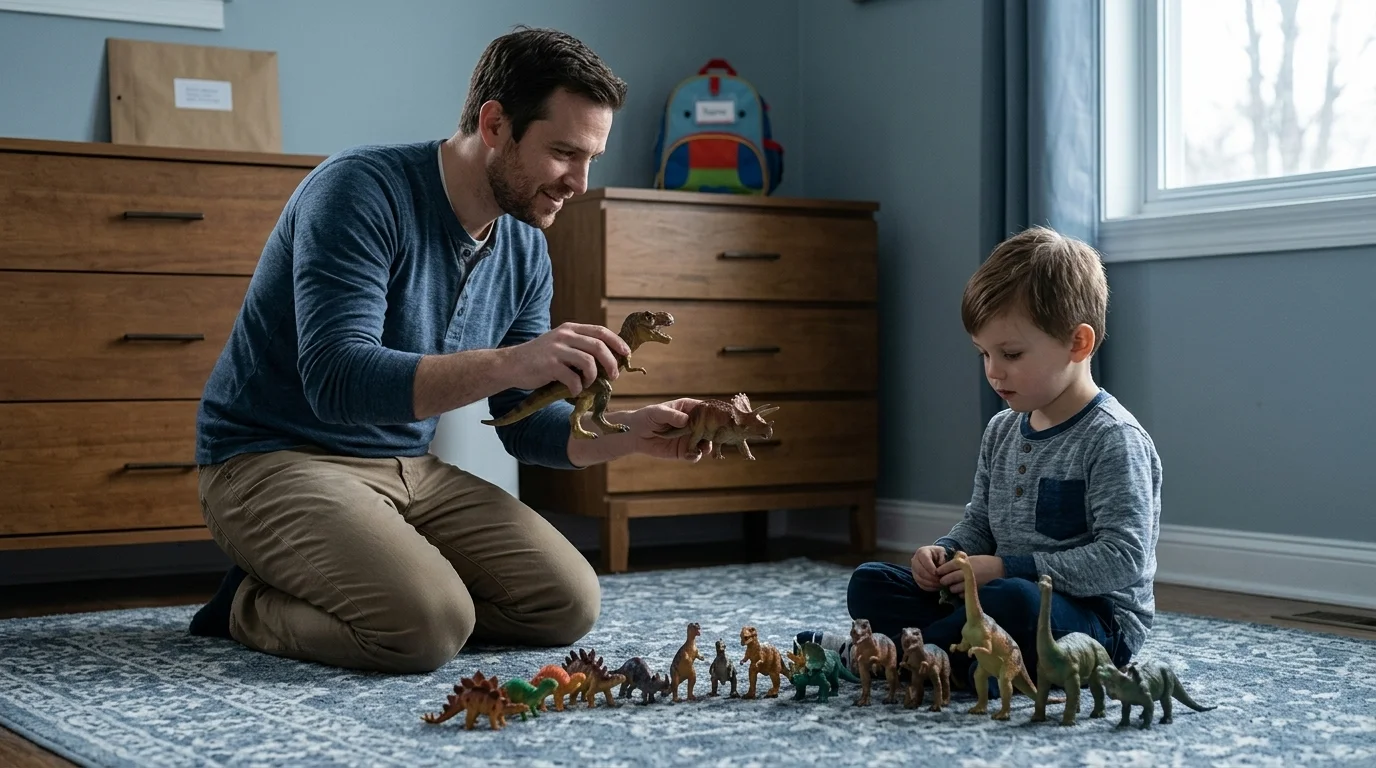
Step 1: Find the peer. Sometimes it is a sibling. Sometimes a cousin. Sometimes a neighbor's kid. The peer needs to be old enough to follow a few simple guidelines from a BT, young enough to actually want to play, and willing to be there more than once. We have had eleven-year-olds become more useful members of the team than some adult therapists.
Step 2: Coach the peer, briefly. Not a clinical training. Five minutes of "here is what I am going to ask you to do, here is what you should not do, here is what to do if he gets upset." Most peers do not need much. Most kids are kinder and more flexible than parents expect, when they are given a real role.
Step 3: Run short, structured activities together. A board game. Building a Lego set. Throwing a ball. The BT is in the room but not in the middle. The BT prompts only when something gets stuck.
Step 4: Watch what your child does. Many of the kids on our caseload show more social behavior with a peer than they ever do with an adult. They watch the older peer. They follow the older peer. They copy what the older peer does. They move closer to the older peer for no particular reason. None of these are programmed. They just happen, because peers are interesting in a way adults are not.
Step 5: Fade the BT. Eventually the peer can run the activity without the BT being right next to them. This is when the program graduates into "structured peer time" and stops being an ABA session in the technical sense.
The peer learns, too. Research on peer buddy programs has found that most child peers report enjoying the experience and feel they got something out of it personally.3 We see this in the field. The cousin or sibling who started doing this for forty-five minutes a week often turns into the cousin or sibling who shows up because they want to.
A lot of families ask if a sibling can fill the peer role. The answer is yes, with two caveats our BCBAs spend a lot of time thinking about.
First, the sibling has to want to. A sibling who is conscripted into being a therapist for their brother or sister will get burned out fast. Our parent training (one of our parent training team's specialties) often involves making sure the sibling is opting in, not assigned.
Second, the sibling cannot be the only social partner. We see a pattern where a kid with autism has one neurotypical sibling who handles all of the social moments, and the kid never builds skills with anyone outside that one relationship. The skill stays brittle. The moment the sibling is at college and the family is at a community event, all the social learning collapses, because it was tethered to one person.
So when we build a peer mentorship piece into a program, we usually want at least two peers in the rotation. A sibling and a cousin. A sibling and a neighbor. A cousin and a kid from school. Variety is what makes the skills generalize.
One of the most useful things we have learned about peer mentorship is that some of the best peer relationships are not the ones we set up at all. From time spent in elementary school settings, the pattern shows up most often during specials and field trips. A neurotypical classmate sits next to your child in art for a semester, hands them a glue stick when they cannot find theirs, waves them over to a seat in the cafeteria, walks next to them on a museum field trip. Nobody asked this kid to do any of that. Nobody trained them. They just became a peer mentor by being a regular sixth grader in the same room every Wednesday at 10:15.
This matters for two reasons. First, it tells us where the natural peer moments are actually happening, which is in mainstream activities your child is already attending. The cafeteria, the art room, the music class, the field trip bus. These are just school, and they are doing real social work that no structured program can replicate.
Second, it changes what we ask parents to look for when they tell us their child has no friends. Often the child has a couple of low-key peer relationships at school that the parent has never heard about, because the peer connection lives entirely inside the school day. The way to find these peers is usually to ask the teacher, not the child. Teachers see who sits next to whom in specials, who pairs up on field trips without being told to, who saves a seat. Those are the kids worth inviting over.
The skills that come out of peer time are different in flavor from the skills that come out of therapist drills. Both matter. They are not the same thing.
From peer time, kids tend to build:
- The ability to repair a social moment after it breaks (you said the wrong thing, the kid is mad, what now)
- Tolerance for being teased or losing
- Ability to read another kid's tone, including sarcasm
- Comfort with the unscripted parts of conversation, like silences and topic changes
- Sense of where the line is between "playing" and "annoying," which most kids learn from being told by other kids that they crossed it
- Genuine friendship behaviors that are not transactional
From therapist drills, kids tend to build:
- Specific social scripts (greetings, requests, asking for help)
- Eye contact and orientation
- Turn-taking mechanics
- Tolerating frustration in a controlled context
- Identifying emotions in pictures or videos
- Communication system fluency (verbal, signed, AAC)
A program that has only therapist drills produces kids who are technically competent in social interactions but get lost in actual playgrounds. A program that has only peer time produces kids whose social moments depend on whether the right cousin is around. The combination is what builds skills that hold up.
Here is something most parents do not see coming. The biggest gains from peer time often show up not in the targeted skill, but in a sibling-relationship side effect that nobody programmed.
A typical scene we see at six-month reviews: a parent reports that their daughter, who has been the peer partner for her brother's program, has started seeking out her brother on her own. Not because her parents asked. Not because the BT scheduled it. She just walks into his room more often, plays Legos with him longer, and asks him questions she did not used to ask. The peer mentorship structure gave her a real way to relate to him, and once that channel was open, it stayed open.
This is the single most common piece of unsolicited feedback we get from parents about this part of the program, and what they are describing is a family outcome more than an ABA one. We mention it because most generic articles about mentorship miss it entirely, and it is one of the more durable benefits of doing this in a home.
If you are not in an ABA program yet but you want to start something, here is the smallest possible version of this that we can recommend.
Pick one peer your child already has some connection with. A sibling, a cousin, a kid from down the block. Pick one shared activity that does not require a lot of language. Building, drawing together, throwing a ball, a video game with a clear two-player mode. Set a fifteen-minute timer. Sit nearby but do not sit in the middle. Do not narrate. Let the peer and your child figure it out.
Watch what happens. Take notes if you want. The point is not to teach a skill. The point is to learn what your child actually does when the social partner is another child. That is the information your BCBA, when you have one, will start designing around.
Why Mastermind Behavior
Mastermind Behavior is a BCBA-owned and operated in-home ABA therapy provider serving families across New Jersey, Georgia, and North Carolina. Peer mentorship works best when it is built into the rooms and the relationships your child already has, which is a sibling on the living room rug or a cousin in the backyard, not a stranger in a clinic waiting room. Our BCBAs design the skill development program. Our BTs run sessions in your home and step back when the peer is the right teacher. Our parent training coaches help you and the rest of the family figure out how to keep the structure going during the hours we are not there. With a 90%+ staff retention rate and no onboarding waitlist, most families begin direct services within six weeks of their initial assessment.
If you are exploring ABA therapy for your child, schedule a free consultation or call us at 732.813.7333. We will talk through who is already in your child's life that could be part of a peer mentorship structure, what the program would actually look like in your home, and what the right next step is. No pressure, no commitment.
References
- Hume K, Steinbrenner JR, Odom SL, et al. Evidence-Based Practices for Children, Youth, and Young Adults with Autism: Third Generation Review. National Clearinghouse on Autism Evidence and Practice | UNC. 2020.
- Association for Science in Autism Treatment. Treatment summary: Peer modeling. ASAT. 2024.
- Chang Y, Locke J. A systematic review of peer-mediated interventions for children with autism spectrum disorder. Research in Autism Spectrum Disorders | NIH PMC. 2016.