How to Use Naturalistic Teaching Methods for Communication Skills Development
Unlocking Communication Through Naturalistic Teaching


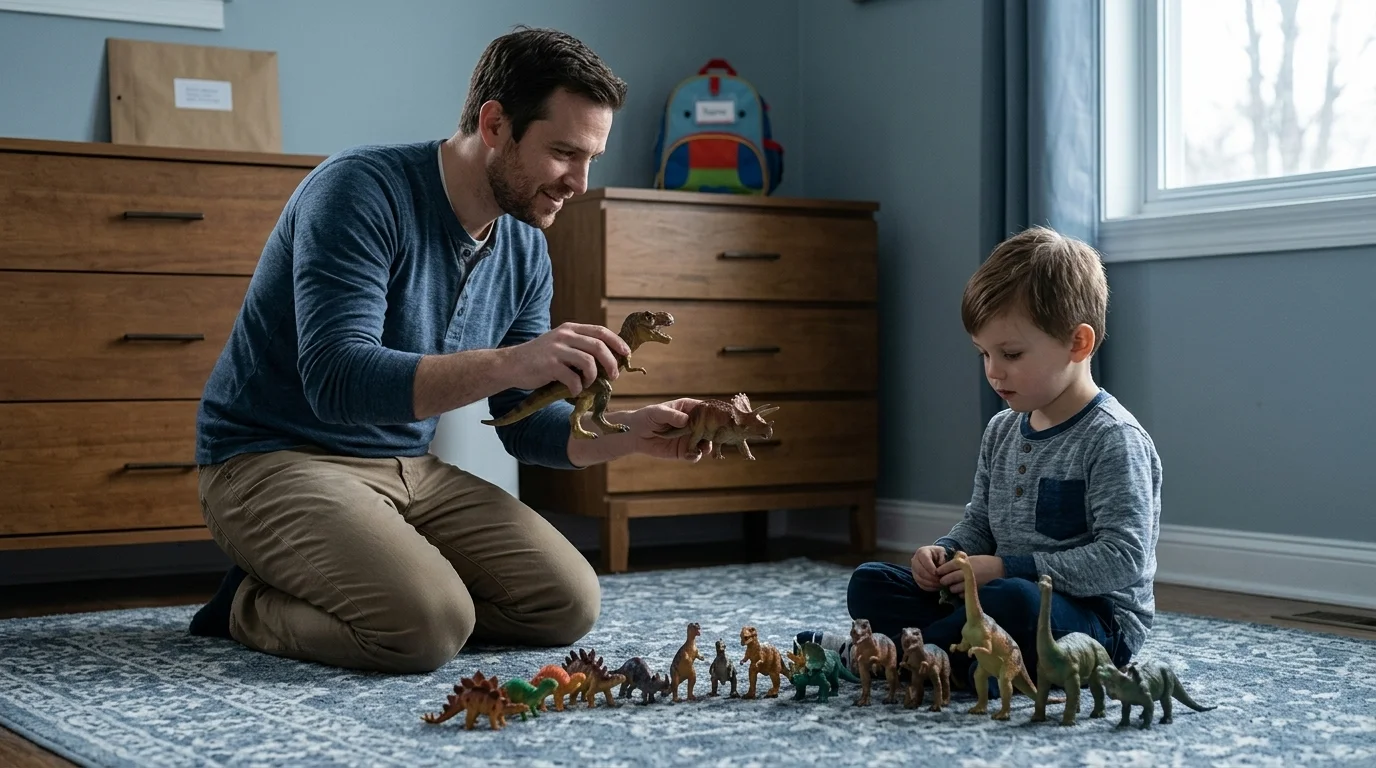
It is a Saturday afternoon. You walk into the living room and the BT is on the floor with your five-year-old, building a track for the dump truck. Cars are everywhere. The BT is laughing at something your son said about a dinosaur. You stand in the doorway for a minute, watching, and a quiet question forms: is this a session, or are they just playing. You are paying for therapy. This looks a lot like what your son does on a normal Tuesday by himself.
This is one of the most common moments parents bring up to us, and it is also one of the most consistently misunderstood things about ABA therapy. What you are watching is naturalistic teaching, often called Natural Environment Teaching, or NET. It looks like play because the form is play. The function is something else. We want this article to make the difference visible, because once you can see it, you can also tell whether your team is doing it well.
What NET Actually Is
Naturalistic teaching is a category of ABA-based methods that embed teaching targets into a child's natural activities and routines, using the child's own interests and motivation to drive the learning. Instead of "sit at the table, repeat after me, here is your sticker," NET looks like the child is leading and the BT is following, with very precise teaching happening underneath.
The umbrella term researchers use for the broader category is Naturalistic Developmental Behavioral Intervention, or NDBI. NDBIs are an evidence-based class of autism interventions, with a substantial research base, that combine principles of applied behavior analysis with developmental science.1 Specific named NDBIs include Pivotal Response Treatment, Early Start Denver Model, Natural Language Paradigm, and Joint Attention Symbolic Play Engagement and Regulation (JASPER), among others. Most in-home ABA programs use NET-style strategies, sometimes alongside more structured Discrete Trial Training (DTT). The two approaches are not in competition; they handle different parts of the program.
What separates good NET from bad NET is not the toys or the location. It is whether the BT is actually running antecedent, behavior, and consequence trials inside the play, with goals, data, and a plan, or whether the BT is just hanging out on the floor.
The Misconception That Derails Most NET Programs
In our practice, the single most common mistake we see (in newer therapists, in some school-based programs, and occasionally in marketing copy from other providers) is treating NET as "child-led play with no plan." It is not. NET is highly structured underneath, even when the surface looks loose.
A BT who has not been trained in NET fundamentals can sit on the floor with a child for an hour, follow the child's interests, label things, and call it naturalistic teaching. From the parent's view it can look identical to the real thing. The difference is in what the BT is tracking. Real NET has a target list active during the session: maybe four communication targets, two requesting targets, one social target. The BT is creating opportunities for those targets to come up naturally in the play, prompting if they do not, reinforcing when they do, and recording what happened. The play is the medium. The trial structure is still there.
Our BCBAs spend a lot of training time on this distinction. New BTs sometimes ask why their session "didn't feel like therapy" when they finished. The honest answer is that the BT was not running it as therapy. The plan was missing. We coach toward the version where the BT can name, on the way out the door, what trials ran during the session, what data points were collected, and what tomorrow's session needs to focus on next.
NET in the Kitchen
Let us walk through what this actually looks like in three rooms most families have. The first is the kitchen.
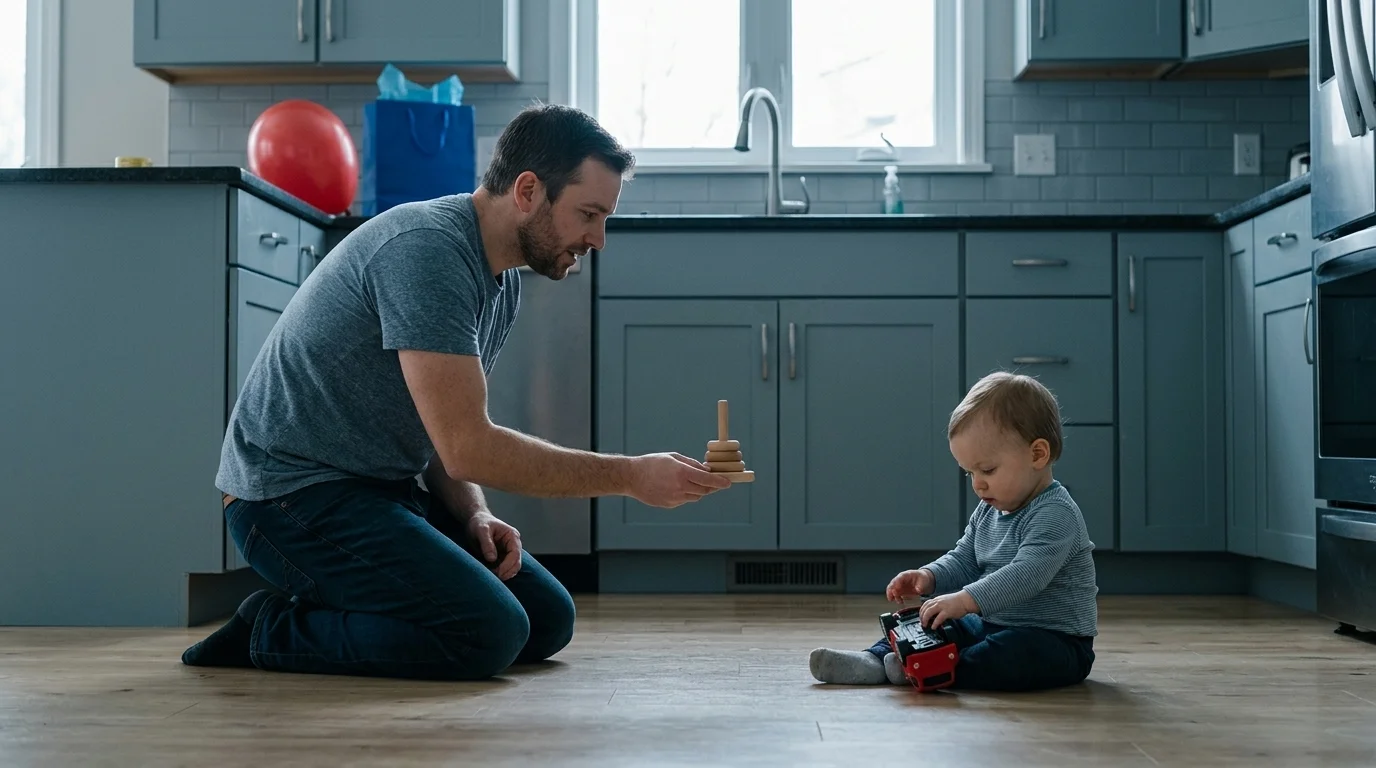
It is dinner prep. You are making spaghetti. The BT has a list of targets for your seven-year-old: requesting, following two-step directions, labeling actions, and tolerating waiting. Real NET in this scene looks like this. The BT hands your daughter a colander to drain the pasta and says, "What do you need to do with this?" (label the action). She answers. She drains. The BT says, "Now we need to put the pasta in the bowl. Can you ask for the bowl?" (request, with a model if needed). She asks. The BT slows the next step, intentionally creating a brief wait. "We have to wait for the sauce. Let's count to ten." (waiting, joint engagement). She counts. Sauce is ready. The BT says, "Now what?" (sequencing). She tells the BT to pour. The BT pours, hands her the spoon, and says, "What do you do with this?" (label the action again, in a different context).
That is roughly five teaching trials in a five-minute span, embedded in dinner prep, and your daughter has just earned a real bowl of spaghetti as the natural reinforcer. No tokens. No "good job." The pasta is the reinforcer because she helped make it.
Cooking-based NET pulls double duty: the same activity can target safety skills (how to hold a knife, what is hot, when to stop), feeding skills (tolerating new foods, expanding flavor profiles), and functional communication. We see this work especially well with older kids and teens whose programs are starting to bridge into skill development targets like adaptive living and meal prep.
NET in the Backyard
A different scene. Same family, different day. You are in the backyard and your son is playing on a swing. The BT is pushing him.
Targets for the session might include turn-taking, labeling environmental sounds (a dog barking, a neighbor's lawn mower), labeling natural categories ("birds," "leaves," "things that fly"), and answering "what do you hear" or "what do you see." NET in the backyard looks like the BT pushing the swing and saying, "My turn next, then your turn." (turn-taking, modeled). After a few rounds the BT says, "Listen. What do you hear?" The child says "dog." The BT adds detail: "Yes, the dog is barking. Where do you think the dog is?" (extending the language). The child answers. The BT pushes again. "Look up. What do you see?" The child says "leaves." The BT extends: "What color are the leaves today? What season is that?" (categorization, label-by-attribute).
Backyard NET is where labeling environmental sounds and categories tends to thrive, because the categories are real and present. This is also where parents often get the clearest view of how language and cognition link up: when the child can answer "where is the dog" by tracking a sound to a direction, that is integration, not just labeling.
NET in the Bedroom
The third scene. Your child has just woken up. The BT walks in for an early-session start.
Targets here might include functional communication (requesting a break, requesting help), morning routine independence (making the bed, getting dressed), and tolerating a transition from sleep to activity. NET in the bedroom looks like this. The BT sits down on the edge of the bed. "Good morning. What do we do first?" The child does not respond verbally; the BT prompts, "Stretch first." (transition routine modeled). The BT then says, "Now we make the bed. Can you grab the corner?" (two-step direction, with movement). The child grabs the corner, the BT grabs the other, they make the bed. The BT says, "Was that fast or slow this morning?" (reflection, building self-monitoring). The child answers. The BT moves to dressing: "What do you want to wear, the blue shirt or the red shirt?" (choice-making, requesting). The child picks. The BT helps with the part the child cannot yet do, fading prompts as appropriate.
Bedroom NET is where functional independence skills get built. Brushing teeth, washing hands, picking out clothes, packing the school bag. The communication is layered into the routine, not separate from it. Most kids will accept communication targets more readily during a routine they are motivated to complete (because they actually want to be dressed, or they actually want breakfast) than during a contrived drill.
Why It Works Better Than the Table-Based Version Some Of the Time
The case for NET is not that it is universally better than DTT. It is that NET fixes a specific problem DTT does not solve well, which is generalization.
A child can master a target in DTT (correctly identifying "red" 90% of the time across ten trials at the table) and not generalize the skill to the kitchen, the car, or the playground. The skill exists in the table context and not outside it. NET trains the skill in the contexts where it actually has to live, which means generalization is built in. Children who have learned a request in DTT and never had to use it spontaneously in their natural environment often hit a generalization wall at age four or five. Children whose programs included regular NET tend not to.
Both methods have their place. In our practice, our BCBAs typically run a mix, weighted toward NET as the child gets older, the targets get more complex, and the natural environment becomes the priority. For very early learners, structured DTT often comes first. For teens working on adaptive living and pre-employment skills, the program is almost entirely naturalistic.
What Parents Can Do During and Between Sessions
Three things tend to make NET dramatically more effective in the homes we work in.
The first is letting the BT see the actual mess. Real bedrooms with toys on the floor, real kitchens with the half-empty cereal box, real living rooms with the laundry pile. The teaching opportunities are richer when the room is real. Parents sometimes apologize for the mess; the BCBA's honest answer is that the mess is the curriculum.
The second is doing your own NET in between sessions. After a few weeks of watching the BT, most parents can replicate the pattern: pick a routine, have one or two communication targets in mind, create the opportunity, prompt if needed, reinforce naturally. Parent training in our practice spends a lot of time on this. Our parent training coaches model the technique, then watch the parent run it, then debrief. The data we care most about is whether the parent can run a clean NET trial unsupervised by the time the program reaches month three or four.
The third is naming what you are seeing. When the BT says "good asking" instead of "good job," they are reinforcing a specific behavior, not the child generally. When the BT lets the child fail at a request and try again, they are building error tolerance. When the BT pauses for a deliberate three seconds before answering a question, they are giving the child time to process, which is invisible to most observers. The more you can read what the BT is doing, the more you can do it yourself the rest of the week.
Common Worries Parents Have About NET
A few things come up often enough that they are worth addressing directly.
"It looks like just playing, am I getting my money's worth." Yes, if the BT is tracking targets, prompting, and collecting data. If you have watched several sessions and never seen the BT take notes, look at a goal sheet, or follow up on something specific from last time, that is a flag. Ask the BCBA to walk you through the goal sheet. A real NET program is data-driven even when the form is play.
"My kid will think therapy is just play forever." This concern usually fades within the first month. NET is teaching during play; the child is still learning that requests get answered, that effort is rewarded, that trying produces progress. Children whose programs use NET tend not to struggle with the transition to school-style learning later, because the underlying behavioral principles are the same.
"Should we still do the table-based work too." Often, yes, especially for early learners and for specific target categories that benefit from massed practice. Pre-academic skills, certain receptive language goals, and matching programs sometimes move faster with structured discrete trials. The right balance is something the BCBA decides based on what the data shows, and it usually shifts over time.
For families exploring whether NET is the right fit for their child's program, in-home ABA therapy is where this approach lives most naturally, because the natural environment is your house.
The Three-Month Check-In That Tells You Whether It Is Working
A practical reference point we use with families. Around the three-month mark of a new program, we run an informal review. Three things to look for.
The first is whether the targets are moving. Are the communication goals from month one mastered or close to it. Are new ones queued up. If the goals look identical at month three to month one, the program is not progressing and that needs a conversation.
The second is whether the skills are showing up outside of session. Is your child requesting things from you that they used to grab silently. Is your child labeling things in the car you would not have predicted. Are routines starting to run more smoothly because the child can communicate during them. Generalization is the whole point of NET; if it is not happening, the program needs adjustment.
The third is how the BT is talking to the child. Are the prompts crisp. Is the reinforcement specific and natural. Is there a clear teaching arc within the play, or does it feel directionless. The BCBA can answer this if you ask. The honest BCBA will tell you if the BT is still developing or already strong, and what the next step is either way.
Why Mastermind Behavior
Mastermind Behavior is a BCBA-owned and operated in-home ABA therapy provider serving families across New Jersey, Georgia, and North Carolina. Naturalistic teaching only works when it actually happens in the child's natural environment, which is why our BTs run sessions in your kitchen, your backyard, your child's bedroom, with the toys and the routines that already live there. Our BCBAs design the targets to fit the rooms, our parent training coaches show you how to run NET-style trials yourself, and the program builds toward generalization from day one. With a 90%+ staff retention rate and no onboarding waitlist, most families begin direct services within six weeks of their initial assessment.
If you are exploring ABA therapy for your child, schedule a free consultation or call us at 732.813.7333. We will talk through what your child's communication looks like at home right now (the requests that are missing, the labels that are not generalizing, the routines that fall apart without prompting), walk you through what an in-home NET program would look like, and help you figure out the right next step. No pressure, no commitment.
References
- Schreibman L, Dawson G, Stahmer AC, et al. Naturalistic Developmental Behavioral Interventions: Empirically Validated Treatments for Autism Spectrum Disorder. Journal of Autism and Developmental Disorders. 2015.