How to Encourage Imitation Skills in Young Children with ASD
Building Foundations for Success: Strategies to Enhance Imitation in Children with ASD

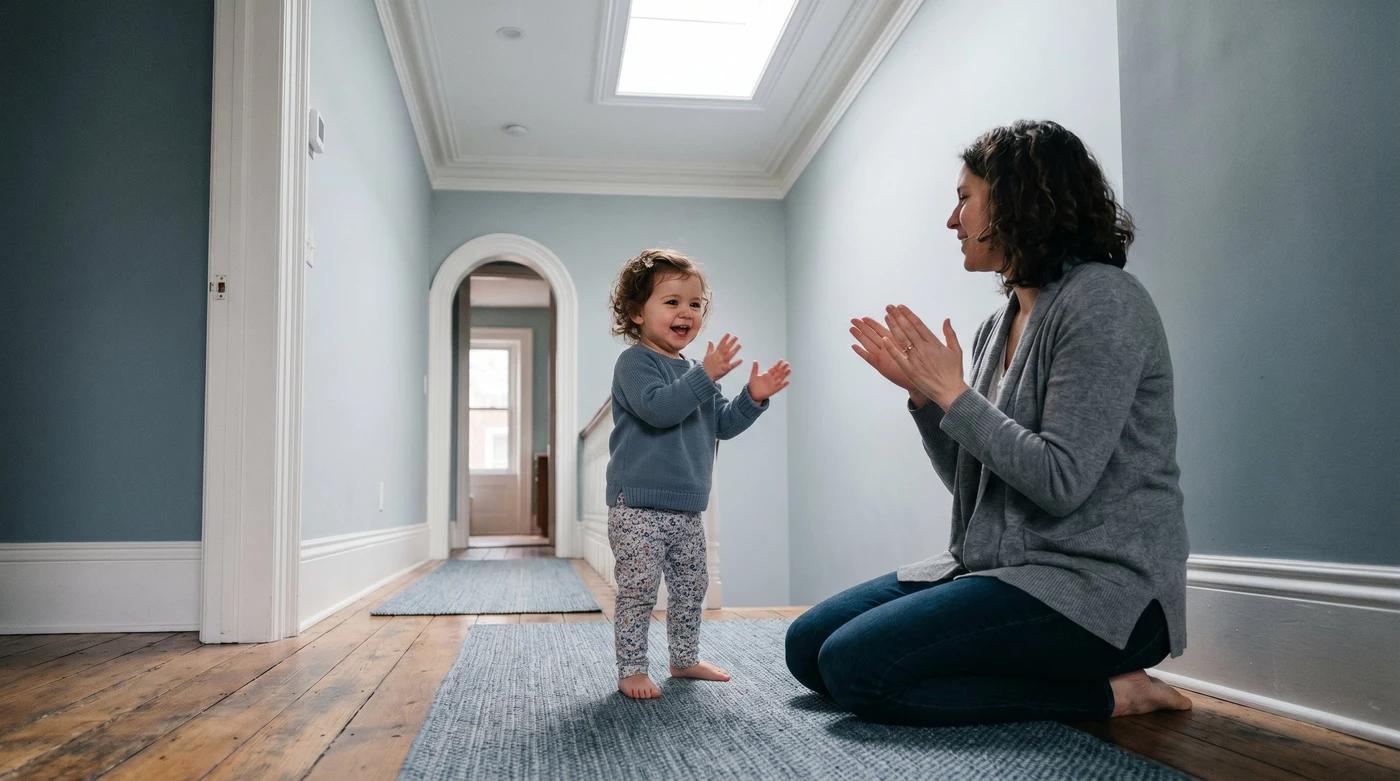
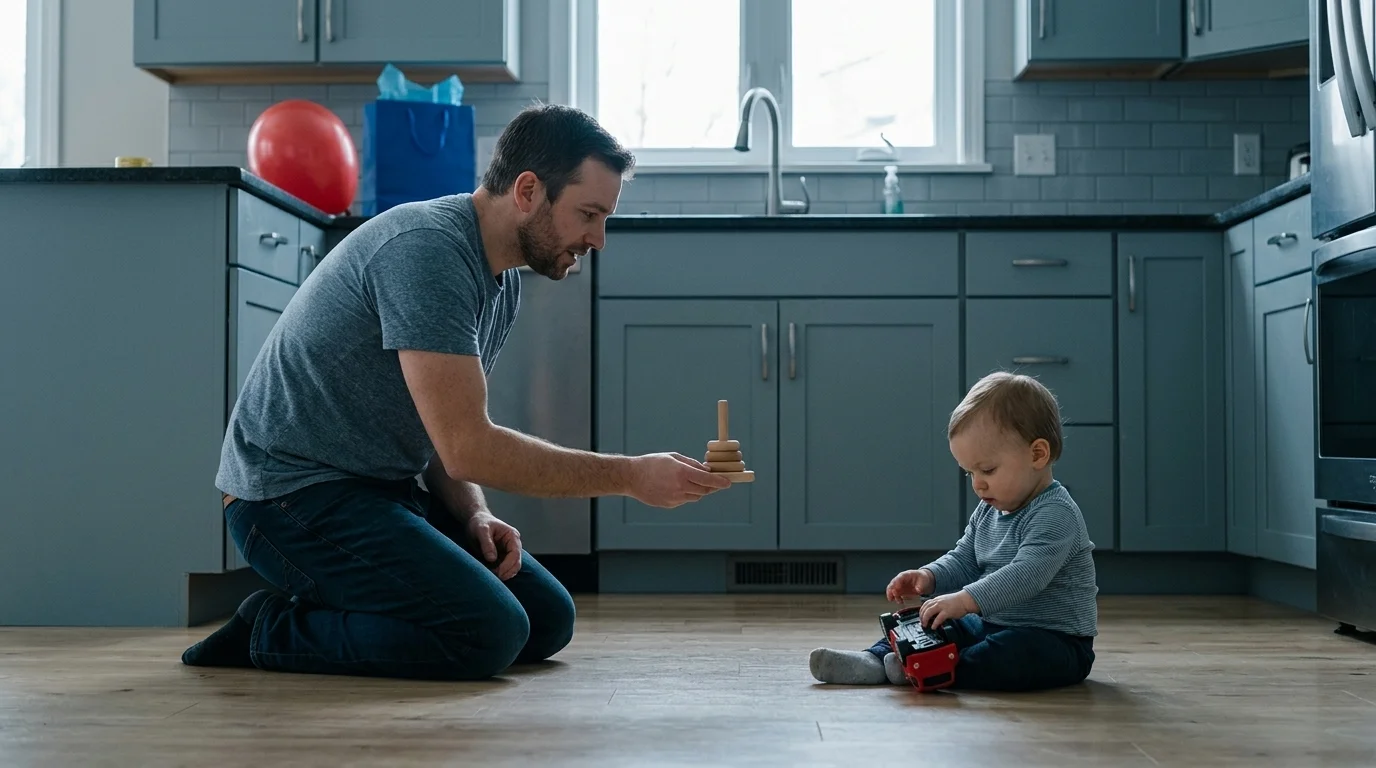
You are sitting on the living room floor with a tub of kinetic sand. Your three-year-old is on the rug nearby, mostly looking at the ceiling fan. You have a speech evaluation booked for next month. The early intervention coordinator used the word "imitation" four times during your last call, and you have been quietly anxious about it ever since, because so far your child does not really copy anything.
This is the moment most ABA programs for young children start. Not with a worksheet or a flashcard. With a tub of something messy on a floor, and a therapist whose first job is to become more interesting than the ceiling fan.
Why imitation comes first
Imitation is one of the earliest social-learning skills typically developing children show. It is also one of the skills most reliably impaired in young children with autism, which is why early intervention programs target it before almost anything else1.
The clinical reason is structural: imitation is a gateway skill. When a child can copy a wave, a sound, an action with a toy, the door opens to language, play, and social exchange. Most cognitive and social skills the child will eventually learn rest on top of imitation as a foundation2. A child who is not yet copying is not "behind" in some general sense. The child does not yet have the mechanism by which the next ten skills are usually acquired.
This is one of the strongest arguments for early intervention in the toddler and preschool years. The earlier the imitation work starts, the more the rest of the learning has time to build.
What "imitation" actually means at this stage
Most parents picture imitation as a child copying a parent waving. That is one form. There are several others, and our BCBAs target all of them depending on the child:
Motor imitation. The child copies a body movement (clapping, jumping, touching the head).
Object imitation. The child copies what an adult does with a toy (rolling a car, stacking a block, brushing a doll's hair).
Vocal imitation. The child copies a sound (the early form, like "ba" or "ee") or a word.
Functional imitation in routines. The child watches a parent do something useful (push a button on the microwave, open the diaper drawer) and copies it.
In our practice, motor and object imitation usually come first, followed by vocal. The reason is that motor and object imitation are easier to prompt physically (we can guide the child's hand) and easier to reinforce immediately, which builds the habit of copying before the harder work of speech imitation begins.
The kinetic sand mess
In a real session with a child who is not yet imitating, the BT does not start with a flashcard that says "do this." The BT starts with whatever the child already cares about. If the child loves crinkly paper, the BT brings crinkly paper. If the child stims with the kitchen funnel, the BT brings a funnel.
A young boy on our caseload, three years old, was not yet imitating or speaking. His therapist (we will call her Sam, but the work would have looked the same with any of our BTs) brought a tub of kinetic sand. They sat on the floor. Sam dumped the whole tub out, shaped it into a hill, and crashed her hand through the middle of it. Sand went everywhere. The boy laughed for the first time in the session.
She did the hand-crash again. He watched. She did it a third time, and on the fourth, he reached out and crashed his hand into the pile too. That was the first imitation.
His mother spent the next ten minutes vacuuming sand out of the rug, because the boy had imitated for the first time in his life and she agreed that the rug was a fair price. The sand-on-rug detail matters because it shows what a real-world, clinical breakthrough actually looks like. Real imitation work is messy. The cleanup is the cost.
The unexpected move: imitate the child first
Here is the move that sounds backwards but is one of the most consistently effective things our BTs do early in a program: before they ask the child to imitate them, they imitate the child.
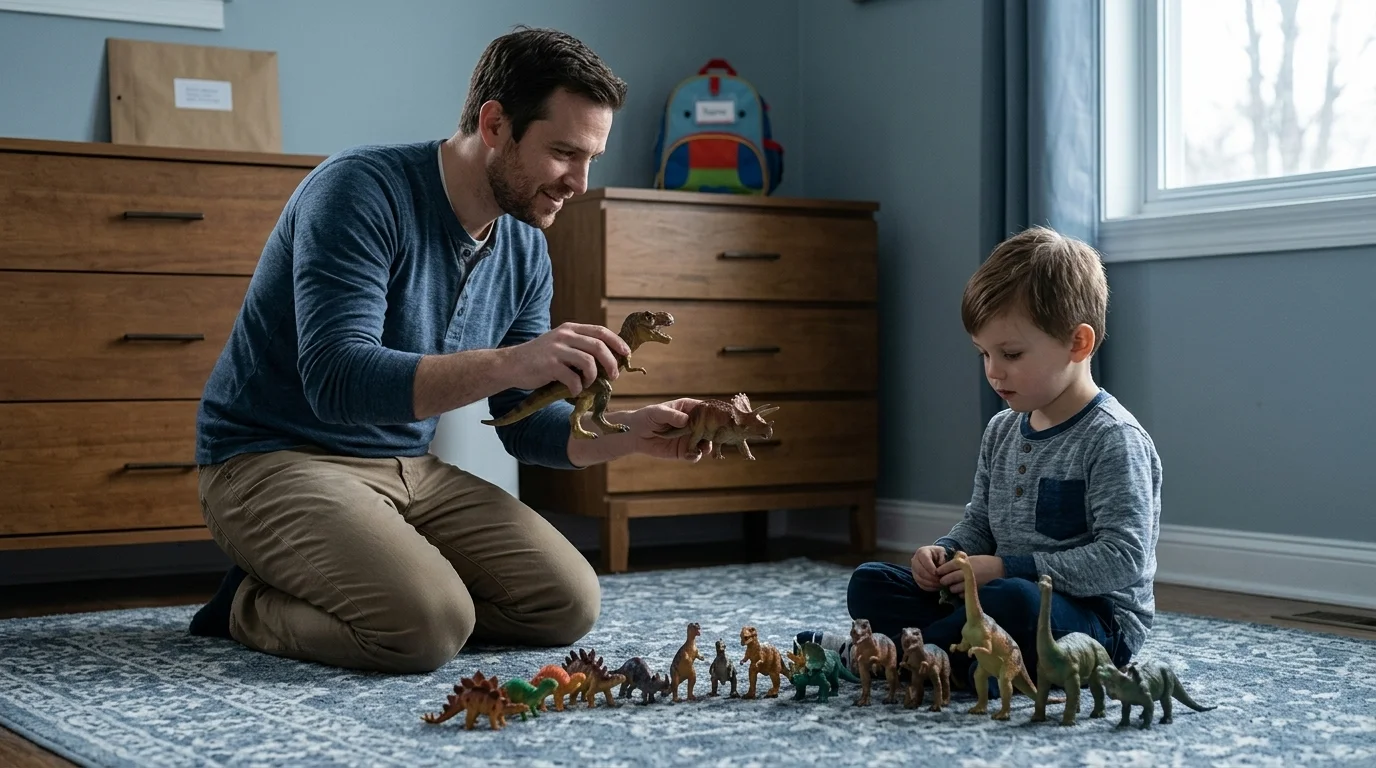
If the child is rolling a car back and forth, the BT picks up an identical car and rolls it back and forth. If the child is humming, the BT hums. If the child is lining up cups, the BT lines up cups in the same way.
The clinical name for this is reciprocal or contingent imitation. The research on Reciprocal Imitation Training (RIT), a well-studied naturalistic intervention, shows that this approach can increase spontaneous imitation, joint attention, language, and pretend play in young children with autism 3. Some of the strongest evidence comes from randomized controlled trials in early-intervention settings 4.
What makes this work clinically is that being imitated is genuinely interesting to a child. They look up. They notice. They sometimes test it (do something deliberately weird to see if the adult does it too). That noticing is the first beat of social engagement, and it is the foundation that elicited imitation builds on later.
It is also the move parents can start using the same day they read about it.
How we coach parents to do this at home
Parent training is built into every program for a young child for one practical reason: the BT is in the house for fifteen to thirty hours a week, and the parents are in the house the rest of the time. Most of the imitation opportunities will happen when the BT is not there.
In the first two or three weeks of a program, our BCBAs and BTs coach parents on three things:
Pairing. Spend time becoming the most interesting thing in the room before asking for any imitation. This is not a quick warm-up; it can take weeks for some kids. Bring the things the child already loves into your interactions with them. The technical reason: imitation is reinforced by social attention, so the social attention has to mean something to the child first.
Imitating the child. During play, copy what the child is doing. Keep it neutral, do not turn it into a teaching moment. The point is to be present and interested.
Targets that pay off. Once imitation starts to emerge, choose imitation targets that improve the child's life. Words that get them the snack they want. Gestures that get the music to start. Movement songs that get them tickled. We avoid teaching imitation of arbitrary actions in the early stage because the child does not yet see the value, and the work is harder to maintain.
The order in which imitation usually comes online
There is no fixed timeline, but a common pattern across our caseload looks something like this:
By the second or third week of a well-paired program, the child usually shows the first instance of spontaneous imitation. It is often small (a single hand crash into the kinetic sand) and easy to miss if you are not looking for it.
Between weeks four and eight, imitation typically becomes more reliable in the activities the child already enjoys. Rolling a car. Crashing a tower. Pushing a button.
By the third month, parents often report that the child is starting to copy actions they were not specifically targeting. A wave. A pretend phone call. A dance move from a song. This is the beginning of generalized imitation, and it is one of the more emotionally significant moments in early intervention. Most parents we work with remember exactly where they were when they noticed it.
After generalized imitation is established, vocal imitation often follows within weeks, because the child already has the habit of "do what the other person does." It just transfers from hands to mouth.
What slows imitation work down
A few things reliably slow the work, and worth flagging early so parents can avoid them:
Pushing too hard before pairing is in place. Asking a child who is not yet engaged to imitate is asking the wrong skill at the wrong time. Most resistance we see is rooted here.
Choosing targets the child does not value. Teaching imitation of arbitrary motor movements (touch your nose, stand up) before the child has experienced imitation as a useful or fun thing usually fails.
Inconsistent reinforcement. Imitation is fragile early on. If the parent reinforces it on Monday and ignores it on Tuesday because the morning is hectic, the child often stops trying.
This is one of the central reasons we run in-home ABA therapy instead of clinic-based programs. The BT can model the right reinforcement schedule in the actual living room with the actual toys, so when the parent runs the same routine on a Tuesday morning, it looks identical to what they watched on Monday afternoon. That consistency is what holds the early imitation gains in place.
What this connects to next
Once imitation is online, skill development accelerates. Communication targets become possible. Play becomes more reciprocal. Social skills like joint attention and turn-taking start to come within reach.
Imitation is rarely the only goal in a program; it is usually the first goal because the rest of the program depends on it. Once it is in place, the BCBA's plan opens up considerably.
Why Mastermind Behavior
Mastermind Behavior is a BCBA-owned and operated in-home ABA therapy provider serving families across New Jersey, Georgia, and North Carolina, including its Georgia early intervention program. Early imitation skills click fastest in the rooms where children already feel safe, usually the living room floor with the toys they already love, which is why our BTs run pairing and reciprocal imitation work inside your home rather than in a clinic. Our BCBAs design the program, our BTs run sessions in the actual rooms where the work has to generalize, and our parent training coaches help families build the same routines into the hours when the BT is not there. With a 90%+ staff retention rate and no onboarding waitlist, most families begin direct services within six weeks of their initial assessment.
If you are exploring ABA therapy for your child, schedule a free consultation or call us at 732.813.7333. We will listen to where your child is right now developmentally (what they already love, what they have started copying, what feels stuck), walk you through what an early intervention program would look like, and help you figure out the right next step. No pressure, no commitment.
References
- Whitehouse AJO, Varcin KJ, Pillar S, et al. Effect of Preemptive Intervention on Developmental Outcomes Among Infants Showing Early Signs of Autism: A Randomized Clinical Trial. JAMA Pediatrics. 2021.
- Ingersoll B, Schreibman L. Teaching Reciprocal Imitation Skills to Young Children with Autism Using a Naturalistic Behavioral Approach: Effects on Language, Pretend Play, and Joint Attention. Journal of Autism and Developmental Disorders. 2006.
- Ingersoll B. Pilot Randomized Controlled Trial of Reciprocal Imitation Training for Teaching Elicited and Spontaneous Imitation to Children with Autism. Journal of Autism and Developmental Disorders. 2010.
- Steinbrenner JR, Hume K, Odom SL, et al. Evidence-Based Practices for Children, Youth, and Young Adults with Autism: Third Generation Review. Journal of Autism and Developmental Disorders. 2020.
- Hyman SL, Levy SE, Myers SM, et al. Identification, Evaluation, and Management of Children With Autism Spectrum Disorder. Pediatrics, American Academy of Pediatrics. 2020. Reaffirmed October 2025.