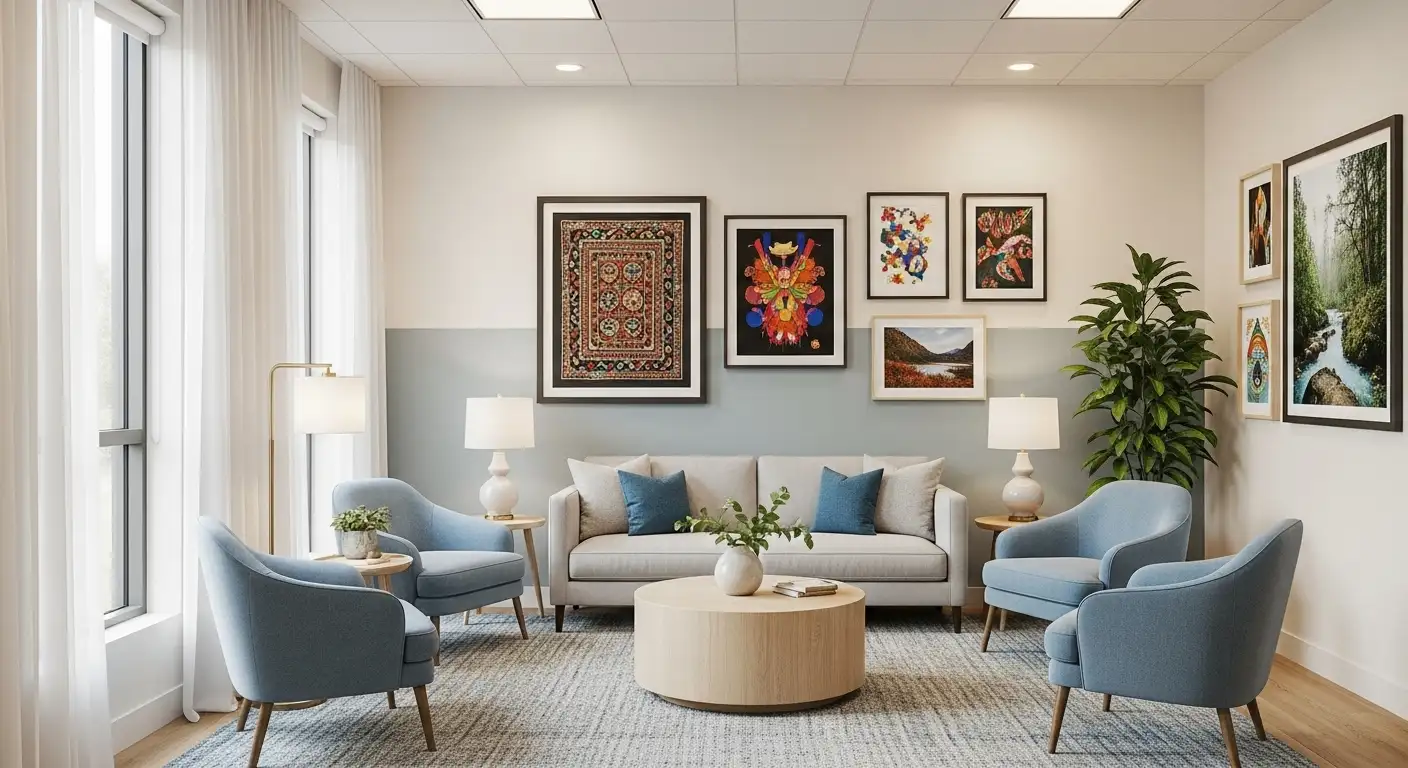
Your BCBA is coming Tuesday at 10. You've been staring at your living room for twenty minutes — couch covered in laundry, the dog's bed in the middle of the floor, your six-year-old's iPad propped on a stack of cookbooks. The intake coordinator told you "no special setup required," but it doesn't feel that way. You want to do this right. You also don't want to turn your home into a clinic.
Here's the honest version from the BCBAs who walk into homes every day: in-home ABA therapy doesn't need a dedicated room, color-coded bins, or a Pinterest-worthy sensory corner. What it does need is a few small, specific tweaks — most of which take a weekend and zero dollars. This guide walks through what actually matters, what doesn't, and how to set up your home so therapy works without erasing the parts of your home that make it home.
What "modifying the environment" actually means in ABA
In ABA, the environment is everything around your child that influences behavior — the noise, the lighting, where their toys are kept, who's in the room, what time of day it is. Behavior Technicians (BTs) and BCBAs aren't trying to remove all of that. They're trying to set things up so that the behaviors you want to see (asking for a snack, sitting through a task, cleaning up) are easier to produce, and the behaviors that get in the way (eloping from the table, screaming when the iPad runs out of battery) have fewer triggers around them.
That's it. No magic. Just antecedents — what comes before the behavior — being arranged on purpose instead of by accident.
Before the first session: a short walkthrough
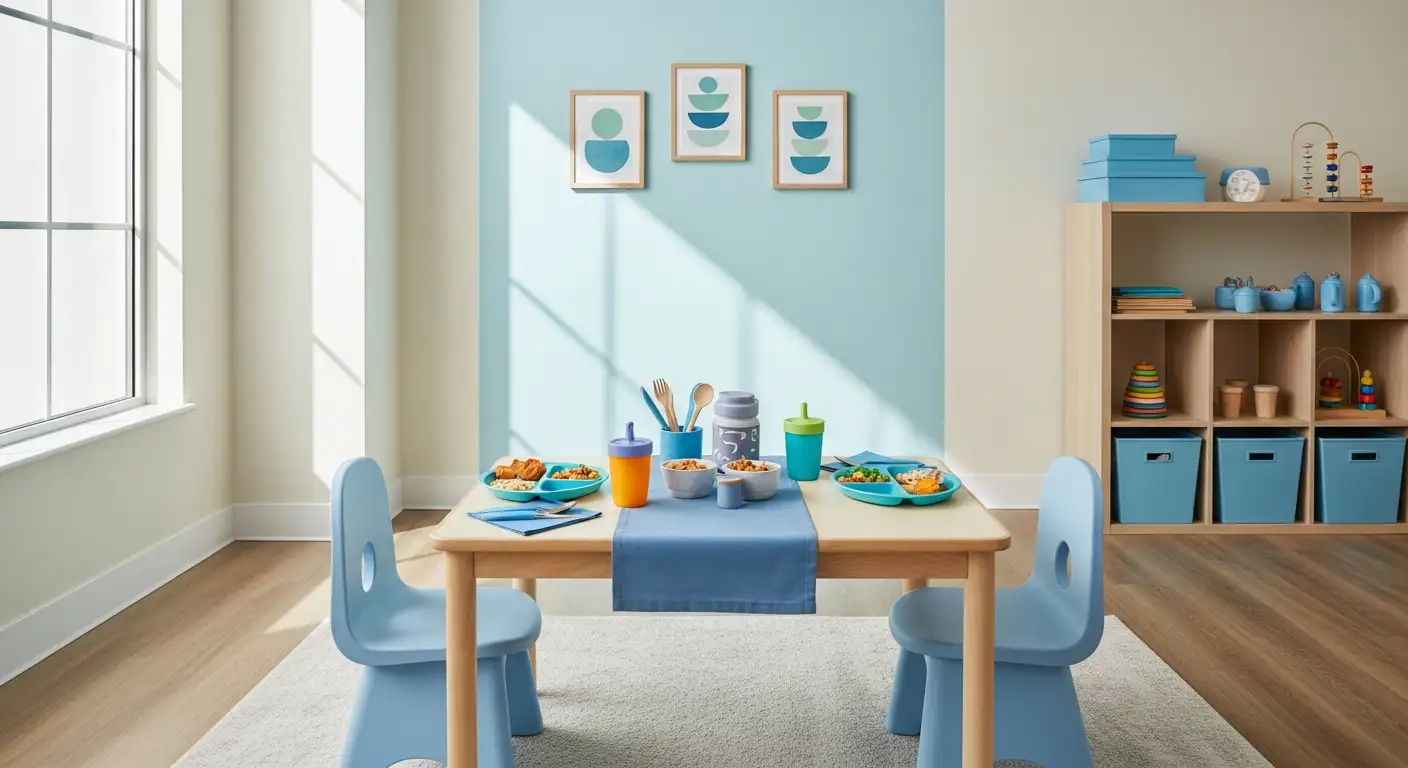
You don't need a dedicated therapy room. A corner of the living room, a section of the kitchen table, or a low table in the playroom all work. What you want is a space your child already associates with calm, focused activity — somewhere they're used to sitting, drawing, or doing puzzles. Your BT will adapt to whatever you choose.
One practical tip: pick a spot where your child can see at least one window or doorway. Kids who feel cornered tend to escape; kids who feel oriented tend to stay seated. This sounds small. It changes a lot.
Manage the noise, not the silence
You don't need a quiet house. Most homes have siblings, dishwashers, and dogs — therapy needs to work inside that, because that's the world your child lives in. What helps is reducing the unpredictable, sharp noises during sessions: the TV in the next room playing a show your child wants, a sibling's gaming console with sudden cheers, a phone left on full ringer.
The rule of thumb most BCBAs use: predictable background noise is fine, novel attention-grabbing noise is a problem.
Visual supports — start small
Every ABA Pinterest board sells you on elaborate visual schedule systems. Skip the kits. For week one, all you need is a simple "first/then" card or two — "First puzzle, then iPad" — and maybe a picture schedule for the morning routine if mornings are hard. Your BCBA will tell you what else is worth adding once they've watched a few sessions.
Common antecedent changes BCBAs use during sessions
If your child loves a particular blue truck, your BT will probably move it. Not to take it away — to make it something your child has to ask for. Out of reach but visible (a high shelf, a clear bin) is a deliberate setup. It creates dozens of small communication opportunities every hour. This is one of the most-used environmental modifications in ABA, and parents often misread it as "they took the toy away." They didn't. They turned it into a teaching moment.
Designated calm spaces
A calm space is not a punishment space. It's a low-stimulation spot — beanbag in the corner, small tent, even just a section of carpet — where your child can decompress when overwhelmed. Soft lighting, one or two preferred items, no demands. Your BCBA will help you set one up and teach your child how to use it on their own. The goal is self-regulation, not isolation.
Visual schedules and timers
Transitions are where a lot of behavior happens. A visual timer (the kind with a red disc that shrinks) and a simple picture schedule reduce the surprise. "Five more minutes of iPad" lands differently when your child can see the five minutes shrinking.
Adjusting for different rooms in the house
The kitchen is where a lot of skills get taught — requesting snacks, waiting for food, tolerating "all done." Keep preferred snacks visible but not freely accessible during sessions. Have a low chair or stool your child can sit on while you cook, so they're part of the room without being underfoot.
The bathroom matters more than parents expect. Toothbrushing, hand-washing, and bath routines are common ABA targets. A small step stool, a visual schedule on the mirror, and a single preferred bath toy held back as reinforcement go a long way.
The bedroom usually doesn't need much modification — bedrooms are mostly for sleep and play, not direct teaching. The exception is bedtime routines. If bedtime is hard, your BCBA will likely build a visual schedule and adjust how toys are organized to reduce overstimulation before sleep.
Why the kitchen counts as much as the therapy table
One of the most-asked questions in parent training is some version of: "My child uses words during sessions but doesn't use them with me. Why?" The answer is almost always generalization — the skill was taught in one specific context and hasn't transferred to others. This is why environmental modifications can't just live in the session corner. The same visual supports, the same reinforcement strategies, the same expectations need to show up in the kitchen, the car, and the grandparents' house.
Practitioners see the pattern over and over: families who carry the strategies into everyday life see two to three times the progress of families who only use them during scheduled sessions. The session is where the skill gets taught. The rest of the house is where it gets learned.
When not to over-engineer the environment
A few things that don't help — and sometimes hurt:
Don't strip the house of stimulation. The point isn't to create a sterile environment; it's to teach your child to function in a real one. Bright colors, normal noise, siblings, pets — all fine. ABA is supposed to work in the world, not in a vacuum.
Don't buy expensive sensory equipment before the first session. Wait for your BCBA's recommendations. Most kids don't need a swing, weighted blanket, or chewy necklace. Some do. Your BCBA will tell you which is which based on actual observation, not a checklist.
Don't move everything at once. Big sudden changes to a child's space can spike behavior, not reduce it. Make changes one at a time, ideally with your child involved when possible.
What this looks like in week three vs. week one
The first two weeks of in-home ABA therapy are mostly pairing — your BT becoming a person your child wants around. Environmental modifications during this phase are minimal: a session spot, maybe a calm corner, a "first/then" card. By week three or four, as your BCBA finishes the initial assessment and the formal program starts, more specific antecedent changes get added: visual schedules tied to specific routines, strategically placed preferred items, designated work and break areas.
Most parents we work with are surprised at how light-touch the environment changes are. It rarely looks like a different house. It usually looks like the same house, with five or six small adjustments that nobody but the family would notice.
Frequently Asked Questions
The most useful changes are also the simplest: a consistent session space, reduced novel noise during sessions, a few visual supports like a "first/then" card or visual timer, and strategic placement of preferred items so your child has reasons to communicate. A designated calm corner for self-regulation also helps. Your BCBA will recommend specific modifications based on what they observe — there's no universal checklist that works for every child.
Does my child need a separate therapy room?
No. A corner of an existing room — living room, family room, dining area — works for the vast majority of in-home ABA sessions. What matters is consistency (same spot most sessions) and accessibility (your child can see exits, the lighting is comfortable, distractions are manageable). Dedicated rooms can actually reduce generalization, since skills taught in isolation often don't transfer to the rest of the home.
What are antecedent strategies in ABA?
Antecedent strategies are changes you make to what comes before a behavior, in order to make the behavior more or less likely. Examples include placing preferred items out of reach (to encourage requesting), using visual schedules (to reduce transition surprises), giving warnings before changes ("two more minutes"), and adjusting the physical environment (lighting, noise, seating) to reduce sensory overload. They're called "antecedent" because they come before the behavior — as opposed to consequences, which come after.
How do I create a calm-down space at home?
Pick a low-traffic spot — a corner of the bedroom, a section of the playroom, or even a small pop-up tent. Add soft seating (beanbag, floor cushion), keep lighting low or use a small lamp, and include one or two preferred low-stimulation items (a favorite stuffed animal, a sensory toy your child finds calming). Avoid screens, demands, and clutter. The space is not a time-out spot — it's a place your child can choose to go when they need to regroup. Your BCBA will help teach your child how to use it independently.
Will the environmental changes I make at home work outside the home too?
Some will, some won't — which is why generalization is built into most ABA programs from the start. Visual schedules can travel (laminated cards in your bag), preferred-item-as-motivation works almost anywhere, and calm-space concepts can be adapted (a quiet corner of a restaurant, the back seat of the car). Other modifications, like specific furniture arrangements, are home-only. Your BCBA will work with you on community-based teaching to bridge skills across settings.
How long does it take to see progress after making environmental changes?
Most families notice small changes — fewer transition meltdowns, more requesting, easier mornings — within two to four weeks of consistent use. Bigger gains in skills like communication, self-regulation, and independence take longer and depend on the full ABA program, not the environment alone. Environmental modifications create the conditions for learning; they don't replace teaching.
Why Mastermind Behavior
Mastermind Behavior is a BCBA-owned and operated in-home ABA therapy provider serving families across New Jersey, Georgia, and North Carolina. We believe skills are best taught where children will actually use them — so our BCBAs and Behavior Technicians come to your home, learn your family's rhythm, and build environmental supports around real life, not around a clinical ideal. With a 90%+ staff retention rate and no onboarding waitlist, most families begin direct services within six weeks of their initial assessment.
If you're exploring ABA therapy for your child, schedule a free consultation or call us at 732.813.7333. We'll walk you through what's possible and help you figure out the right next step — no pressure, no commitment.