How Autism Affects the Daily Life of Adults
Discover how autism affects daily life in adults, from social interaction to daily living skills and more.


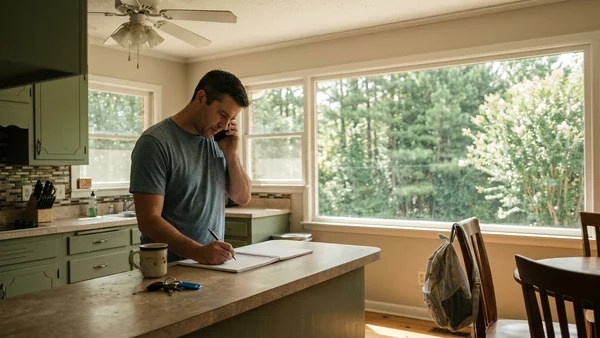
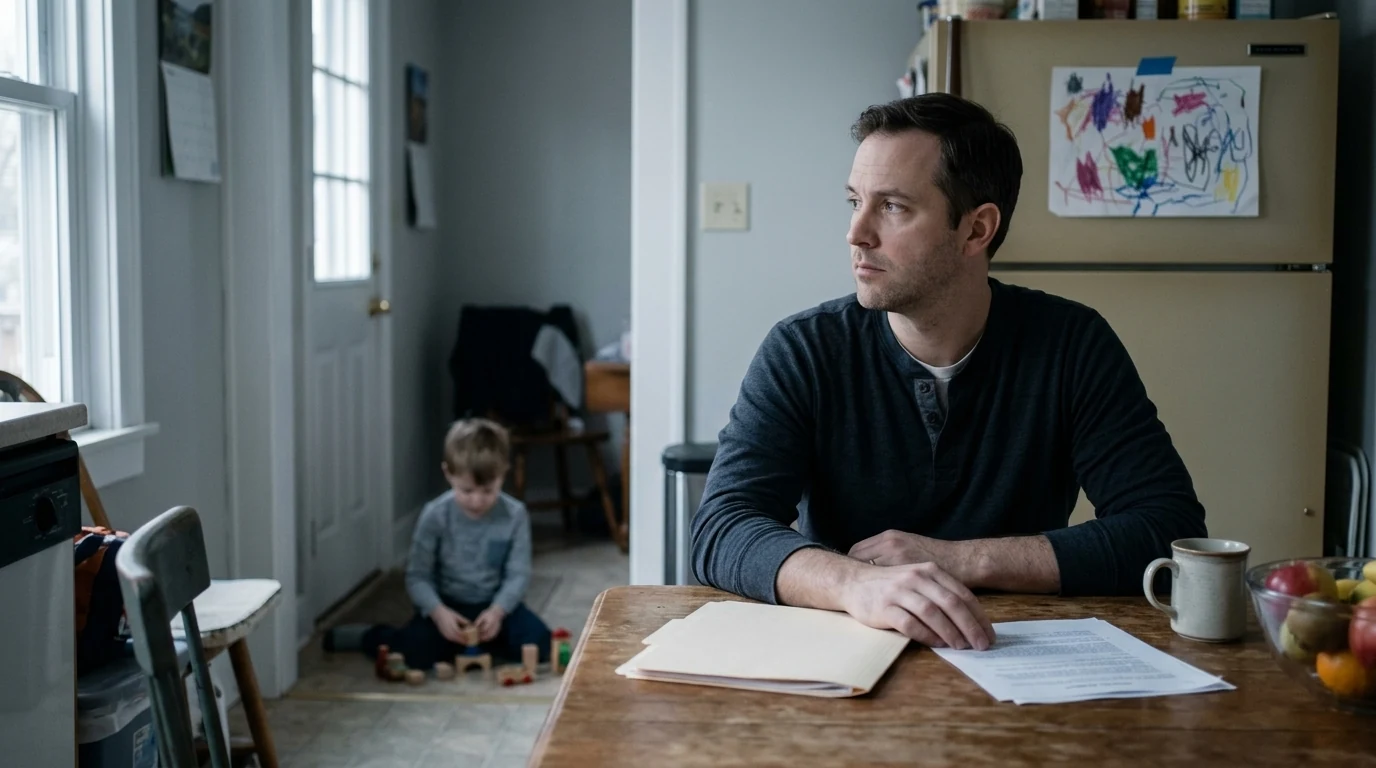
Your seventeen-year-old is a junior. The IEP team mentioned "transition" at the last meeting, almost as a footnote, and you nodded like you knew what that meant. You drove home thinking about it. He has eighteen months of school left, then what. He cannot fill out a job application on his own. He has never ridden a city bus. He does not know how a debit card works. The graduation date is on the calendar and the rest of his life is not.
This is the exact moment we walk into a lot of older-teen cases at Mastermind Behavior. The family has been doing ABA therapy for years, the focus has been on communication or behavior, and suddenly the clock changes. The work becomes about adulthood. The skills that matter shift. What we want this article to do is show you what the last year of services should actually look like for a teen who is aging out, so you can ask for those things before the calendar runs out.
What the Adult Outcome Data Actually Says
Most parents of teens with autism do not get a clear picture of adult outcomes until late, and when they do get it, it is sobering. About 50,000 young people with autism turn 18 every year in the United States.1 Roughly half of young adults with autism have ever held a paid job outside the home in the years after high school, the lowest rate among disability groups studied.2 Anxiety and depression are common across adulthood, with lifetime prevalence near 42% and 37% respectively.3 Independent living rates are low.
We are not here to scare you. We are here to make a point. Adult outcomes are not random. They are heavily shaped by what happens between roughly age 14 and age 21, in school, at home, and in whatever services the family is using. When parents tell us their teen "isn't ready" for the adult skill work, our usual answer is: that is the work. Readiness is what the program builds.
The Transition Plan You Already Have (and Probably Have Not Read Closely)
If your teen has an IEP, federal law requires a written transition plan to be in effect by the IEP that covers age 16, with measurable postsecondary goals in education or training, employment, and (where appropriate) independent living.4 Many states require it earlier, sometimes by age 14. Your teen has one. If you have not read it carefully, that is the first homework assignment.
The Autism Parent Power Podcast has a parent on what the years after high school look like.
Look for three things. The postsecondary goals (do they actually reflect what your teen wants and can do, or are they boilerplate). The transition services (a coordinated set of activities, with someone responsible and a timeline). And the courses of study (what classes between now and graduation are designed to move toward those goals).
In our practice, the IEP transition plan is often the document that tells us what the school is going to handle and what will fall to us. The school typically owns the academic and vocational pieces. We typically own the daily-living-skills piece, the communication piece (especially self-advocacy), and the behavior piece (frustration tolerance during a long-form task, for example). When those are coordinated, the year works. When they are not, the teen graduates with a diploma and no functional life skills.
What the Last 12 Months Looked Like for a Real Teen
A few years ago, one of our BCBAs worked with a young man who was about to graduate. The team made a deliberate decision to spend that final year on the things he would actually need on the other side of high school. Not more academic drill. Not more discrete-trial vocabulary work. The list looked like this: filling out job applications, making phone calls to ask about hiring at specific stores, taking public transportation from point A to point B, and making purchases for daily things he would need. That was the year.
He got a job. He took the bus to and from that job. He kept the job. His family was proud. The team was proud. The piece our BCBA still talks about: the young man was proud of himself. That last part is doing real work in the program. When the reinforcement for a daily living skill becomes intrinsic ("I did this, I am proud"), the skill is durable in a way that no amount of token economy ever produces. We borrow that as a teaching principle for every transition program we run now.
The Five Skill Areas That Actually Move the Needle
When our BCBAs design a transition program, the skill areas tend to cluster into five buckets. The buckets matter more than the specific drill, because the buckets are what real adult life requires.
Self-management. This is the one we put first now. A young adult who can build a to-do list and follow it without prompting is functionally a different person than one who needs a prompt for every step. We start with simple lists (three items, written, checked off as done) and build to multi-day calendars, recurring weekly tasks, and eventually the ability to add new items and reorder priorities. The goal is independence from the prompt, not independence from the list. Most adults use lists. The skill is using one without being told.
Money skills. Understanding the difference between $5 and $50. Reading a price tag. Using a debit card without giving the PIN to the cashier. Using a calculator to check whether the change is right. We have seen money skills lag behind other adaptive skills by years in some teens, and the lag is rarely caught until a real-world purchase goes wrong. We build it the same way we build any skill: short, frequent, real-world trials, with real money, in real stores. Worksheet money does not generalize.
Self-advocacy. This is the one most parents do not realize is missing until later. In our experience, a lot of teens have been taught very well how to accept "no" (often a behavior-reduction goal earlier in their program), but never explicitly taught how to say "no" when something is wrong, uncomfortable, or unsafe. That is a self-advocacy gap, and it is also a safety gap. When a coworker takes the teen's lunch, when a stranger asks for personal information, when something hurts physically, the teen needs language for that. We teach refusal as a skill, with the same care we teach acceptance.
Functional communication. Ordering at a counter. Asking a salesperson where something is. Calling a doctor's office to schedule. Writing a short email. The communication targets shift in the last year from peer conversation to transactional adult communication. We build scripts, run them in low-stakes settings, then live ones. Most teens we work with can do this with practice. They have rarely been asked to.
Transportation and community navigation. Reading a map. Following a transit route. Recognizing the right stop. Knowing what to do if you miss the stop. Walking from a parking lot to a building without help. Some of this can be done in your neighborhood. Some of it requires a BT going with the teen, riding the bus, walking the route, doing it twenty times until it is rote. The reason this is on the list is that almost every employment goal and almost every independent-living goal collapses without it.
These are not the only buckets. Personal hygiene, cooking, laundry, home maintenance, social skills for the workplace, medical self-management, and digital literacy are all on the table. But the five above are the ones we see move the needle most often in the last year.
What Goes on the Goals List Right Now
If you are sitting down with your BCBA next week, three concrete questions to bring:
The first: which adult skills are on the program right now, and which are missing. If the program is still primarily focused on the same goals it had five years ago, that is a flag. The transition year program looks different.
The second: what does generalization to the community look like for each goal. A young adult who can read a recipe at the kitchen table cannot necessarily cook from one. A young adult who can count change in a session cannot necessarily handle a real cashier without prompting. We want each goal to have a "real-world" criterion attached. When the BT can document that the teen used the skill independently in three real settings, the goal is mastered.
The third: what does the parent training piece look like. Most of the daily living skills your teen is learning will need to be reinforced in the home, by you, after the BT leaves. Parent training in this last year usually shifts from behavior management to skill maintenance. Our parent training coaches sit with you and walk through how to keep the skills from drifting.
Co-Occurring Mental Health Considerations in Adulthood
A piece of this we have to name directly: anxiety in adults with autism is common, and the rate is meaningfully higher than in the general population.3 Adults with autism are diagnosed with an anxiety disorder at much higher rates than non-autistic peers.5 Some of this is the autism itself. A lot of it is the accumulating mismatch between what the world expects and what the young adult was prepared for.
In our practice, the teens whose anxiety stays manageable through the transition year are usually the ones who got concrete, real-world practice with the things adulthood actually requires. The teens whose anxiety spikes are often the ones who hit adulthood having never done the thing in real life. The implication is uncomfortable but useful: skill-building and anxiety prevention are the same project. Practice the bus ride. Practice the job application. Practice the phone call. Anxiety drops when competence rises.
Where Mastermind Behavior Fits in the Transition
We are an in-home ABA therapy provider. We work with children and teens up to 21, in homes and communities in New Jersey, Georgia, and North Carolina, and provide transition planning in Georgia for teens approaching adulthood. The transition year looks a little different from the elementary-school year of services. The BT is in the kitchen practicing budgeting. The BT is at the bus stop with the teen, waiting for the right route. The BT is at a register, fading prompts on the debit card transaction.
Our transition planning work runs alongside the school's IEP transition plan. We build our goals to reinforce theirs, fill the gaps the school cannot reach (most schools cannot send a staff member home with a teen to teach grocery shopping), and stay coordinated with the IEP team across the year. The flagship in-home ABA therapy model is what makes this possible, because the skills the teen needs are skills that live in his actual home and his actual neighborhood, not in a clinic. For families whose teen is also working on adaptive skill development targets, the transition year folds those into the same plan.
The BCBA on a transition case usually meets with the family once at the start of the year to map the priorities, then again at six months to adjust based on what is moving and what is not. The BT runs the daily work. The parent training coach shows up monthly to make sure the skills are being maintained at home when the BT is not there.
What "Aging Out" of Services Actually Means
A practical note about the calendar. ABA services through insurance typically end at age 21, sometimes 22 in certain plans. The school's IEP services end when the teen graduates or ages out. Adult disability services (vocational rehab, day programs, supported employment) start when those end. The handoff is rarely smooth.
Two things matter. First, the BCBA on your team should know which adult services the family is going to access after age 21, and the program should be building toward those. If the plan is supported employment, the program should be developing the skills that supported employment will reinforce. Second, somebody in the family or service team should be on a vocational rehabilitation referral well before age 21. Many states have backlogs. The earlier the referral, the cleaner the handoff.
We tell parents to think about the last 12 to 18 months of in-home services as a bridge, not a destination. The point is not to teach every adult skill before discharge. The point is to teach enough that the next set of services can pick up the thread.
What to Do This Week
If your teen is between 14 and 21, three things this week:
Read the transition plan in the IEP. Pull it out. Read it carefully. Mark the goals that are concrete and the ones that are vague.
Make a list of five adult skills your teen does not yet have. Things you would normally do for them. Tying shoes if it is still a thing, riding the bus, ordering at a counter, sending a text to confirm a plan, using a microwave safely, whatever applies.
Bring both to your next BCBA meeting. Ask for the transition program to be reviewed against both lists. The conversation should produce a revised goal sheet within two weeks. If it does not, ask why.
Why Mastermind Behavior
Mastermind Behavior is a BCBA-owned and operated in-home ABA therapy provider serving families across New Jersey, Georgia, and North Carolina. The skills a teen needs in the last year before adulthood (the bus route, the job application, the debit card, the doctor's office phone call) are taught best in the actual settings where they will be used, which is why our BTs work alongside teens in their homes and neighborhoods rather than from a clinic across town. Our parent training coaches help you keep the skills sharp once the BT is not there. With a 90%+ staff retention rate and no onboarding waitlist, most families begin direct services within six weeks of their initial assessment.
If you are exploring ABA therapy for your teen, schedule a free consultation or call us at 732.813.7333. We will listen to where your teen is right now (the IEP transition plan that does not say enough, the adult skills no one has gotten to yet, the calendar that feels too short), walk you through what a last-year program would look like, and help you figure out the right next step. No pressure, no commitment.
References
- Centers for Disease Control and Prevention. Autism Spectrum Disorder in Teenagers and Adults. CDC. 2025.
- Roux AM, Shattuck PT, Cooper BP, Anderson KA, Wagner M, Narendorf SC. Postsecondary Employment Experiences Among Young Adults With an Autism Spectrum Disorder. Journal of the American Academy of Child and Adolescent Psychiatry. 2013.
- Hollocks MJ, Lerh JW, Magiati I, Meiser-Stedman R, Brugha TS. Anxiety and Depression in Adults with Autism Spectrum Disorder: A Systematic Review and Meta-Analysis. Psychological Medicine. 2019.
- Hughes MM, Kirby AV, Davis J, et al. Individualized Education Programs and Transition Planning for Adolescents With Autism. Pediatrics, American Academy of Pediatrics. 2023.
- Nimmo-Smith V, Heuvelman H, Dalman C, et al. Anxiety Disorders in Adults with Autism Spectrum Disorder: A Population-Based Study. Journal of Autism and Developmental Disorders. 2020.