How ABA Therapy Can Support Children with Selective Mutism
Unleashing the Power of ABA Therapy for Overcoming Selective Mutism

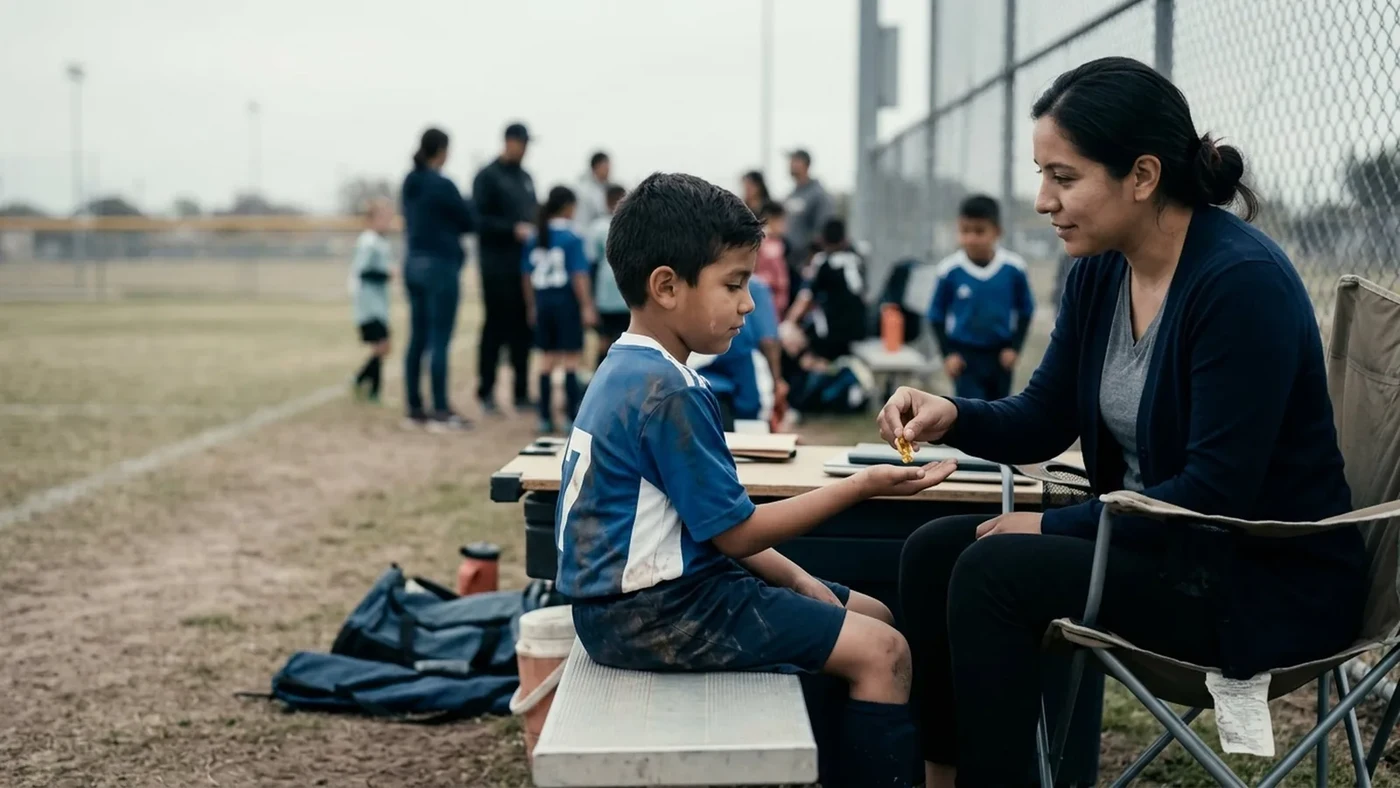
Your six-year-old will not stop talking at home. She narrates her stuffed animals' breakfast routines, asks the same question about why birds are so loud in the morning, sings to herself in the bathtub for an hour. At school, she has not said a single word to her teacher in seven weeks. Not one. The teacher emailed again yesterday, gently, asking whether everything is okay at home. You read the email three times before answering, because the answer is yes, everything is fine at home, which is exactly what makes this so confusing.
Selective mutism is not stubbornness, and it is not shyness a child grows out of by being pushed to speak. It is an anxiety response that locks the voice in certain settings while leaving it free in others. Applied Behavior Analysis (ABA) therapy is one of the more useful tools for helping a child move through it, because it works on the conditions around the speaking, not on the child's willingness alone.
Understanding Selective Mutism: Symptoms and Potential Treatments
Selective mutism is an anxiety disorder that typically shows up in early childhood. It is characterized by a child's inability to speak in specific social situations, such as at school or with unfamiliar relatives, even though they can converse freely at home with close family members. The disorder can quietly reshape a child's social interactions and academic performance if no one intervenes.
Symptoms of Selective Mutism
- Persistent Silence: Children may be entirely mute in social contexts despite communicating normally in familiar environments.
- Anxiety and Distress: Visible anxiety or distress when prompted to speak, often paired with avoidance behaviors.
- Withdrawal: Children may freeze, look away, or physically retreat in social situations where they feel pressured.
Approximately 1 in 140 children are affected, with a slightly higher prevalence in girls. Children learning a second language may carry an additional layer of difficulty, since the second-language environment is often the same one that triggers the mutism in the first place.
Potential Treatments for Selective Mutism
Effective treatment strategies for selective mutism are crucial for building communication skills and reducing the anxiety that drives the silence. These approaches commonly include:
- Cognitive Behavioral Therapy (CBT): Helps children understand and cope with their anxiety, often through gradual exposure to speaking in social settings.
- Behavioral Strategies: Role-play, self-modeling, and structured "brave talking" practice that lets a child communicate in anxiety-provoking situations one small step at a time.
- Parental and Educator Involvement: A nurturing, low-pressure environment at home and school can meaningfully shift outcomes, especially when adults stop asking the child to "just say hi."
Addressing selective mutism early increases the likelihood of strong outcomes and reduces the chance the pattern carries into adolescence and adulthood.
The Role of ABA Therapy in Addressing Selective Mutism
Applied Behavior Analysis (ABA) therapy addresses selective mutism through structured techniques that build communication in low-anxiety settings before stepping up the social demand. In our practice, we see this work best when the first goal is not "speak at school" but "make any vocal sound to a single trusted adult in a familiar room." That first sound, once it is reliable, becomes the foundation everything else gets built on.
Key methods used in ABA therapy for selective mutism include:
- Positive Reinforcement: When a child verbalizes a need, even quietly, they receive praise or a small reward that makes the speaking feel safe and worthwhile. Over time, the reinforcement shifts from external rewards to the natural social reward of being understood.
- Role Play: Children rehearse conversations in a safe environment that simulates real-life situations, lowering anxiety before the real situation ever happens. Our BCBAs typically start with short, scripted exchanges and slowly remove the script as confidence grows.
- Video Self-Modeling: Children watch recordings of themselves successfully communicating, which reinforces their own ability and reduces the "I can't" belief that anxiety builds up. For some kids, seeing themselves speak on a screen is what finally convinces them they can do it in person.
- Shaping: A gradual approach that reinforces successive approximations of speech, starting with whispering, mouthing, or even pointing, then layering in louder, fuller communication as the child tolerates each step.
- Gradual Exposure: Step-by-step introduction to harder speaking situations, often starting with one adult in one room, then adding people, locations, and topics on a deliberate schedule.
Collaboration with parents and teachers is central to all of this. The communication skills practiced in therapy only generalize when the same low-pressure, reinforcing approach shows up at home and at school. If a child finally whispers "thank you" to a librarian on a Saturday and the parents respond with calm warmth instead of a big public reaction, the next whisper comes faster. If the response is a startled "she spoke!", the next attempt usually goes backward.
For families navigating both selective mutism and an autism diagnosis, our behavior support team builds plans that target the anxiety driving the silence, not the silence itself, and structures the environment so speaking becomes easier rather than scarier. The same logic that drives reinforcement decisions in ABA more broadly applies here too, including the matching law in ABA therapy, which helps explain why children allocate their responses (including talking) toward whichever environment offers the richest reinforcement.
Role Play and Video Self-Modeling: ABA Strategies for Success
Role play gives children with selective mutism a chance to rehearse speaking in a setting where the social stakes are zero. They can practice ordering at a restaurant with a stuffed animal as the waiter, answer "what's your name?" to a parent pretending to be a new teacher, or run a pretend birthday party three times before attending a real one. Each rehearsal pre-builds the muscle for the situation they normally freeze in. Over time, the rehearsed response becomes available when it counts.
Effectiveness of Video Self-Modeling
Video self-modeling works by editing together short clips of the child actually speaking, often in their easiest setting, and replaying them to the child as evidence of their own capability. The technique sounds simple, but its effect on self-belief tends to be larger than parents expect. Children who watch themselves succeeding on screen frequently start producing more spontaneous speech within the first few weeks of consistent viewing.
Benefits of Combined Strategies
Combining role play and video self-modeling addresses both the rehearsal side (what the child will say) and the belief side (whether they can say it). Initial studies have shown promising results, with children demonstrating increased spoken initiations and responses, along with decreased communication breakdowns across diverse environments. The combination also lets families practice between sessions, which is where most of the real progress lives in this work.
Practical Strategies for Parents and Caregivers
Parents and caregivers can support a child with selective mutism by building a nurturing, pressure-free environment around speaking. The child is not refusing to talk, they are responding to anxiety that often feels closer to panic than to defiance. Reassurance and patience matter more than encouragement. Here are some strategies our team coaches families through:
- Create a Safe Space: Offer chances for the child to communicate in familiar settings, free from the pressure of large groups or unfamiliar faces.
- Build Confidence Gradually: Encourage the child to engage in low-stakes "brave talking" practice, where they can stretch one notch beyond their comfort without crossing into shutdown.
- Engage with Professionals: Speech-language therapists and BCBAs can support early diagnosis and design a tailored plan that fits your child's specific triggers.
- Inform and Educate: Make sure teachers and other caregivers understand selective mutism so they can offer appropriate support. The wrong intervention from a well-meaning adult ("you need to use your words") can undo weeks of progress.
- Utilize Resources: Organizations such as the Child Mind Institute and SMIRA offer evidence-based strategies and parent community networks.
Home-based interventions for managing selective mutism
Home-based practice is where most of the day-to-day movement happens. Try:
- Practice Speaking at Home: Use games or low-pressure activities that build verbal engagement without anyone announcing that this is "speaking practice."
- Praise Efforts, Not Volume: Celebrate every attempt, including whispers, nonverbal sound, or pointing. Acknowledging the effort quietly is usually more reinforcing than a celebration.
- Practice Gradual Exposure: Introduce the child to new social situations step-by-step. One new person at a time, then two, then a small group, then a louder setting.
- Limit Pressure: Avoid putting the child on the spot in group settings, which can spike anxiety and set the pattern back.
- Encourage Controlled Socialization: Arrange smaller gatherings, often with one or two familiar peers, to build communication skills without overwhelm.
For parents who want a more structured way to learn these techniques and apply them consistently across home, school, and community, our parent training program walks caregivers through the specific reinforcement and exposure decisions that move the needle for children with anxiety-driven communication patterns. Some families also find that formalized agreements help: behavioral contracts in ABA therapy can give older children a clearer sense of what they are working toward and what reinforcers they have chosen, which often increases their buy-in.
Programs and Resources Available for Children with Selective Mutism
Yes, there are several targeted programs designed to assist children dealing with selective mutism. One notable initiative is Brave Buddies®, which provides intensive behavioral therapy for children ages 3 to 12. The program encourages children to practice speaking in a supportive group setting, gradually building confidence in their communication skills.
The Child Mind Institute's Anxiety Disorders Center also offers a dedicated Selective Mutism Service. This service employs a team of experienced professionals who provide evidence-based treatments tailored specifically for selective mutism. The focus is on gradual exposure to new speaking environments, which is essential for helping children work through their fears.
Parental and educator involvement remains crucial across all of these programs. A supportive environment that reinforces the skills learned during therapy is what makes the gains stick. In some cases, medication may be considered when behavioral therapy alone does not yield meaningful change, often as part of a coordinated plan with a child psychiatrist.
What resources are available for families and educators?
Families and educators have access to several useful resources to better understand and support children with selective mutism:
- Books and Guides: Publications offer practical strategies for effective communication and support.
- Webinars and Workshops: Professional organizations host online events covering the latest research and intervention strategies.
- Support Groups: In-person and online communities allow families to connect, share experiences, and discuss coping strategies.
- Consultation Services: Educational institutions and mental health centers offer school-based consultation to train teachers in inclusive engagement with children who do not speak in class.
These resources play an important role in creating a supportive community around children with selective mutism, which often matters as much as the formal therapy itself.
The Intersection of Selective Mutism and Autism Spectrum Disorder
Selective mutism (SM) and autism spectrum disorder (ASD) show notable overlap in social communication challenges, but they stem from different underlying causes. SM is rooted in anxiety, causing children to speak comfortably at home but struggle in social situations. ASD encompasses a wider spectrum of difficulties around communication, social interaction, and behavioral regulation.
A surface-level overlap of symptoms (silent withdrawal in social settings, for example) can complicate diagnosis. Both conditions might present as a child who does not respond to a teacher's question, but the mechanism is different, and treatment plans built on the wrong mechanism rarely work. Practitioners differentiate between them by looking at speaking patterns in safe versus unsafe settings, sensory profiles, and the broader developmental picture.
Implications for treatment
Treating children with both selective mutism and autism calls for an integrated approach that combines evidence-based behavioral therapies. This may include cognitive behavioral strategies, gradual exposure to social stimuli, and positive reinforcement techniques aimed at encouraging speech. Programs like Brave Buddies are designed to create supportive peer interactions that mimic real social environments where children can practice their speaking skills.
Collaboration between mental health professionals, educators, and families is what holds the plan together across home and school. When the anxiety of SM is treated alongside the social communication aspects of ASD, tailored therapies tend to produce stronger gains than either approach alone.
Early Intervention and School Readiness
Early intervention in selective mutism matters because it addresses the anxiety pattern before it solidifies into a long-term identity. Without timely action, children often experience ongoing communication anxiety and growing social isolation, which compounds year over year. Signs of SM typically appear around ages 3 to 4, which is also when most preschool environments first expose children to the speaking demands that trigger the silence. The earlier the support starts, the less the child has to "unlearn" later.
ABA in Preparing Children for School
ABA therapy plays a meaningful role in preparing children with selective mutism for school. It helps build the smaller communication skills that underlie classroom participation: initiating to a peer, responding to a one-word question, raising a hand. By using structured techniques, ABA builds confidence in verbal interactions in steps the child can actually complete. Positive reinforcement and gradual exposure to social settings make the school transition feel less like a cliff and more like a slope.
Evidence-Based Interventions for Selective Mutism
Evidence-based interventions to overcome communication barriers in selective mutism include Integrated Behavioral Therapy, which combines several effective strategies:
- Behavioral Techniques: Stimulus fading, shaping, and self-modeling, which together let a child transition from speaking in safe environments to challenging social settings without skipping steps.
- Exposure-Based Strategies: Controlled introduction to anxiety-inducing situations, often starting with the easiest setting where speech is just below current baseline.
A coordinated environment is what makes these techniques work. Parents, teachers, and clinicians have to be running the same plan, or the child gets mixed signals about what is being asked. This is the part that breaks down most often when SM treatment stalls.
Role of Speech-Language Pathologists
Speech-language pathologists (SLPs) are central to assessing and treating selective mutism. They help build a management plan tailored to each child, with a focus on gradual exposure to speaking situations. Structured activities can be integrated into both home and school settings to keep the approach consistent.
Additional Psychotherapy Benefits
Alongside behavioral interventions, individual psychotherapy can help the child manage the underlying anxiety that fuels selective mutism. With these structured support systems in place, many children develop functional communication skills and visibly reduced reluctance to speak in social contexts.
Exploring Future Directions in ABA Therapy for Selective Mutism
Recent advancements in ABA therapy point to growing potential for innovative techniques that support children with selective mutism. Practitioners are increasingly incorporating self-modeling and social reinforcement to create a more engaging treatment experience. Self-modeling, in particular, has emerged as a low-cost intervention that produces outsized results because it changes the child's belief about themselves, not just their behavior. Role-playing tailored to simulate specific real-life social scenarios (a school cafeteria, a soccer team huddle, a doctor's office) helps children build context-specific verbal skills in a safe environment first.
Future research areas
Looking ahead, there are several promising research directions for ABA therapy in selective mutism. Understanding the long-term outcomes of combining ABA approaches with CBT could lead to more effective integrated treatment plans. Further studies could also clarify the benefits of starting intervention before age 5, which is the window many clinicians believe carries the highest leverage. Collaborations with speech-language pathologists will likely sharpen comprehensive models that promote communication across home, school, and community contexts.
Collaborative Approaches for Lasting Change
Effective treatment for selective mutism relies on collaboration among therapists, families, and schools. Engaging parents in therapy creates a supportive home environment that carries the work between sessions. Parents reinforce the communication techniques learned during therapy, which is what builds durable confidence rather than session-only gains.
Teachers and school staff play an equally important role by setting up classroom conditions that lower the pressure on speaking, often through small adjustments like allowing nonverbal responses early, then layering in verbal expectations as the child becomes ready.
Achieving Long-Term Success
Long-lasting success in addressing SM goes beyond clinical settings. It depends on transforming the everyday environments where children spend most of their time. Evidence-based interventions like Parent-Child Interaction Therapy (PCIT-SM) and ABA strategies are most effective when applied consistently across home and school.
Regular training for school staff and open lines of communication among all parties involved are what keep the intervention coherent. Over time, this kind of coordinated approach is what helps children move from silence to functional, comfortable communication in the settings that used to lock them up.
Conclusion: Charting a Path Toward Confident Communication
Through a combination of ABA therapy techniques and an integrated support system involving parents, educators, and mental health professionals, children with selective mutism can move toward overcoming their communication barriers. Structured interventions built on positive reinforcement and tailored, paced practice give these children a path to find their voice in social settings. As understanding of selective mutism continues to evolve, ongoing research and collaboration will keep refining how treatment is delivered, so that more children can express themselves with less fear.
Why Mastermind Behavior
Mastermind Behavior is a BCBA-owned and operated in-home ABA therapy provider serving families across New Jersey, Georgia, and North Carolina. Our BCBAs design the plan, our Behavior Technicians run the day-to-day trials in the rooms where your child actually speaks (or wants to), and our parent training coaches help you carry the work into the moments we are not there for. With children navigating selective mutism, that integration matters more than usual, because the silence does not respect office hours. Many of the smallest, most important breakthroughs happen at a grandparent's kitchen, a school pickup line, or a checkout counter, so we build the plan to fit those places too. With a 90 percent staff retention rate and no onboarding waitlist, most families begin direct services within six weeks of their initial assessment.
If you are exploring how ABA therapy might help your child find their voice in the settings where it feels stuck, schedule a free consultation or call us at 732.813.7333. We will listen to the specific pattern you are seeing, including what is working at home and what is breaking down outside of it, and help you figure out a sensible next step with no pressure to commit.
References