Behavioral Strategies for Improving Social Interactions in Children with Autism
Unlocking Social Potential: Effective Approaches for Autistic Children

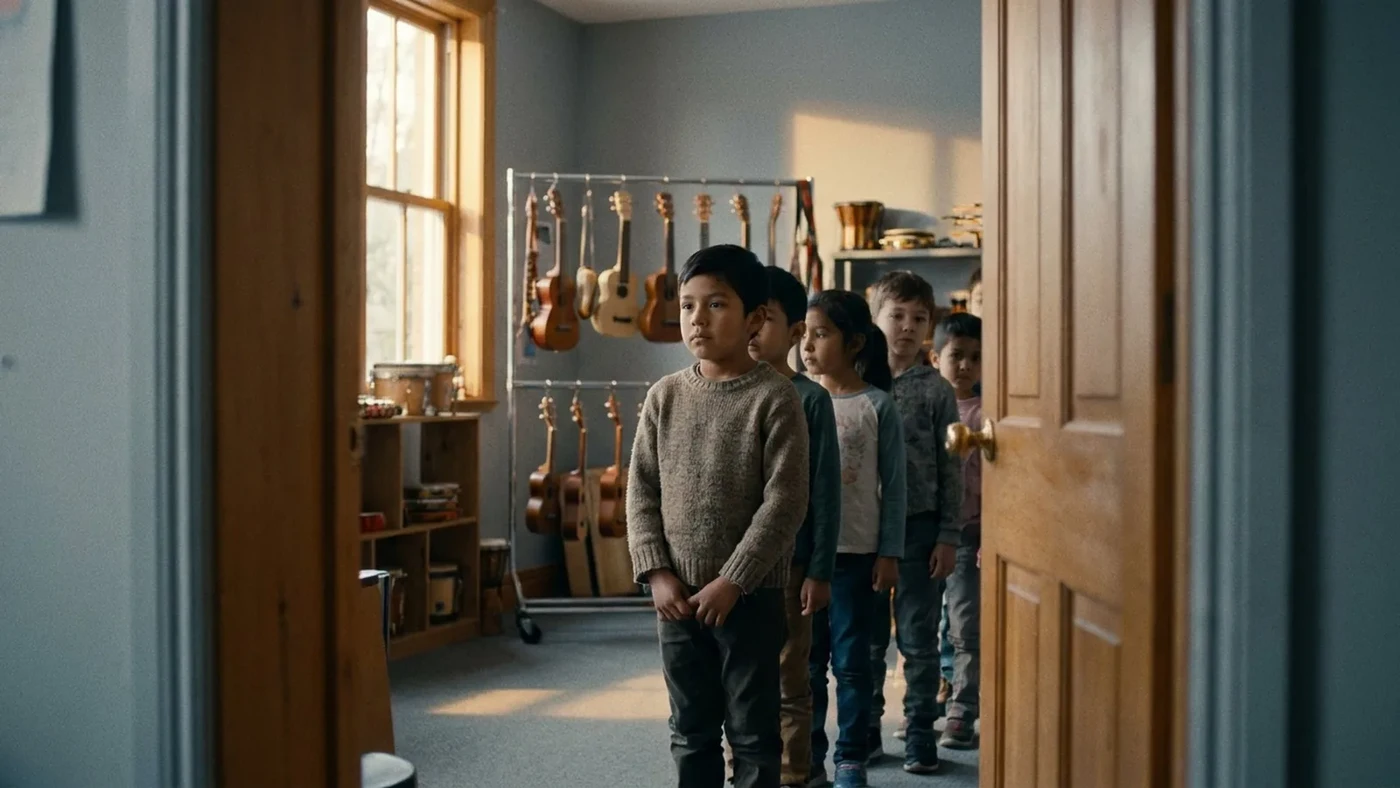
You have been wondering, quietly, whether your daughter will ever have a real friend. Not a kid in her class who tolerates her. Not a cousin who is required to play with her. A friend. Someone she texts. Someone who comes to the door asking for her. She is eight, and you are not sure she has had one yet. You see her watching the girls at the park, hanging close enough to be near them but never quite stepping in. You see her start a conversation about ponies that none of them want to have, and you see them drift away, and you see her not understand why.
Behavioral strategies for social interaction are not about polishing autistic kids until they pass as neurotypical. They are about teaching the specific moves that connection runs on: starting a conversation, reading when someone is interested, taking a turn, recovering when a moment goes sideways. Most autistic children want friendship; what is often missing is the practice and the structure that let them get there. This piece walks through the strategies that actually work, from Applied Behavior Analysis to peer-mediated interventions, and how parents and teams fit them together.
The Importance of Social Skills in Autism
Children with autism often face significant challenges in social interaction, and many of them want to engage but struggle to find the door in. Low levels of social engagement, less eye contact than peers, and difficulty reading non-verbal cues make standard social situations harder to navigate. Many children also struggle with the unspoken pieces, knowing when to join a line, how to take a turn in conversation, when to read context and adjust, when to demonstrate empathy or take someone else's perspective.
What pulls these challenges into focus is that the desire to connect is usually there. The skills to do it are what need building. In our practice, the kids who are sometimes labeled as "uninterested in socializing" are most often kids who have not yet learned the specific moves that let them in, or who have tried and gotten enough painful results that they have stopped trying. Direct instruction and structured environments help, because they let the child practice the moves in a setting that is patient with the early attempts.
Why are social skills important for children with autism?
Social skills are how kids build friendships, communicate effectively, and participate in daily life. The ability to connect with others drives personal development and self-confidence. Kids learn to navigate social dynamics, which gives them a sense of belonging in school and in the community.
Inherent communication delays and difficulty reading social cues make this harder for many children on the autism spectrum. Targeted teaching and support can close the gap.
Key Social Skills Strategies in Intervention
| Strategy | Description | Effectiveness |
| Role-Playing | Simulates real-life social scenarios to practice skills | High |
| Social Stories™ | Personalized narratives to understand social norms | Effective for comprehension |
| Peer-Mediated Interventions | Training peers to support social interactions | Significant improvements noted |
When these strategies are implemented well, they meaningfully improve social skills in children with autism. They are core to how the skill-building actually happens.
Behavioral Strategies for Social Skills Development
Building social skills in children with autism takes structured, tailored teaching. The strategies below are the ones that consistently move the needle.
- Modeling social interactions: Adults and peers demonstrate the move you want the child to learn, turn-taking, eye contact during a back-and-forth, an acknowledging "yeah" or "no thanks." Kids learn what they see done in front of them.
- Breaking down skills: A skill like "having a conversation" is many smaller skills stacked on each other. Splitting it into pieces, starting the topic, waiting for the response, responding to what was said, ending cleanly, lets the child master one piece at a time. Using visual supports speeds this up.
- Positive reinforcement: Specific praise, "you waited for her to finish before you answered," tells the child exactly what to repeat. Generic praise like "good job" does not.
- Role-playing and social stories: Rehearsing a scenario in advance makes the actual moment less overwhelming. Social stories walk a child through what to expect and what to do, in clear, concrete language.
- Video modeling: Showing a child a short video of someone doing the social move correctly, especially when the someone is another child, gives them something to imitate. It also lets them watch their own successful attempts back, which builds self-image.
- Structured small group activities: A planned activity with two or three peers, with clear rules and a supportive adult, is where most of the real practice happens. Open recess is too unstructured for most kids who are just learning these skills.
Used together, these strategies give children with autism the tools to navigate social interactions. Celebrating the small wins, the first unprompted "hi," the first turn taken without a reminder, builds the motivation to keep going.
Applied Behavior Analysis (ABA) Therapy
Applied Behavior Analysis (ABA) is an evidence-based intervention that supports skill development in children with autism, including social skills. The approach takes complex social behaviors and breaks them into teachable components, then uses positive reinforcement to build them step by step.
A typical ABA-based social skills program runs on a few core moves:
- Assessment. The BCBA looks closely at where the child's social skills are now, what is missing, and what the child is motivated by. The plan is built off that, not off a template.
- Behavioral strategies. Role-playing, social stories, and structured rehearsal let the child practice in a low-pressure setting before trying in real life.
- Reinforcement. Specific praise or a small reward right after the target behavior makes the behavior more likely to repeat. The reinforcer has to actually matter to the child, which sounds obvious and is often where generic programs fail.
- Practice in groups. Structured group activities give the child a setting to use the skill with peers, which is what real life requires.
- Generalization. The team works with parents and teachers to make sure the skill shows up across settings, home, school, the playground, the cousins' house, not just in the therapy room.
In our practice, the BCBA designs the program, the BTs run the practice with the child in real rooms in your home, and the parent training coaches show you how to reinforce the same goals so the work continues between sessions. That structure is what makes the gains hold.
Key Insights from Social Skills Training (SST)
Social Skills Training (SST) is a well-researched intervention aimed at improving social skills in children with autism. It involves explicit teaching of specific social moves, starting conversations, recognizing social cues, recovering from misunderstandings. It can be delivered one-on-one or in groups, and the research consistently shows it helps children with autism engage with peers more successfully.
Effectiveness of Social Skills Training
Studies show SST helps kids understand the mechanics of interaction and also actually engage more often with peers. Peer-mediated interventions, which are a structured version of SST, have produced especially strong results, because training the neurotypical kids around the child with autism creates natural practice opportunities that no clinic session can replicate.
Training approaches and outcomes
Effective SST methods include role-playing, social stories, and video modeling. Regular structured practice in small groups, discussions, games, cooperative tasks, is what drives ongoing growth. Most kids on our caseload start seeing measurable shifts in social engagement somewhere between week four and week eight, and the shifts grow from there.
| Training Approaches | Description | Expected Outcomes |
| Role-Playing | Simulates social interactions | Improves turn-taking and engagement |
| Social Stories | Personalized narratives about social scenarios | Enhances understanding of behaviors |
| Video Modeling | Use of recordings to demonstrate skills | Builds self-image and skill acquisition |
| Peer-Mediated Interventions | Typically developing peers engage and model interactions | Reduces stigma and enhances interactions |
The point of SST is to give children with autism the tools to build real, sustained connections with their peers, not to perform "appropriate" social behavior on command.
Effective Use of Video Modeling and Social Stories
Video modeling and social stories are two of the most reliable tools for teaching social skills.
The role of video modeling
Video modeling shows a child a recording of someone, a peer, an adult, sometimes the child themselves, doing the social move correctly. The child watches and imitates.
Why it works:
- Provides a visual, replayable example of the target behavior
- Helps the child read context and body language without the pressure of being in the moment
- Self-modeling, where the child watches their own successful attempt, builds confidence
The function of social stories
Social stories walk through a social situation step by step in clear, concrete language. They explain what is happening, what people are thinking, and what the child can do.
Key features:
- Narrative structure simplifies complex social moments
- Visuals support comprehension and retention
- Concrete examples of how to respond support perspective-taking
Impact on social skills
Both methods consistently improve communication and engagement. Specifically, they:
- Build confidence going into social moments
- Help children read and respond to cues
- Translate to noticeable improvement in real-life peer interactions
What progress tends to look like
In practice, gains from video modeling and social stories show up first in the rehearsed scenarios, then transfer to similar real-world moments as the child gets more comfortable. The transfer is what the team is watching for; that is where the skill actually lives.
Peer-Mediated Interventions
Peer-mediated interventions (PMI) train typically developing peers to engage socially with children on the autism spectrum. The point is to create natural environments where social interaction can actually happen, rather than relying entirely on adult-led sessions.
The research is clear that PMI works. It improves social engagement, reduces stigma, and gives children with autism real opportunities to practice with kids their own age. Neurotypical peers are taught how to interact, take turns, share, read emotional cues, recognize when their partner needs a moment, and that creates a more inclusive environment for everyone.
Role and effectiveness of peer-mediated interventions
Children with autism participating in PMI consistently show increased social interactions and improvement in their ability to navigate group situations. Peers in the program learn about the needs and strengths of their autistic classmates, which deepens acceptance. In our practice, when a child has even one or two trained peers in their school day, the social temperature of the entire week shifts.
| Aspect | Description | Benefits for Children with ASD |
| Training Peers | Teaching neurotypical peers to engage appropriately | Improves communication and social skills |
| Structure | Incorporating peer interactions within planned activities | Reduces social anxiety and enhances natural engagement |
| Social Modeling | Peers serve as role models for appropriate social behavior | Fosters independence in social situations |
| Inclusivity | Creates acceptance among peers | Encourages lasting friendships and interaction |
Interdisciplinary Collaboration for Social Skills Development
Parents, educators, and therapists each play a critical role, and the work holds together when they coordinate.
1. Structured environment. Kids practice new social skills best in settings that are calm, predictable, and well-organized. Parents can use what they learn from therapy at home; teachers can reinforce the same skills at school.
2. Collaborative strategies. Evidence-based interventions like ABA and PMI work better when everyone is using the same playbook. Regular meetings, even brief check-ins, keep the team aligned. Skill-building also has to be coordinated across settings, so a child practicing turn-taking in therapy is also practicing it at home and at school; our skill development work targets exactly this kind of cross-setting consolidation.
3. Goal alignment. Shared goals across home and school help the skills generalize. A child who learns turn-taking in therapy then practices it during a board game at home and a structured group activity at school is far more likely to use it in unstructured settings.
What collaborative approaches enhance social skills?
| Approach | Description | Benefit |
| Team Meetings | Regular discussions among parents, therapists, and teachers | Ensures consistency in approach and strategies |
| Peer Engagement | Training typically developing peers to support children with autism | Promotes natural social interactions and relationships |
| Social Skills Groups | Structured small-group activities to practice social skills | Provides safe settings for interaction |
| Visual Supports | Use of tools like Social Stories and PECS to aid understanding | Clarifies social norms and expectations |
| Parent Training Programs | Equipping parents with tools and strategies | Enhances effectiveness of interventions at home |
Innovative Teaching Models for Social Competence
Teaching empathy and emotion recognition is foundational for the kinds of social moves that matter most. The work is concrete, not abstract.
Techniques for teaching empathy
- Role-playing. Putting the child in a situation, then asking them to consider how someone else might feel, builds perspective-taking in a hands-on way.
- Visual aids. Emotion cards, photo sets of facial expressions, and short comic strips help the child recognize and label feelings. These are reference tools the child can actually use in the moment.
- Storytelling. Social stories that include a character's emotional experience open up discussion about how someone might be feeling and why. Repeated exposure builds the pattern.
Why emotional recognition matters
When a child can read what someone else is feeling, they can predict how the interaction is going to go. That predictive ability is what makes someone feel like a smooth social partner. Building it makes everything downstream, conversation, friendship, conflict recovery, more accessible.
Impact on social interaction
As emotional recognition grows, kids initiate more, maintain interactions longer, and recover from misunderstandings faster. The downstream effects show up in:
- Improved relationships. Easier to connect, less isolation, more sustained peer time.
- Confidence. Reading social moments accurately makes future moments feel less risky, so the child keeps trying.
- Engagement. Recognizing and responding to others increases overall participation and deepens friendships.
Our BCBAs help children develop coping strategies at home as part of a structured plan that builds these specific skills inside the rooms your child already lives in, rather than only inside a clinic.
Understanding Skill Acquisition vs. Performance Deficits
In our practice, this is one of the most useful distinctions a parent can carry. Two kids might both look like they "cannot do" the same social skill, and the right intervention is completely different depending on which problem is actually happening.
- Skill acquisition deficits. The child has not learned the skill yet. They do not know how to initiate a greeting, or they do not know what taking turns in conversation looks like.
- Performance deficits. The child has learned the skill but is not applying it consistently. They know how to take turns, they have done it in therapy fifty times, but they are not doing it during recess.
Why the distinction matters
If you teach a skill the child already has, you waste time and the child gets bored. If you push for performance when the child does not yet have the skill, you frustrate them.
A skill acquisition deficit usually calls for direct instruction, modeling, and structured practice. A performance deficit usually calls for prompting, reinforcement in the real-world setting, or peer-mediated practice where the conditions for using the skill are right.
Why distinguish between skill acquisition and performance deficits in social skills interventions?
Distinguishing the two is what makes a social-skills plan land. A BCBA looks closely at the data, when the child does the skill, when they do not, what is different between those situations, and adjusts the plan based on what is actually going on. This is one of the points where having a clinician versus a checklist makes a real difference.
Role of Positive Reinforcement
Positive reinforcement is the engine. The principle is simple: when a desired behavior is followed by something the child finds motivating, the behavior gets more likely to repeat.
Using positive reinforcement to encourage social skills
What "motivating" means changes from child to child, which is why generic reinforcement programs often disappoint. Common forms:
- Verbal praise. Specific, descriptive praise, "you asked her what she was building, that was a great way to start the game," tells the child exactly what to repeat.
- Tokens or stickers. A token economy where social moves earn tokens that trade for a preferred item or activity, used at the right age, can drive a lot of progress.
- Small tangible rewards. Sometimes the reinforcer is an item the child wants. For other kids, it is being allowed five minutes of a favorite activity.
Examples of reinforcement in practice
- Initiating conversation. A child says hi to a peer without prompting; the adult provides specific praise within seconds.
- Role-playing games. During a structured game, the child takes a turn without needing a reminder; they earn a token.
- Social stories. After a social story, the child uses the move described; that gets acknowledged.
The timing matters. Reinforcement that comes ten minutes later is much weaker than reinforcement that comes in the next breath.
Cognitive Behavioral Therapy (CBT) for Emotional Management
Cognitive Behavioral Therapy (CBT) has good evidence for helping individuals with autism manage anxiety and mood-related difficulties, both of which often get in the way of social engagement.
In CBT sessions, the work focuses on coping strategies and problem-solving skills: recognizing the thought patterns that drive distress, learning to interrupt or reframe them, and practicing alternative responses. For autistic individuals, well-adapted CBT can help with anxiety around social situations, transitions, or specific fears.
Limitations and challenges
The main limitation is access. The number of clinicians trained specifically in CBT for autistic clients is much smaller than the need. CBT works best when adapted to the autistic profile, more concrete language, more visual supports, more behavioral practice, and a clinician without that training can produce mixed results. When done well, CBT pairs effectively with ABA-based social skills work, because anxiety relief often unlocks social engagement that no amount of skill-building can produce on its own.
Comprehensive Early Intervention Programs
Comprehensive Early Intensive Behavioral Intervention (EIBI) programs are designed for young children with autism, usually under age five, and target communication, social skills, and self-care. The intensity is high, typically twenty-five to forty hours per week, and the methods are grounded in ABA.
The data on EIBI is some of the strongest in the field. Children in well-run early programs typically show:
- Improved cognitive outcomes. Better performance on standardized measures of cognitive ability.
- Stronger adaptive behavior. More independence in daily tasks like dressing, eating, and basic self-care.
- Real social skill growth. More peer engagement, better turn-taking and sharing, and faster pickup of social cues.
| Intervention Type | Focus Area | Impact |
| EIBI | Communication Skills | Increases opportunities for interaction with peers |
| Intensive Individualized Intervention | Social Skills | Produces more social engagement in natural settings |
| Peer-Mediated Interventions | Social Engagement | Encourages interactions with typically developing peers |
The earlier the start, the more time the child has to build a base before school demands hit. Families who think they may want an early intensive plan should not wait for a perfect moment; the calendar matters.
Adaptive Play Methods
Adaptive play sits between structured teaching and free play. The session is designed to make specific social skills come up naturally, while still feeling like play to the child.
Adaptive play targets:
- Turn-taking. Games and structured activities create natural waiting points.
- Emotional regulation. Competitive or cooperative play gives the child a chance to practice handling frustration, excitement, and disappointment in a manageable dose.
- Problem-solving. Play that requires teamwork or solving a small puzzle together builds collaboration.
Adaptive play also makes practice less effortful. Kids try more, give up less, and stick with the activity longer than they would in a more clinical setting. Visual supports and reinforcement layered into the play keep the skill-building on track.
| Strategy | Benefits | Key Focus Areas |
| Role-playing | Enhances understanding of social scenarios | Turn-taking, emotional management |
| Social games | Offers real-world practice in a fun environment | Problem-solving, teamwork, communication |
| Visual supports | Provides clarity and guidance during play | Expectation management, social cues |
Bridging Social Blindness with Instruction
"Social blindness" is shorthand for the difficulty many autistic children have with the unwritten social rules everyone else seems to absorb automatically. These rules, when to lower your voice in a library, when to stand up because the rest of the room stood, when a question is rhetorical, are usually never taught explicitly to neurotypical kids. They pick them up by absorption. Autistic kids often do not, and that gap is what creates so many of the awkward moments at school.
The fix is direct instruction. The Hidden Curriculum approach lays out the unspoken rules in plain language. So do social stories and comic-strip conversations, which draw out what people might be thinking or feeling in a situation.
Strategies to teach unspoken social rules
- Social Stories™. Personalized narratives that walk through a social situation and the appropriate responses.
- Role-playing. Simulated practice in a safe setting, with chances to redo and refine the move.
- Comic-strip conversations. Drawings that show what people might say versus what they might be thinking, clarifying the gap between surface and intent.
- Visual supports. Tools like PECS, schedules, and visual cue cards that remind the child what to do.
Practicing in natural settings is what makes the skills hold. The classroom teaches the rule; the playground, the family dinner, and the birthday party are where the rule actually gets used.
Tailoring Interventions for Long-Term Success
A social-skills plan that works for one child often fails for another. The kids are different. The triggers are different. What they find motivating is different. The plan has to be built around the specific child.
Approaches like Peer-Mediated Interventions and the Program for the Education and Enrichment of Relational Skills (PEERS) are well-supported, but they need to be adapted to the child in front of you. Visual supports that resonate with one child are noise for another. Reinforcers that motivate one child do nothing for another.
Ongoing evaluation matters as much as the original design. The BCBA looks at the data, sees what is moving, and modifies the plan. A plan that is not adjusted after a few weeks is a plan that is going to stop working.
Strategies for tailoring interventions
| Strategy | Description | Benefits |
| Assessing individual needs | Comprehensive assessment of specific deficits | Customized interventions enhance relevance |
| Breaking down skills | Decompose social skills into smaller, manageable parts | Simplifies learning, focuses practice |
| Implementing visual supports | Tools like PECS and visual schedules | Aids in illustrating social norms and cues |
| Ongoing evaluation | Regularly review progress and adjust strategies | Keeps interventions responsive to growth |
Continuous improvement
Celebrating small wins is the long-game move. Reinforcement, plus structured evidence-based interventions, plus the willingness to adjust when something is not working, is what produces lasting change.
Utilizing Visual Supports for Communication
Visual supports are practical tools that make communication easier. Common examples:
- Picture Exchange Communication System (PECS). Children use pictures to express needs and choices.
- Help cards. Visual cues for "I need a break" or "I do not understand."
- Daily schedules. Visual timelines that lay out what is happening when.
These tools give the child clear, consistent cues, which improves their ability to communicate and lowers the frustration that drives a lot of behavior.
Examples and effectiveness of visual supports
| Support Tool | Purpose | Effectiveness |
| Picture Exchange Communication System (PECS) | To express needs and choices | Increases communication attempts and reduces frustration |
| Help cards | To provide assistance in various scenarios | Improves response time and clarifies expectations |
| Daily schedules | To outline daily activities and transitions | Reduces anxiety and enhances independence |
Visual supports make abstract social ideas concrete, which is what makes them so effective.
Role of Structured Group Activities
Structured group activities create the right conditions for practice. The structure does the work that open-ended play cannot: it lets the child know what to expect, it sets up clear roles, and it provides natural moments to take turns and communicate.
Benefits of structured groups for social learning
- Predictability. Kids do better when they know what is happening. Predictable structure frees them to focus on the social moves.
- Visual reminders. Posted rules, schedules, and cue cards keep expectations clear.
- Defined behavioral expectations. When the rules of the activity are explicit, the child knows what success looks like.
- Peer interaction. Small groups create natural opportunities for the social moves the child is practicing.
Creating supportive group settings
- Foster a positive atmosphere. Encouragement is what keeps kids participating. A group that celebrates small wins keeps members motivated.
- Encourage collaboration. Group projects build teamwork and belonging.
- Use role-playing. Rehearsal in a safe space makes the real version easier.
Celebrating Strengths and Social Milestones
Recognizing progress keeps the work going. A child who feels seen when they take a small social risk is more likely to take another one.
Encouraging engagement by leveraging strengths
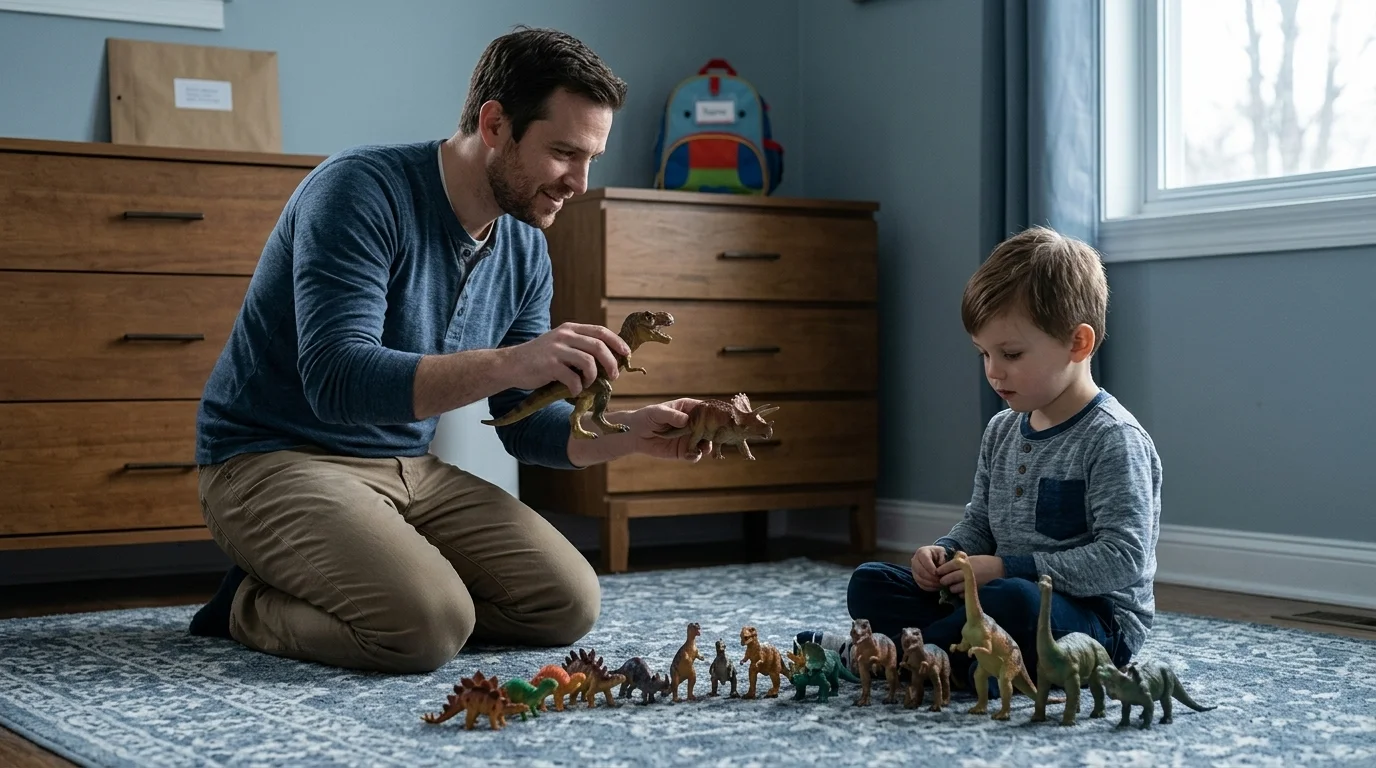
Building social skills around a child's existing interests works better than fighting against them. A child who loves dinosaurs is going to be more interested in joining a group conversation about dinosaurs than a group conversation about anything else. Using interests as the bridge to social engagement is faster and more durable than trying to flatten the interest and force generic socializing.
Celebrating progress also boosts self-esteem, which is its own driver of social engagement.
Parent-Mediated Interventions
Parent-mediated interventions are central to lasting change. The clinician sees the child a few hours a week; the parent sees the child the rest of the time. Plans that train parents to reinforce the same skills at home produce significantly stronger generalization than plans that do not.
By bringing parents into the intervention process, the family creates a consistent environment where skills get practiced in real, naturalistic moments, at dinner, in the car, on the way to a birthday party.
Effectiveness of parent-mediated interventions
The research is strong. Parents trained in specific strategies, role-playing, social stories, collaborative play, see significant improvements in their child's communication and adaptive behavior.
Parent training also helps parents recognize the early signals of social difficulty and respond effectively rather than reactively. And the benefits flow both ways: parents who are equipped with tools tend to report higher confidence and less day-to-day burnout.
| Intervention Type | Impact on Skills | Key Components |
| Parent-Mediated Interventions | Improved communication, adaptive behavior | Structured support, role-playing |
| Social Stories & Role-Playing | Enhanced understanding of social norms | Contextual learning, practical scenarios |
| Collaborative Play with Peers | Increased social engagement | Natural practice opportunities |
Folding these methods into ordinary family routines is what makes the work stick after the formal sessions end.
Empowering Social Growth for Autistic Individuals
Building social skills in children with autism is not a single strategy. It is a coordinated approach: evidence-based teaching, structured practice, parent and teacher involvement, and a long-game commitment to celebrating what is working. The goal is not to produce a child who looks more "typical." The goal is to give an autistic child the specific tools to form real connections, navigate the social world more comfortably, and participate in the parts of life that matter to them.
Why Mastermind Behavior
Mastermind Behavior is a BCBA-owned in-home ABA therapy provider serving families in New Jersey, Georgia, and North Carolina. When a parent comes to us worrying that their child has no real friends, the BCBA does not start by drilling "social skills." The team first watches how your child already tries to connect, what gets in the way, where the social bid is breaking down, and builds the plan from there. The Behavior Technicians (BTs) practice with your child in real rooms, your kitchen, your backyard, sometimes a sibling's birthday party, because that is where friendship actually happens. Parent training coaches help you set up the smaller social moments at home that bigger ones grow out of. Because we run sessions where your child lives, we can target the specific social moves that come up in your actual life, not the abstract ones a clinic curriculum would default to. We are insurance-based, have no onboarding waitlist right now, and most families start direct services within six weeks of the initial assessment.
If you have a kid who wants friends and cannot seem to get one to stick, that is worth talking through before you commit to anything. Call 732.813.7333 or schedule a free consultation at mastermindbehavior.com/contact. We will hear what your child is actually doing first, and tell you honestly whether ABA is what you need.
References
- Autism and Social Skills Development, Autism Speaks
- Improving Social Initiations in Young Children with Autism
- Making (and Keeping) Friends: A Model for Social Skills Instruction
- Behavioral Interventions for Autism Spectrum Disorder
- Social skills and autism, Autism Speaks
- Enhancing social interactions for youth with autism spectrum disorder