Revealing Strengths and Abilities in Autism
Discover the strengths and abilities in autism, highlighting unique talents and skills for success in life.

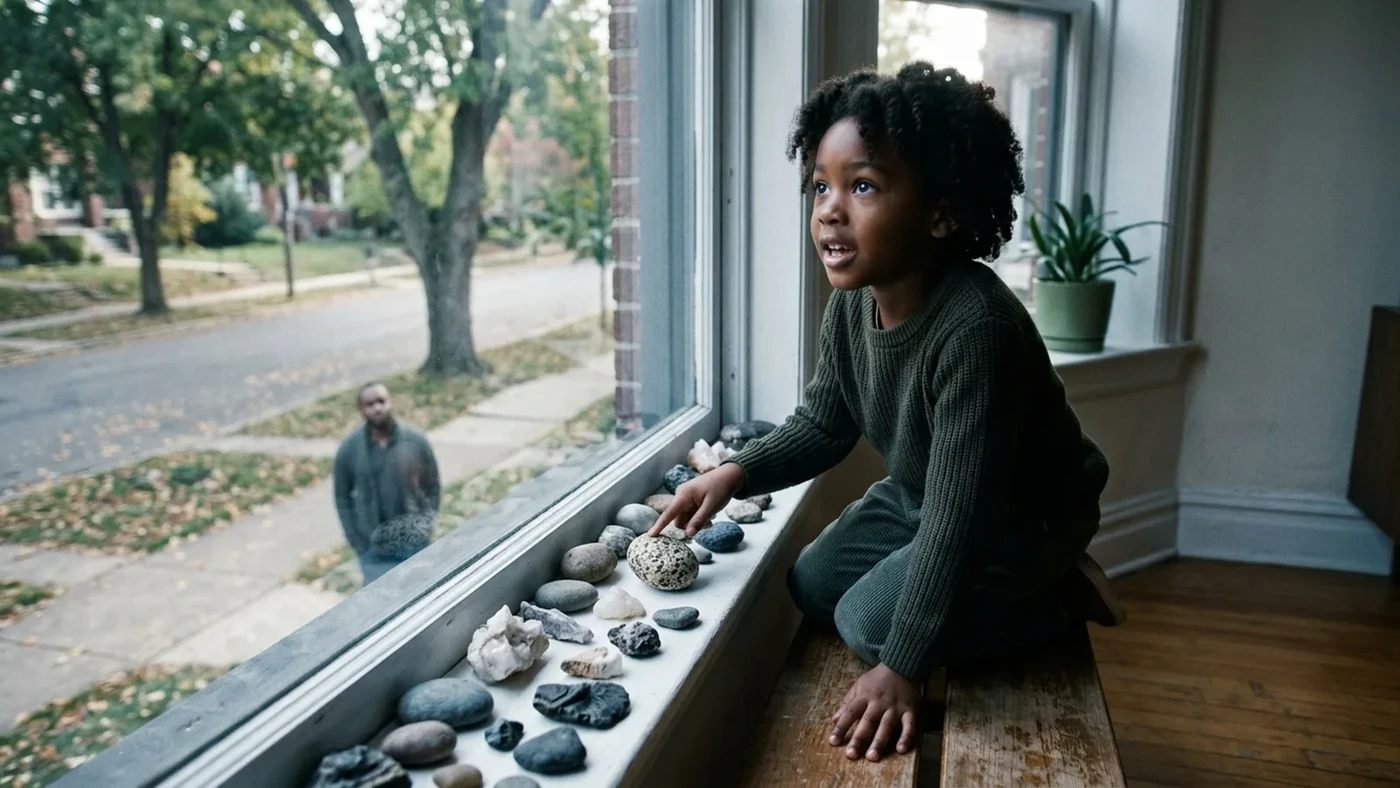
There is a tower of magnatiles on your eight-year-old's bedroom floor that has been there for nine days. You are not allowed to take it apart. He gets up in the morning, checks it, adjusts a single piece, then walks to school. When he comes home he checks it again. You are tired from the negotiations it took to keep it standing, and you are also a little in awe of the design.
Autism is most often described in terms of what is difficult. For the families we work with, though, the strengths show up early and clearly, usually as a kind of focus, attention to pattern, or memory that other kids in the room do not have. This article walks through the strengths that come up most often for children with autism, where they tend to translate into school and career success, and what parents and educators can do to give those strengths room to grow. The point is not to ignore the challenges. The point is to recognize that the same brain that struggles with one thing is usually built for another.
Understanding Autism Strengths
Autism, sometimes called Autism Spectrum Disorder (ASD), is characterized by a wide range of behaviors, abilities, and support needs that vary from one person to the next [1]. Each autistic person carries a distinct profile of strengths and challenges, and recognizing the strengths matters as much as understanding the challenges, both for the child's sense of self and for the practical work of supporting them well.
Overview of Autism Abilities
Children with autism often present a profile of unusual strengths layered alongside the more familiar challenges in communication, social interaction, and sensory processing. The strengths most commonly described are not random. They tend to cluster around focus, pattern, and memory, all of which support creative and problem-solving work when the environment fits.
Some of the most common strengths we see in our caseload:
| Strength | What It Looks Like |
| Hyperfocus | Sustained, intense focus on topics or tasks of interest |
| Creativity | Original output in music, visual art, building, or coding |
| Attention to detail | Noticing small differences that others miss |
| Honesty | A direct, transparent communication style |
| Empathy and fairness | A strong sense of social justice, often expressed concretely |
Unique Skills and Talents
Many children with autism bring distinct skills to academic and creative settings. Strong cognitive ability paired with hyperfocus produces high-quality, meticulous output in areas the child is passionate about. Most kids on our caseload have at least one domain (a topic, a craft, a subject) where they perform well beyond age expectation. The work in therapy is often about building enough flexibility around that domain that the strength becomes a transferable asset rather than a single channel.
Research supports what families and clinicians see in practice. In one widely cited peer-reviewed study, roughly one-third of autistic individuals showed superior skills on psychometric tests or by parental report, in areas including memory, drawing, and musical ability [2]. A larger study following nearly 1,500 children with autism aged 4 to 18 found that 46% had a parent-reported "extraordinary talent" in memory, reading, or computation, with another 23% showing at least one personal strength on standardized measures [3].
Creativity is another common strength. Many children with autism are drawn to the arts, finding language for their experience through music, drawing, building, or writing. Personal qualities like honesty, dedication, and a strong sense of fairness often follow the same pattern: pronounced, real, and most visible when the environment respects them.
For parents at the beginning of this picture, our resources on does my child have autism? and do older fathers cause autism? cover the most common parent-research questions.
Enhanced Perception and Detail Focus
A subset of children with autism show genuinely enhanced perception, the ability to notice details and patterns that others overlook. In our practice, this usually shows up as the child catching a small inconsistency in a video game, a math problem, a logo, or a parent's behavior, that everyone else missed. This kind of perception is useful in any field that rewards precision: data work, quality control, design, scientific observation.
| Skill | Description |
| Enhanced perception | Spotting fine-grained details and patterns in environments or tasks |
| Sustained attention to detail | Working with precision over long stretches of time |
For these kids, the right scaffolding makes the strength legible to other people. Our BCBAs often design programs around the role of reinforcement schedules in ABA therapy so that the child's detail-focus produces output that teachers, peers, and eventually employers can see.
Memory Skills and Meticulousness
Many children with autism have notable long-term memory, retaining facts, sequences, and specific details that other kids in the same classroom struggle to hold. This shows up as encyclopedic knowledge of a special interest, fast recall of routes or schedules, or unusually accurate recall of past conversations.
| Skill | Description |
| Long-term memory | Retaining and recalling detailed information across time |
| Meticulousness | Performing tasks with care and precision |
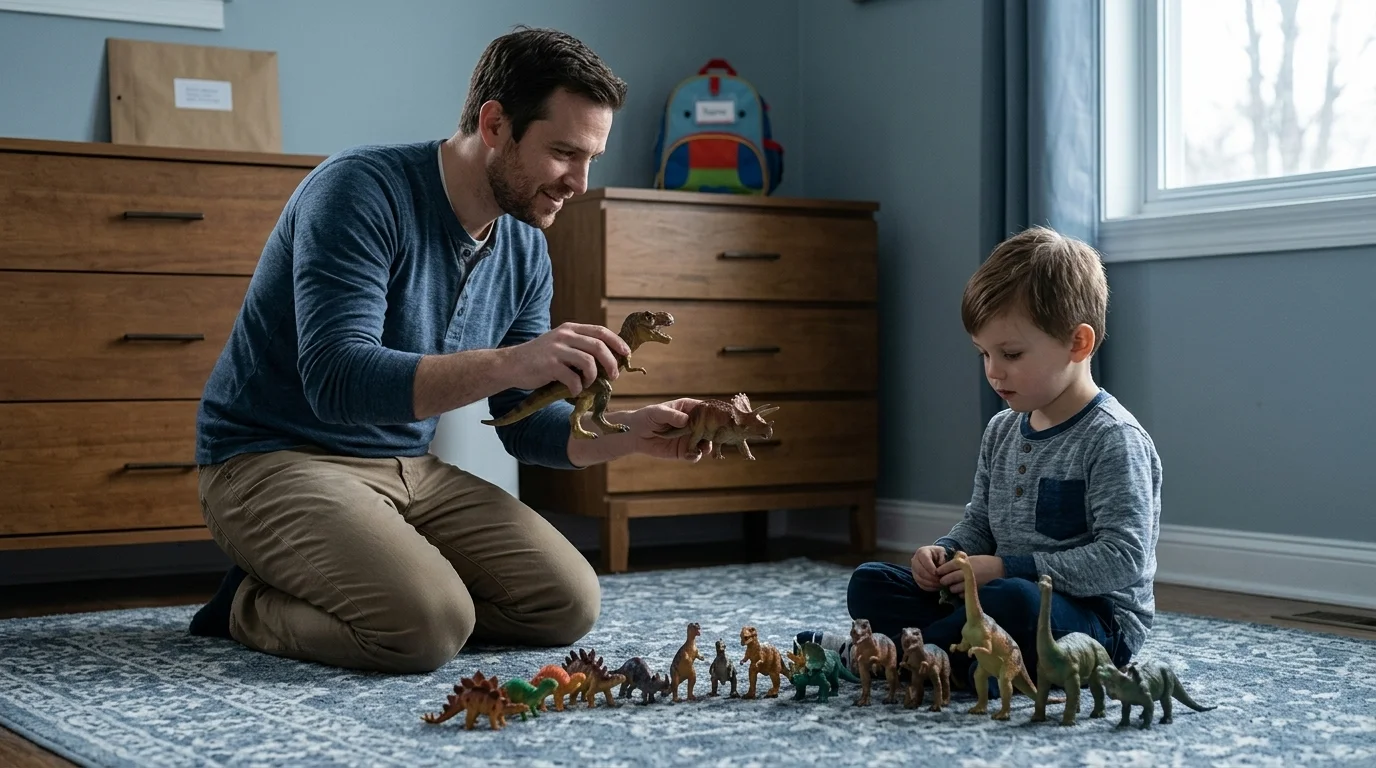
In our caseload, the kids with strong memory profiles do best when learning structures lean on their existing recall, rather than asking them to abandon it. A child who knows every dinosaur and every dinosaur's geologic period is showing you the learning system that already works for them. Building literacy and math around that system is faster than starting from scratch.
Strengths in the Workplace
Adults with autism often bring strengths that translate well into specific work environments. The cognitive and personal strengths below appear so consistently in our caseload's older clients (and in research on autistic adults more broadly) that they deserve their own treatment.
Cognitive Abilities and Efficiency
Autistic adults frequently demonstrate cognitive strengths that make them strong fits for certain roles. Hyperfocus enables long stretches of concentrated work. Strong memory supports detail-heavy fields. Pattern recognition supports analytic work.
| Cognitive Strength | Where It Pays Off |
| Creativity | Original problem-solving and design |
| Sustained focus | Detail-heavy, long-arc tasks |
| Memory | Accurate recall of facts, code, procedures |
| Efficiency | High output when tasks match the strength profile |
The shared feature is that the strength is most useful when the workplace removes friction (sensory load, interruption, ambiguous social demand) that would otherwise compete for the same cognitive bandwidth.
Personal Qualities and Perspectives
Personal qualities like honesty, commitment to fairness, dedication, and empathy are reported as significant assets by both autistic adults and the colleagues who work with them. These traits often shape team culture in ways that benefit everyone.
| Personal Quality | Workplace Impact |
| Honesty | Builds trust through directness |
| Sense of fairness | Strengthens team culture and ethics |
| Dedication | Reliable, persistent work output |
| Empathy | Bridges to teammates who feel marginalized |
Recognizing and matching these strengths to the right roles produces outcomes that benefit the autistic adult, the team, and the employer.
Leveraging Strengths in Education
School is where strengths and challenges meet hardest. Done well, education amplifies the strength profile a child arrives with. Done poorly, it can spend a decade trying to fix the wrong thing.
Attention to Detail in Learning
Children with autism often excel at tasks that demand precision and accuracy, which makes subjects like mathematics, science, programming, and detailed visual or musical work natural fits. Curriculum design that channels the strength into substantive output (a research project, a portfolio piece, a working program) produces motivation that does not need to be manufactured.
| Learning Strength | Examples | Areas of Application |
| Attention to detail | Identifying patterns in data | Research, programming |
| Enhanced perception | Noticing slight differences | Quality control, data analysis |
Building Inclusive Learning Environments
Inclusive classrooms work for the autistic child and for everyone else. The strategies that help most are not exotic. They are mostly about reducing friction (sensory load, social ambiguity) and offering structure that lets the strength surface.
Strategies that work in our experience:
- Personalized learning plans that account for the child's actual strength profile, not the standard grade-level checklist
- Quiet study spaces (a corner, a desk, a small room) where the child can concentrate without competing input
- Visual schedules and structured routines that reduce decision fatigue
- Technology, including speech-to-text and visual supports, that lets the child show what they know in formats that match how they process
For a framework that pulls these together for autism specifically, see the SPELL autism framework, which is built around structure, positive approach, empathy, low arousal, and links.
Social Skills Development
Social connection is the single area where strengths-based framing requires the most care. Many autistic children find friendship and group interaction harder to learn and harder to navigate. The hardness is real, and so is the need. Improved social skills produce real improvements in quality of life: friendships, school participation, opportunities, mental health.
In our practice, the kids who build durable social skills are usually the kids whose families took the social side as seriously as the academic side, instead of waiting for it to develop on its own.
Strategies for Social Skills Improvement
Several approaches help children build social skills in a way that respects how they actually process social information.
| Strategy | What It Does |
| Social skills groups | Structured peer practice using a curriculum, with feedback in real time |
| Visual learning tools | Personalized social stories that clarify expectations in specific situations |
| Programs like PEERS | A structured 16-week program from UCLA covering friendships and (for teens) dating, with evidence of measurable gains in peer interaction and social skills [4] |
| Role-playing | Practice scenarios in a low-stakes setting with feedback and repetition |
Used in combination, these approaches build a vocabulary the child can carry into real-world interaction. For more context on related parent decisions, our overview at does my child have autism? covers the most common starting questions.
Career Guidance for Autistic Individuals
The career conversation is often the most useful one for parents of older teens, because it puts the strengths question into a real-world frame.
Matching Strengths to Job Demands
Most of the autistic adults we know who report high job satisfaction landed in roles that fit their cognitive profile rather than fighting it. Roles that demand rapid, high-pressure information processing in social contexts (high-volume sales, fast-pivot multi-stakeholder work) tend to be poor fits. Roles that reward sustained focus, precision, pattern recognition, and visual or logical thinking (graphic design, programming, data analysis, engineering, research) tend to fit well.
| Job Type | Fit for Autistic Adults |
| High-pressure sales | Generally poor fit |
| Graphic design | Often strong fit |
| Data analysis | Often strong fit |
| Programming | Often strong fit |
| Abstract math (pure theory) | Variable; depends on strength profile |
The pattern in our caseload's older kids is that the strongest career outcomes come from roles that lean on long-term memory and visual or logical thinking, with low demand on fast social-context switching.
Choosing College Majors and Fields
College major selection follows the same logic as job selection. Majors that match the strength profile tend to produce better outcomes. Majors that require constant high-speed social calibration are often a poor return on the effort it takes to navigate them.
In practice, the families we work with have found stronger fit in fields like computer science, statistics, engineering, library science, applied math, visual or musical art, and the lab sciences. Fields like political science, business management, and English literature can be more challenging, since they often rely on social insight and ambiguity tolerance as central skills.
The most useful frame, from a parent's perspective, is to take the strength your child has been showing since they were small and ask which fields actually reward it. For families who want help building toward that future starting now, ABA-based skill-building remains one of the strongest options, and our team can start your child's ABA journey with early intervention so that the strengths your child already has become the foundation everything else rests on.
For families further along, in-home ABA therapy brings programs into the rooms where the strengths are easiest to spot and reinforce.
Why Mastermind Behavior
Mastermind Behavior is a BCBA-owned and operated in-home ABA therapy provider serving families across New Jersey, Georgia, and North Carolina. Our BCBAs design programs that work with your child's actual strengths, not just around the gaps, our Behavior Technicians run the trials in the rooms where the strengths are easiest to spot (the bedroom floor, the kitchen table, the backyard), and our parent training coaches help you see and reinforce those strengths in real time. We serve children with autism up to age 21. With a 90%+ staff retention rate and no onboarding waitlist, most families begin direct services within six weeks of their initial assessment. We have found that the parents who say "my child is good at X" are often the parents whose kids do best in therapy, because the strength is already a leverage point we can build from.
If you are starting to see what your child can do, and you want help turning it into more of what they can do, call us at 732.813.7333 or schedule a free consultation. We will ask you about the strengths first.
References
- \\Autism Speaks. "What Is Autism?"
- \\Howlin, P., Goode, S., Hutton, J., & Rutter, M. "Savant skills in autism: psychometric approaches and parental reports."Philosophical Transactions of the Royal Society B, 2009; 364(1522): 1359-1367.
- \\Uddin, L.Q. "Exceptional abilities in autism: Theories and open questions."Current Directions in Psychological Science, 2022.
- \\Laugeson, E.A., Ellingsen, R., Sanderson, J., Tucci, L., & Bates, S. "The ABC's of teaching social skills to adolescents with autism spectrum disorder in the classroom: the UCLA PEERS Program."Journal of Autism and Developmental Disorders, 2014; 44(9): 2244-2256.