DSM-5: Autism Diagnostic Criteria Explained
The DSM-5 and DSM-5-TR autism criteria in plain language: the two core domains, Levels 1, 2, and 3, the tools evaluators use, and what the report means.


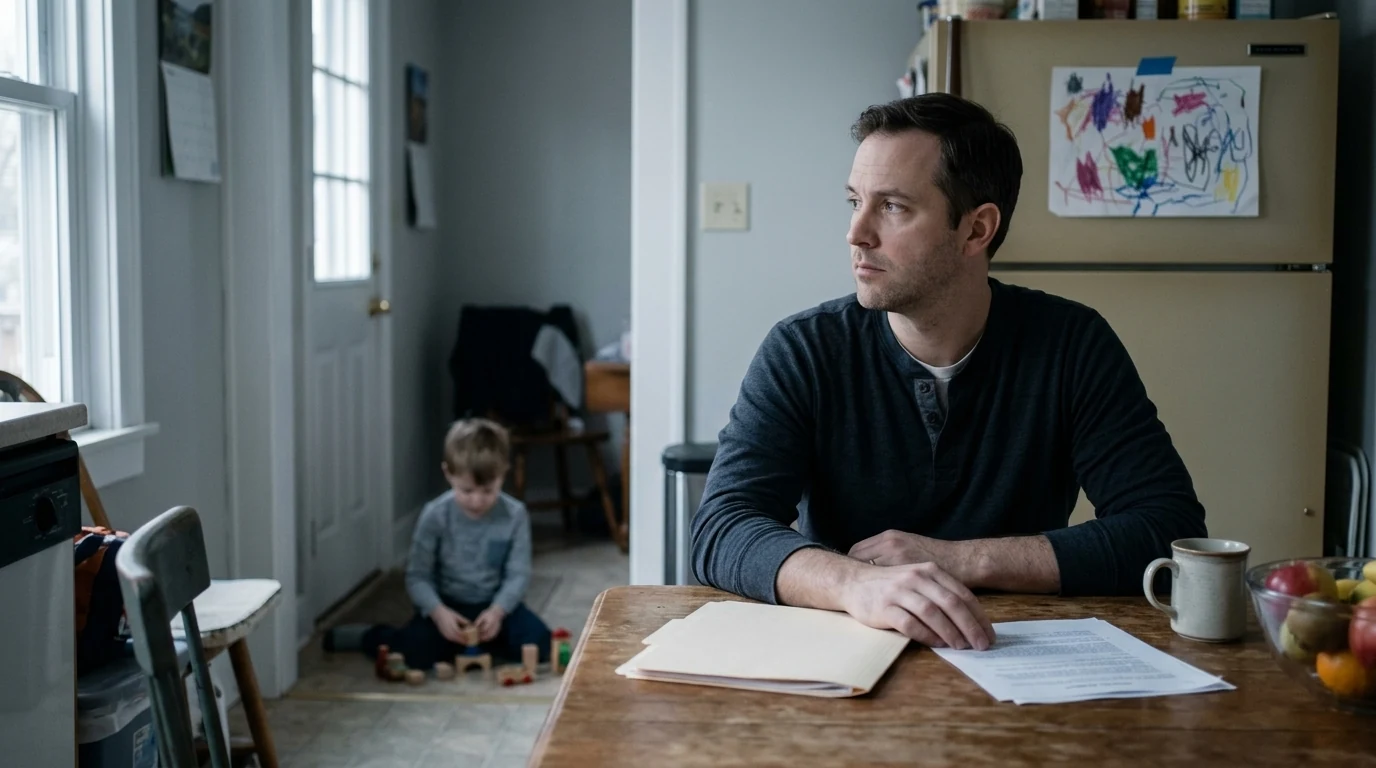
The neurologist used a phrase you did not expect, and you have been turning it over in your head ever since. "Level 2." Your son is six. He has talked since he was two. He recites whole sections of his favorite movie. The report on the desk in front of you uses the words "persistent deficits in social communication" and "restricted, repetitive patterns of behavior," and you can match those phrases to specific moments in his week if you really think about it. But "Level 2" still feels like a strange way to describe a child who hugs you every morning.
The DSM-5 autism diagnostic criteria are the framework clinicians use to decide who meets a diagnosis of autism spectrum disorder (ASD) and at what level of support. They are also the framework that insurers, schools, and ABA providers use to authorize services. This article walks through the criteria, the severity levels, and what each piece actually means for the day after a diagnosis is handed to you.
Understanding Autism Spectrum
Autism is a developmental condition that affects how a person communicates, interacts socially, and responds to the world around them. Understanding the autism spectrum, and how diagnoses are made, helps parents make sense of an evaluation report and ask better questions of the clinicians who wrote it. The main reference for diagnosing mental and developmental conditions in the United States, including autism, is the Diagnostic and Statistical Manual of Mental Disorders (DSM). The current version, DSM-5, and its 2022 text revision, DSM-5-TR, provide the framework for autism diagnosis.
DSM-5 Diagnostic Criteria
The American Psychiatric Association (APA) released the fifth edition of the DSM (DSM-5) in 2013. According to DSM-5, an autism diagnosis requires persistent deficits in social communication and social interaction across multiple contexts 1. This includes difficulties in social-emotional reciprocity, nonverbal communication behaviors, and developing and maintaining relationships. The criteria also require restricted, repetitive patterns of behavior, interests, or activities. These are designed to capture the behaviors typically associated with autism in a way that holds up across very different presentations. In our practice, we see this range constantly: one child on our caseload may have limited speech and intense sensory needs, while another reads chapter books at age five but cannot read a face. Both can meet the same criteria. For more on who is qualified to confirm a diagnosis, see our article on who is qualified to diagnose autism in adults.
Evolution to DSM-5-TR
The APA periodically refines the DSM to reflect updated research and clinical use. In 2022, the APA released the DSM-5-TR, a text revision of the DSM-5. This revision included a clarification to the autism diagnostic criteria. Specifically, the phrase "manifested by the following" was revised to read "as manifested by all of the following," tightening the intent of the wording. The change underscores that an autism diagnosis is built on the convergence of several features, not just one or two in isolation. As we await the dsm 6 release date, it is worth knowing that these changes mostly affect documentation language rather than who actually qualifies for the diagnosis. For broader context, see is autism overdiagnosed? and is it worth getting an autism diagnosis?.
Early Developmental Period
A core part of the autism diagnostic criteria (DSM-5) is that symptoms must be present in the early developmental period. This requirement keeps the diagnosis specific to autism rather than something that arose later from a different cause. In practice, it does not mean the signs were obvious at age two. It means that, looking back, the patterns were already there.
Delayed Manifestation
Per the Autism Speaks guidelines, symptoms of autism spectrum disorder (ASD) should be present in the early developmental stage. But they may not become fully visible until social demands exceed the individual's capacities. This is the pattern most BCBAs on our team are familiar with: a child does fine in preschool with a routine and one or two predictable adults, then hits second grade and the group projects, the cafeteria, and the constant social negotiation start to overwhelm him. The criteria were already met. They just were not visible until the demands changed 2.
Masking Symptoms
In some children, and many adults, symptoms of ASD may be masked by learned strategies in later life. People with autism often develop coping mechanisms, scripts, and rehearsed social responses to navigate everyday interactions. A child might learn to mimic eye contact or to copy a peer's reactions in real time. Girls in particular often develop sophisticated masking strategies that can delay a diagnosis by years, sometimes into adulthood 3.
According to a study published by NCBI, children who met DSM-IV-TR criteria for autistic disorder but not the DSM-5 ASD criteria were more likely to have mild ASD symptoms, or symptoms accounted for by another condition.
Understanding delayed manifestation and masking is part of why a good evaluation looks at both current behavior and developmental history. The pattern matters as much as any one snapshot.
Impairments and Functioning
Understanding how autism affects day-to-day functioning is what turns a diagnosis from a label into a plan. The DSM-5 covers both the social and occupational impact and a severity rating that drives what kind of support a child is likely to need.
Social and Occupational Impact
Symptoms of ASD can produce clinically significant impairment in social, occupational, or other important areas of current functioning. These impairments tend to be persistent. They show up in how a child makes friends, how he handles transitions, how she does in a classroom, and later, in how she navigates a job. Some kids face difficulty with the back-and-forth of social interaction. Others run into trouble when school or work requires flexible thinking and changing rules.
For families weighing whether it is worth getting an autism diagnosis, the diagnosis is often the gateway to the support that takes the pressure off these areas. School accommodations, ABA, speech therapy, and occupational therapy all flow from it.
Defining ASD Levels
The DSM-5 introduced a severity rating system that allows clinicians to identify the level of support each child needs across two core domains: social communication, and restricted/repetitive behaviors. A child can be rated at different levels in each domain (Level 1 in one, Level 2 in the other), which is more common than parents expect. The three severity classifications are detailed in the next section.
Severity Classifications
The DSM-5 autism spectrum criteria define three severity classifications as a way to describe the degree of support an individual needs. These classifications are based on observable behavior in social communication (SC) and restricted and repetitive behaviors (RRB), and are categorized into Level 1 (Requiring Support), Level 2 (Requiring Substantial Support), and Level 3 (Requiring Very Substantial Support) 4.
It is worth saying that these levels are descriptions of support needs at a point in time, not predictions of who your child will become. We have seen kids on our caseload move from Level 2 to Level 1 with consistent intervention, and we have seen children whose levels stayed stable but whose quality of life expanded dramatically. The number is not the story.
Level 1: Requiring Support
Individuals classified at Level 1 demonstrate difficulties in social communication and may show inflexible behaviors that interfere with functioning in some contexts. They may face challenges initiating social interactions and may respond atypically in social situations.
A Level 1 child can usually manage daily life with some support, though the symptoms are noticeable to a careful observer. He may need scaffolding to complete multi-step tasks, prompts to engage with peers, or task analysis to break down routines like getting dressed in the morning or finishing a homework assignment without melting down.
Level 2: Requiring Substantial Support
At Level 2, individuals show more visible social communication deficits and repetitive behaviors that are clearly observable to others. They may have difficulty switching activities or shifting focus, and they may struggle to adapt when their environment changes without warning.
These individuals typically require substantial support in daily life. Reading social cues is hard. Maintaining friendships is hard. Tolerating an unexpected substitute teacher is hard. ABA programming at this level often focuses on building communication systems that work, expanding flexibility, and reducing the behaviors that interfere with learning.
Level 3: Requiring Very Substantial Support
Level 3 is characterized by severe deficits in verbal and nonverbal social communication that produce major impairments in functioning. These individuals may initiate social interactions very rarely and respond minimally to social overtures from others.
Children at Level 3 may also show extreme difficulty coping with changes, and repetitive behaviors that significantly interfere with daily life. They require very substantial support to participate in routines and to manage the demands of their day. Programming for Level 3 children is intensive and tends to start with the basics: communication, safety, daily living skills, and the steady reduction of behaviors that get in the way of learning.
It is important to remember that these severity levels frame the support needs, but they do not predict the full picture of a child's life. Each child with ASD is unique and the way their symptoms appear can shift over time, with intervention, and with age 2. To understand how the diagnosis fits into the broader process, see who is qualified to diagnose autism in adults and is it worth getting an autism diagnosis?.
Diagnosis Challenges
While the DSM-5 has improved the way clinicians categorize autism, the diagnosis process still runs into real challenges. Two of the biggest are inconsistencies in how severity is rated and the lack of clear guidance on classifying support needs.
Discrepancies in Severity
A key feature of the DSM-5's approach to autism is the severity marker, which is meant to reflect the degree of impairment. But the methods for differentiating between severity levels are not clearly defined, which can lead to inconsistent ratings between clinicians.
These discrepancies have practical consequences. A child rated at Level 1 by one evaluator and Level 2 by another may receive very different levels of school support, insurance hours, or family services. The misalignment between the DSM-5, ADOS-2, and other common diagnostic tools makes this worse 4. A study found that 34.1% of subjects previously diagnosed with Pervasive Developmental Disorder (PDD) under the DSM-IV did not meet the DSM-5 criteria for Autism Spectrum Disorder (ASD). Among these individuals, nearly half had previously been diagnosed with Asperger's disorder under the DSM-IV 5. The shift in criteria left many families re-navigating eligibility for services. For more on the differences between approaches, see our discussion of the difference between aba therapy and other therapies and our article on is autism overdiagnosed?.
Classifying Support Levels
The other major challenge is deciding what level of support an individual actually needs. The DSM-5 proposes three levels, but it does not provide a precise method for matching a child to one of them.
This lack of clarity can lead to inconsistencies in diagnoses and support plans. A child's autism symptoms, cognitive skills, and adaptive functioning may not line up neatly with a single severity level. We see this often: a verbal child with strong cognitive skills who needs substantial support to handle transitions. The number on the report often understates how much help he actually needs.
The issue of classifying support levels points to the need for more detailed and standardized guidelines in future DSM revisions. For now, parents should know that the level is a starting frame, not a final verdict. The right support is built on the full evaluation, not just the number.
Diagnostic Tools and Assessments
A wide range of diagnostic tools and assessments exist to identify autism spectrum disorder (ASD). These tools help match observed behavior to the autism diagnostic criteria (DSM-5). Two are worth knowing about: the AIIMS Modified INDT-ASD Tool and the combination of ADOS-2 and CARS-2.
AIIMS Modified INDT-ASD Tool
The All India Institute of Medical Sciences (AIIMS) developed and validated the DSM-5-based AIIMS-Modified-INDT-ASD Tool to diagnose ASD in children. The tool demonstrated a sensitivity of 98.4% and specificity of 91.7% to diagnose ASD, with a score of ≥14 suggesting severe ASD. The AIIMS Modified INDT-ASD Tool had a false positivity rate of 8.2% and a false negative rate of 1.55%. It showed a sensitivity and specificity of 92.97% and 92.98% respectively when the score was ≥10, and it could diagnose severe ASD with a sensitivity and specificity of 80% each when the score was ≥14.
A strong indicator of its reliability is its correlation with the Childhood Autism Rating Scale (CARS) score, with a Pearson correlation of 0.76. The tool was built to incorporate DSM-5 criteria, replacing the older DSM-IV-based version. The aim was to give clinicians a structured, physician-administered instrument for diagnosing ASD with acceptable accuracy.
ADOS-2 and CARS-2 Comparison
The Autism Diagnostic Observation Schedule (ADOS-2) and Childhood Autism Rating Scale (CARS-2) are two tools that are often used together to diagnose autism 7. Most families on our caseload have an ADOS-2 score in their evaluation report; it is the standard for direct observation.
The ADOS-2 is a semi-structured assessment in which the clinician sets up activities and prompts to evaluate the child's communication, social behavior, and play. It produces a numerical score and a classification.
The CARS-2 is a behavioral rating scale that evaluates the presence and severity of autism symptoms across multiple domains. It is used alongside or in place of the ADOS-2 depending on the setting and the child's age.
Together, they offer a more complete picture of a child's symptoms. Understanding these tools, and what their scores actually mean, can help parents make sense of the evaluation report and ask better questions when the diagnosis comes through, especially when navigating the complexities of diagnosing autism in adults.
Why Mastermind Behavior
Mastermind Behavior is a BCBA-owned and operated in-home ABA therapy provider serving families across New Jersey, Georgia, and North Carolina, including in-home early intervention in Georgia. After a child receives a DSM-5 autism diagnosis, our BCBAs read the full evaluation report, talk through the support level with the parent, and translate the clinical findings into an individualized plan. Behavior Technicians then run the day-to-day sessions in the home, working on the exact skills the BCBA prioritized: communication, flexibility, daily routines, social play. Parent training coaches sit alongside families to make sure what is happening in sessions transfers into the real moments of family life, the bedtime, the morning rush, the grocery store. A diagnosis is the start of a process, not the end of one, and the program a child needs after a Level 1 diagnosis looks very different from what a Level 3 child needs. With a 90%+ staff retention rate and no onboarding waitlist, most families begin direct services within six weeks of their initial assessment.
If you have a recent diagnosis in hand and you are trying to figure out what programming actually fits your child, we are happy to read the report with you. Schedule a free consultation or call us at 732.813.7333. No pressure, no commitment, no jargon you did not ask for.
References
[2]: https://www.research.chop.edu/car-autism-roadmap/diagnostic-criteria-for-autism-spectrum-disorder-in-the-dsm-5
[3]: /who-is-qualified-to-diagnose-autism-in-adults
[4]: https://www.ncbi.nlm.nih.gov/pmc/articles/PMC3989992/
[5]: https://www.ncbi.nlm.nih.gov/pmc/articles/PMC7289465/
[6]: https://www.ncbi.nlm.nih.gov/pmc/articles/PMC6415840/
[7]: https://quenza.com/blog/knowledge-base/psychological-assessment-tools-for-autism/